


Co-branded airline credit cards promise the dream scenario: more miles, smoother airport experiences and cheaper flights, all in exchange for putting your everyday spending on one piece of plastic. In Brazil, the Azul Itaucard line is one of the most aggressive offers on the market, tying Azul Linhas Aéreas and the TudoAzul program directly to Itaú’s credit card platform. After digging through the fine print, recent promotions and real trip use cases, I put the Azul Itaucard side by side with competing airline cards to see when its benefits truly pay off, and when a more flexible travel card might be the smarter move.
Get the latest updates straight to your inbox!
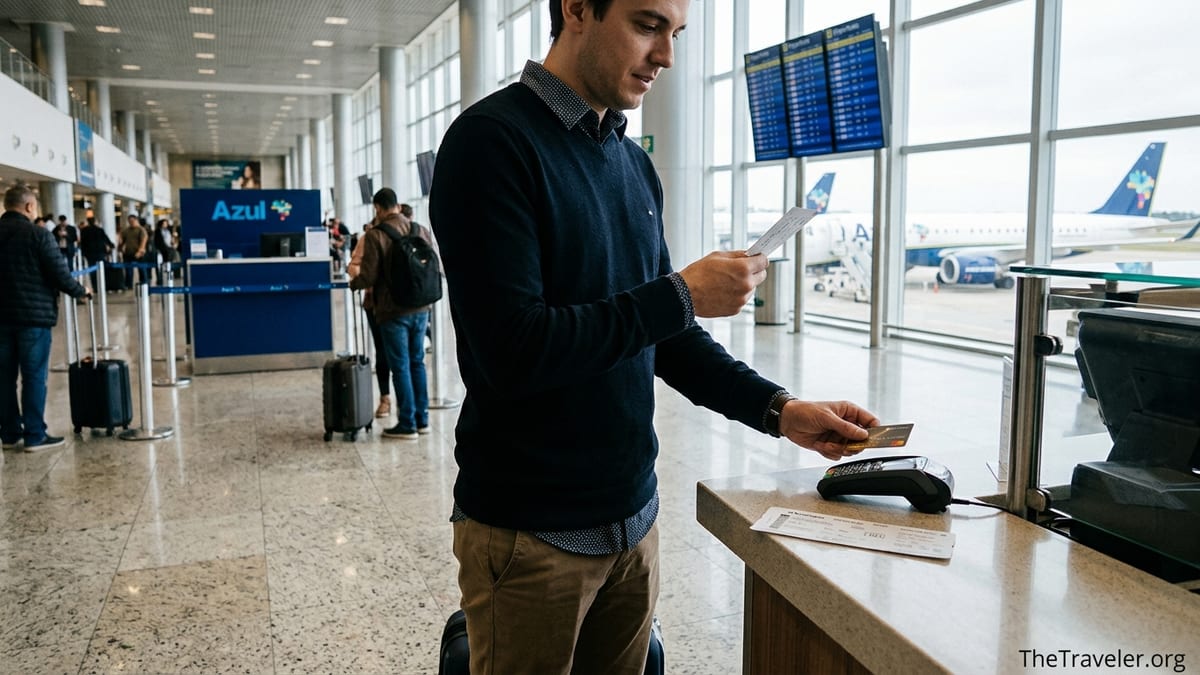
What Exactly Is Azul Itaucard and Who Is It For
Azul Itaucard is a family of co-branded credit cards issued by Itaú in partnership with Azul Linhas Aéreas, the Brazilian carrier that has built a dense domestic network and a growing long-haul operation to North America and Europe. Instead of sending your rewards to a bank currency, every real you spend converts directly into TudoAzul points, which you can redeem on Azul flights and selected partners. For travelers who frequently fly routes such as São Paulo to Recife, Campinas to Porto Alegre or long-haul services like Campinas to Orlando or Lisbon, that direct tie-in can be very attractive.
The portfolio is tiered by income and benefits. At the base you have Gold cards aimed at occasional Azul customers who want some mileage accrual and modest discounts. In the middle sits Azul Itaucard Visa Platinum, targeted at middle-income travelers who check bags regularly and fly domestically several times a year. At the top are Azul Itaucard Visa Infinite and Azul Itaucard Mastercard Skyline, premium products designed for high spenders and Azul loyalists who value priority airport services, extra baggage allowance and stronger points earning on every purchase.
The design principle is simple: the more you concentrate spending and flying with Azul, the more value you extract. Where things become nuanced is in how those benefits compare with competing airline cards from LATAM Pass or Smiles, and with flexible travel cards that earn transferrable points. To answer that, you need to look closely at earn rates, airline perks and the real cost of the annual fee.
In this review I focus primarily on the Azul Itaucard Visa Platinum and especially the Azul Itaucard Visa Infinite, because these are the variants where the airline benefits start to meaningfully shape your travel experience. They are also the cards most often recommended to travelers looking to upgrade from a no-fee bank card or from a generic cashback product.
Core Earning Power: How Many Points You Really Get
The main argument for any airline credit card is simple: earn miles faster than you would with a general-purpose card. Azul Itaucard delivers this through boosted TudoAzul accrual on all spending, then goes further when you hold a TudoAzul club subscription or hit promotional tiers.
On the Azul Itaucard Visa Infinite, current public information shows a base accrual of around 3 TudoAzul points per US dollar equivalent on domestic purchases and up to 3.5 points per dollar on international transactions, with periodic welcome bonuses for high initial spending. Some analyses published in 2026 demonstrate scenarios where Infinite cardholders on a TudoAzul club plan effectively earn about 4.5 points per dollar when temporary campaigns stack on top of the base rate. In some limited-time offers, Azul and Itaú have pushed the effective earning even higher for club members paying their club with the same card.
On the Azul Itaucard Visa Platinum, earning is lower but still competitive for a mid-tier airline product. Public comparison tools in Brazil typically report 2 points per dollar on most purchases, with extra points for spending directly with Azul, especially when booking tickets in Brazilian reais on Azul’s own channels. That means that if you put a monthly spend of 4,000 reais on the Platinum, you could end up with a five-figure annual balance of TudoAzul points without flying at all.
For a concrete comparison, imagine a traveler based in Belo Horizonte who spends about 10,000 reais a month on a combination of groceries, fuel, school fees and online purchases. On Azul Itaucard Visa Infinite at a rough 3 points per dollar, that person would generate in the region of 6,000 TudoAzul points per month, or more than 70,000 points per year when converted from reais at a realistic long-term exchange rate. With an active TudoAzul club and occasional multiplier campaigns, the same profile can reach well over 100,000 points in a year, enough for a round trip to the United States in economy on Azul promotional fares or several domestic round trips in Brazil.
Compared with a bank travel card that earns, for example, 2 generic points per dollar, which then sometimes convert to airline miles at a 1:1 or worse ratio, Azul Itaucard’s direct accrual can be superior if your end goal is almost always an Azul flight. The trade-off is that you lose flexibility: if Azul does not serve your preferred route or if another airline has a sharply cheaper ticket, your TudoAzul balance will not stretch as far.
Azul Flight Perks: Where the Card Actually Changes Your Trip
The distinctive value of Azul Itaucard reveals itself not at the supermarket checkout but in the airport terminal. Azul and Itaú have layered a suite of travel benefits onto the higher-tier cards to make flying Azul feel smoother and cheaper, particularly for families and frequent domestic business travelers.
The Azul Itaucard Visa Infinite stands out most clearly here. According to recent issuer and comparison-site summaries, cardholders are eligible for up to three free checked bags on Azul flights in Brazil and on long-haul routes to the United States and Europe, and one free checked bag on flights within South America. That detail matters if you regularly fly routes like Campinas to Fort Lauderdale with a family of four: paying for two or three checked bags each way could easily add hundreds of reais to the bill on competing airlines, while the Azul Infinite benefit can neutralize that cost when everyone is ticketed in the same reservation.
On top of luggage benefits, Infinite cardholders typically receive access to Azul’s preferred seating options under the Espaço Azul brand, priority check-in counters, and priority boarding lanes. Picture a Monday morning departure from São Paulo to Curitiba at 7 a.m. If you arrive at the airport 50 minutes before departure and there is a long line at the standard Azul check-in, going to the priority lane reserved for TudoAzul elites and premium cardholders can be the difference between gliding through bag drop and missing cut-off times. The seating benefit also has practical implications: having extra legroom on a four-hour flight from Belém to Campinas can substantially change comfort levels.
Even the mid-tier Azul Itaucard Visa Platinum carries some of these airline-linked perks. Many versions include one free checked bag on Azul domestic flights and priority boarding within certain boarding groups. For a solo traveler flying São Paulo to Salvador three or four times a year with a checked suitcase, that alone can justify much of the annual fee when compared with paying Azul’s standard bag fees each time, especially on cheaper promotional fares where luggage is not included.
In daily life, those benefits accumulate quietly. University students returning home to the Northeast with heavy luggage, small business owners transporting product samples between Belo Horizonte and Manaus, or families doing yearly school-break trips to the Northeast coast all see a tangible financial advantage from repeating the same pattern of Azul flights with a card that consistently wipes away baggage and seat fees.
Lounge Access and Premium Comfort: How Strong Is Azul Itaucard Here
Airport lounge access used to be one of the main selling points of airline co-branded cards. Over the past few years, Azul’s policy has shifted, and the Azul Itaucard proposition has increasingly relied on the global lounge programs tied to Visa Infinite and to third-party services, rather than unlimited access to Azul’s own lounges.
As of mid 2026, public guides to the Azul Itaucard Visa Infinite consistently highlight two free lounge visits per year via the LoungeKey network, plus access to the Visa Airport Companion program. That means that on top of occasional entry to Azul-branded lounges in airports like Campinas Viracopos and Belo Horizonte Confins when allowed by separate airline rules, Infinite holders can use those two visits at partner lounges in major hubs such as São Paulo Guarulhos, Rio de Janeiro Galeão, Miami or Lisbon. The catch is that two visits per year is modest; if you fly frequently for work, you will exhaust that allotment quickly and then pay per entry.
In practical terms, the lounge benefit is most compelling for travelers who do two or three major trips a year. Consider a couple from Porto Alegre flying to Lisbon via Campinas: they can use one LoungeKey visit on the outbound connection in Viracopos and another on the way back, enjoying showers, food and quiet workspaces during long layovers. For a road warrior who takes multiple trips per month between São Paulo and the interior, the two free visits feel more like a welcome bonus than a core reason to hold the card.
The Platinum tier historically offered more limited lounge access, sometimes linked to Azul’s own branded spaces on a promotional basis or tied to the TudoAzul elite status of the cardholder. Recent consumer discussions and issuer materials show that the emphasis has shifted away from promising lounges on Platinum towards value in luggage, discounts and miles. This aligns Azul Itaucard with broader market trends where many mid-tier airline cards around the world are also trimming back lounge privileges in favor of bonus miles or statement credits.
Ultimately, if year-round lounge access is your main criterion, a premium bank card with a stronger Priority Pass or similar program may serve you better. However, if your pattern is two big international trips annually on Azul metal, then Azul Itaucard’s lounge and comfort perks effectively upgrade those journeys without you needing to justify a more expensive all-round travel card.
Costs, Annual Fees and How to Decide If It Pays Off
No airline card review is complete without a hard look at cost. Publicly available comparisons in 2026 place the Azul Itaucard Visa Infinite annual fee around 1,260 reais, in line with competing premium airline products from other Brazilian carriers. The Azul Itaucard Visa Platinum fee often lands a little above 600 reais per year, sometimes split into monthly installments, with possibilities of partial or full waiver when you hit specific spending thresholds.
Itaú commonly advertises spending conditions for fee waivers or discounts. For example, several comparison portals note that Platinum cardholders who consistently spend about 4,000 reais per billing cycle can secure full annual fee waiver, while spending around 2,000 reais halves the fee. On the Infinite side, maintaining a monthly spend in the neighborhood of 20,000 reais can eliminate the 1,260 reais fee entirely. These numbers are not static, so always confirm them at the time you apply, but they provide a realistic framework for deciding if you belong to the target audience of each tier.
To judge real value, you need to marry those costs with your travel pattern. Take a traveler from Recife who flies Azul to São Paulo four times a year and once to Orlando, usually with one checked bag, plus moderate monthly spending on the card. If they hold Azul Itaucard Visa Platinum and get one free bag on each domestic leg plus a bag benefit on the international route, they could avoid paying luggage fees that might run several hundred reais per round trip. Over a year, that saving, combined with the miles earned, can outweigh a partially discounted annual fee.
Now consider a business owner in Campinas who spends 25,000 reais monthly on advertising and inventory and flies Azul at least once a month. For that profile, Azul Itaucard Visa Infinite’s higher accrual, multiple free checked bags and priority services can deliver thousands of reais in indirect value. They will likely meet the fee-waiver spending threshold, effectively turning the premium card into a no-fee product that still carries robust flight benefits and travel insurance.
If, on the other hand, you fly Azul once every couple of years and your monthly card spend rarely exceeds 2,000 reais, even the Platinum card may not be worthwhile. You would probably be better served with a no-fee credit card that offers modest cashback or flexible bank points that can occasionally transfer to multiple airline partners, rather than committing to a co-branded product closely tied to a single carrier’s schedule and pricing.
Comparing Azul Itaucard With Other Airline and Travel Cards
When deciding whether Azul Itaucard is the right fit, it helps to zoom out and compare it with other common options in Brazil and with the logic of airline cards worldwide. In the Brazilian market, the most direct rivals are co-branded cards from LATAM Pass and Smiles, each pegged to its respective airline and loyalty program. At the same premium tier, annual fees are broadly similar and base accrual rates cluster around 2.5 to 3 airline points per dollar, with occasional bonuses for spending with the partner airline.
Where Azul Itaucard can pull ahead is for travelers whose home airport is an Azul stronghold, such as Campinas Viracopos, Belo Horizonte Confins or certain mid-sized cities where Azul offers nonstop routes that competitors do not. For someone living in a city with extensive Azul connectivity and limited options from other airlines, earning TudoAzul points directly and unlocking baggage and seat perks on the very flights you take most often is simply more practical than chasing an alternative loyalty currency.
On the other hand, if you value flexibility and regularly hunt for the cheapest fare across multiple airlines, a general travel card that earns bank points may suit you better. Many Brazilian banks issue high-end Visa Infinite or Mastercard Black cards whose points can be transferred not only to Azul, LATAM and Smiles, but also occasionally to foreign programs like TAP Miles&Go or Air France-KLM Flying Blue during promotional transfer bonuses. In that scenario, you might accept a slightly lower point accrual rate on everyday spending in exchange for the freedom to direct those points to whichever airline offers the best redemption value at the time.
Outside Brazil, the logic is similar to how a frequent United flyer in the United States evaluates the United Club Card against a general-purpose card from issuers like Chase or American Express. The trade-off between focused airline perks and flexible currencies is universal: airline cards tend to give you free checked bags, better boarding and higher earn rates on that airline’s tickets, while general travel cards deliver broader lounge access, travel protections and the ability to shop around for the best redemption deals. Azul Itaucard fits neatly into that global pattern on the side of strong benefits for one carrier’s ecosystem.
The Takeaway
After weighing the numbers, the travel perks and real-world use cases, the Azul Itaucard line emerges as a compelling tool for a specific but sizable group of travelers: those who fly Azul frequently and are willing to concentrate their card spending to unlock the richest combination of miles, luggage benefits and airport privileges.
If you live near an Azul hub, fly the airline several times a year and regularly check bags, Azul Itaucard Visa Platinum can quietly pay for itself through waived luggage fees, priority boarding and dependable TudoAzul accrual. If your monthly spending is high and Azul is your default carrier for both domestic and international trips, Azul Itaucard Visa Infinite pushes that value proposition even further, stacking elevated earning rates with multiple free bags, preferred seating and limited but useful lounge access. In both cases, the products make the most sense when you meet the spending thresholds for annual fee reductions or waivers.
Conversely, if your travel is fragmented across many airlines, or you rarely fly at all, Azul Itaucard’s tight focus can feel restrictive. In that situation, a flexible travel card or even a simple cashback product may be a more rational choice, especially if you prize worldwide lounge access and the ability to chase the best deal on any airline rather than committing to Azul’s network.
Ultimately, Azul Itaucard is best understood as a loyalty accelerator for Azul’s ecosystem. Treated as such and matched to the right traveler profile, it can turn routine everyday spending into free flights, smoother airport experiences and meaningful savings on baggage and seat fees. Used casually by someone who only steps on an Azul plane every few years, it risks becoming an expensive piece of plastic whose benefits never quite take off.
FAQ
Q1. Is the Azul Itaucard Visa Infinite worth it for occasional travelers
The Infinite tier is generally not ideal for occasional travelers who fly Azul only once every year or two. Its higher annual fee and more complex benefits are designed for people who fly Azul multiple times per year and can also meet the relatively high monthly spending required to reduce or waive the fee. Occasional travelers usually extract more value from the lower Platinum tier or from a no-fee card.
Q2. How many free checked bags can I get with Azul Itaucard on Azul flights
Public issuer and comparison information indicates that Azul Itaucard Visa Infinite commonly includes up to three free checked bags on Azul domestic flights and on selected long-haul routes to the United States and Europe, while the Platinum tier tends to offer at least one free bag on domestic services. Exact allowances can change over time and may depend on fare class and route, so always verify the current rules before travel.
Q3. Do Azul Itaucard points expire
TudoAzul points earned with Azul Itaucard generally follow the standard TudoAzul expiration policies, which consider your program tier and activity level. Some campaigns and higher-tier cards offer extended validity or protect points from expiration as long as you keep the card active and continue earning. However, travelers should still assume that long periods of inactivity could lead to points expiring and plan redemptions accordingly.
Q4. How does Azul Itaucard compare with a flexible bank travel card
Azul Itaucard tends to earn more TudoAzul points per real spent and unlocks concrete Azul-specific perks like free checked bags, priority services and discounts on Azul tickets. Flexible bank travel cards usually earn slightly fewer points per real but can transfer those points to multiple airline partners or be used as statement credits. If you mostly fly Azul, Azul Itaucard is often superior; if you mix airlines and shop tickets based on price alone, a flexible card often wins.
Q5. Can I access airport lounges with Azul Itaucard
Yes, but lounge access is limited. The Azul Itaucard Visa Infinite typically includes a small number of complimentary visits per year via the LoungeKey network and access to Visa Airport Companion, which covers a range of partner lounges globally. Past arrangements for broader access to Azul-branded lounges have changed over time, and mid-tier cards such as Platinum may offer little or no guaranteed lounge access.
Q6. What kind of travel insurance does Azul Itaucard offer
The core travel insurance on Azul Itaucard Visa Infinite and Platinum is largely provided by the Visa or Mastercard network at those tiers, rather than by Azul itself. Typical protections include emergency medical coverage abroad, trip cancellation and interruption coverage, lost or delayed baggage compensation and rental car insurance, as long as you pay for the travel with the card and follow the network’s conditions. Coverage limits and activation rules vary, so cardholders should review the latest benefit guides before relying on them.
Q7. How much do I need to spend to get annual fee waivers
Recent public comparisons suggest that Azul Itaucard Visa Platinum often offers full fee waiver around 4,000 reais in monthly spending, with a 50 percent discount around 2,000 reais. For the Visa Infinite tier, spending near 20,000 reais per month is commonly associated with full waiver. These numbers are approximate and can shift with new campaigns, so it is important to confirm the exact thresholds when you apply or negotiate with the issuer.
Q8. Is Azul Itaucard a good choice if I live outside Brazil
Azul Itaucard is primarily targeted at residents of Brazil with income and billing in Brazilian reais. While it does earn extra points on international spending and can be useful for Azul flights to the United States and Europe, non-residents may find it difficult to qualify and may face foreign transaction costs. Travelers based outside Brazil are usually better served by airline or travel cards issued in their home country.
Q9. Can additional cardholders use the same Azul Itaucard travel benefits
Additional cardholders on Azul Itaucard often share mileage accrual benefits and may be able to enjoy some travel perks such as free baggage allowances when they are part of the same Azul booking as the primary cardholder. However, access to certain benefits like lounge visits or companion tickets can sometimes be limited to the primary holder. Because policies can change, households planning to issue multiple supplementary cards should confirm benefit sharing with Itaú when applying.
Q10. Who should avoid getting an Azul Itaucard
Travelers who rarely fly Azul, who prefer to constantly chase the lowest fare across multiple airlines, or who do not expect to spend enough on the card to reduce the annual fee are usually not ideal candidates. People who carry balances month to month and incur interest charges will also find that any value from miles and travel perks is quickly wiped out by finance costs. For these profiles, a simple low-fee or fee-free card with cashback or broad bank points is often a better and safer fit.