


More news on this day
UK travel and insurance group Saga has reported first-half cruise bookings ahead of expectations, pointing to resilient demand from its over-50s customer base even as geopolitical tensions reshape holiday patterns.
Get the latest news straight to your inbox!
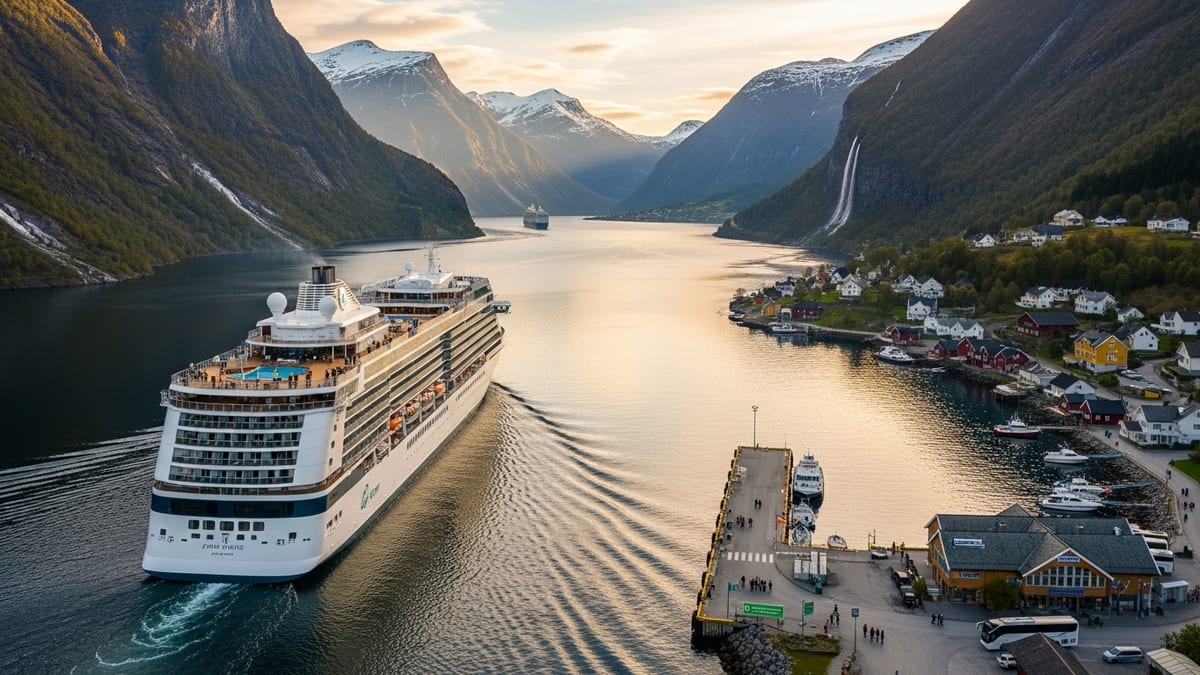
Cruise Bookings Outpace Company Forecasts
According to recent trading updates and market coverage, Saga’s cruise division delivered a stronger-than-expected performance in the first half of its financial year. Ocean cruise revenue for the period is projected to exceed the prior year, supported by higher prices per passenger and solid occupancy levels. River cruises are also expected to post year-on-year revenue growth, helped by firmer pricing and steady demand.
Reports indicate that booked per diems on Saga’s ocean cruises have risen by around 13 percent compared with the previous year, while river cruise per diems are estimated to be about 4 percent higher. These gains, combined with booked load factors in the low‑90 percent range on key itineraries, have pushed first-half cruise income beyond what the company had initially anticipated.
Publicly available information suggests that the robust cruise performance has left Saga broadly on track to meet its full-year guidance. Even so, the company’s share price showed a muted response immediately after the latest update, reflecting investor focus on longer-term earnings sustainability and leverage reduction.
The upbeat booking picture extends beyond the current season. Forward sales data referenced in company reports and industry analysis show that Saga has built a healthy pipeline of reservations into 2026 and 2027, supporting management’s stated confidence in the medium-term outlook for its cruise brands.
Holiday Mix Shifts Amid Middle East Conflict
While cruise demand has exceeded expectations, Saga’s broader holiday business is seeing a more nuanced picture. Public disclosures and analyst summaries indicate that full-year holiday revenue is expected to be marginally ahead of last year, but that overall passenger numbers may slip slightly. The company attributes this to the impact of conflict and instability in parts of the Middle East and surrounding regions.
Travel patterns highlighted in the trading commentary show customers opting more frequently for shorter, closer‑to‑home trips instead of long‑haul itineraries. Short‑haul European breaks and other near‑distance options appear to be gaining share, as some travelers defer more complex or distant journeys in favor of flexible, lower‑risk plans.
For Saga, whose core demographic values both safety and convenience, this shift in mix requires ongoing adjustments to capacity, scheduling and product design. Industry observers note that the company is emphasizing itineraries perceived as stable and familiar, while closely monitoring booking trends on routes nearer to geopolitical flashpoints.
Despite these headwinds, publicly available forecasts suggest that Saga expects its travel operations as a whole to grow profit in the current financial year, supported in large part by the strength of its cruise business and by careful management of destination exposure.
Pricing Strength and Hedging Bolster Revenue Visibility
A recurring theme in recent updates is the role of pricing in driving Saga’s cruise outperformance. Higher booked per diems, combined with disciplined capacity management, are expected to deliver a year-on-year uplift in cruise revenue even without a dramatic increase in passenger volumes. Company statements referenced in financial media point to strong advance bookings and controlled discounting as key contributors.
In parallel, Saga has moved to lock in a large share of its cost base. Publicly available information indicates that commodity and foreign exchange exposure for the cruise business is now hedged through to the end of 2027. This hedging strategy is designed to protect margins from swings in fuel prices and currency movements, giving the group greater confidence in forecasting profitability over the medium term.
Analysts following the stock note that this combination of higher prices, robust load factors and extended hedging provides a clearer line of sight on cash generation from the cruise division. For a business working to reduce debt and reposition around capital-light growth, predictable cruise earnings are seen as particularly valuable.
At the same time, the reliance on pricing power underlines the importance of maintaining Saga’s premium positioning. Industry reports suggest that the company continues to focus on differentiated, small‑ship experiences and inclusive packages that resonate with its target audience of older, typically more affluent travelers.
Insurance Partnership and Debt Reduction in Focus
The strength of first-half cruise bookings is unfolding alongside structural changes in Saga’s insurance operations. Recent coverage of the group’s strategy highlights early progress from a new long-term partnership model that aims to simplify its balance sheet and generate more predictable fee income. One such arrangement has already delivered an additional payment to Saga after surpassing agreed early performance thresholds.
These developments feed into a broader effort to reduce net debt and improve the group’s leverage profile. Financial updates over the past year describe a pattern of improving trading earnings from travel, coupled with steps to recycle capital out of more volatile or capital‑intensive activities. Strong cruise bookings, and the cash they generate through advance customer receipts, are a central part of this deleveraging story.
Market analysis suggests that investors are watching for evidence that the combination of cruise growth, holiday normalization and insurance partnerships can support a sustained improvement in underlying profit. While near-term results have been helped by favorable booking and pricing trends, the group’s ability to keep demand resilient in the face of economic uncertainty will remain under scrutiny.
For now, the better‑than‑expected first-half cruise performance provides Saga with additional breathing room as it continues to reshape its portfolio. The company’s progress on debt reduction, together with a more focused travel strategy, is seen by analysts as an important backdrop to any future investment in additional cruise capacity.
Older Travelers Continue to Power UK Cruise Demand
Saga’s update also offers a snapshot of broader trends in the UK cruise market. Industry reports have noted sustained interest in cruising among older travelers, who often favor the predictability, security and all‑inclusive nature of ship‑based holidays. This demographic is typically less constrained by school holidays and is more willing to book well in advance, characteristics that support the booking patterns highlighted in Saga’s first-half performance.
Available research on the sector suggests that demand for small and mid‑sized ships, itineraries focused on culture and scenery, and longer‑duration voyages has remained resilient, even as some segments of the wider travel market soften. Saga’s focus on adults‑only cruising, curated excursions and tailored onboard services appears to align closely with these preferences.
At the same time, the overall cruise industry is contending with elevated operating costs, tightening environmental regulations and heightened geopolitical risk on certain routes. Saga’s decision to hedge key costs several years ahead, and to prioritize itineraries that can be flexed or re‑routed where necessary, reflects a wider shift among operators toward risk management and long‑term capacity planning.
For UK travelers weighing their options, the company’s stronger-than-expected first-half cruise bookings suggest that appetite for sea‑based holidays remains high. As Saga and its competitors refine their offerings for an aging but increasingly adventurous customer base, the competition for loyalty in the premium over‑50s segment looks set to intensify.