


More news on this day
British travellers heading abroad this summer are being urged to pay close attention to fresh travel warnings that highlight rising security risks in certain destinations, extreme heat across Europe, tighter insurance conditions and new documentation rules that could disrupt holidays if ignored.
Get the latest news straight to your inbox!
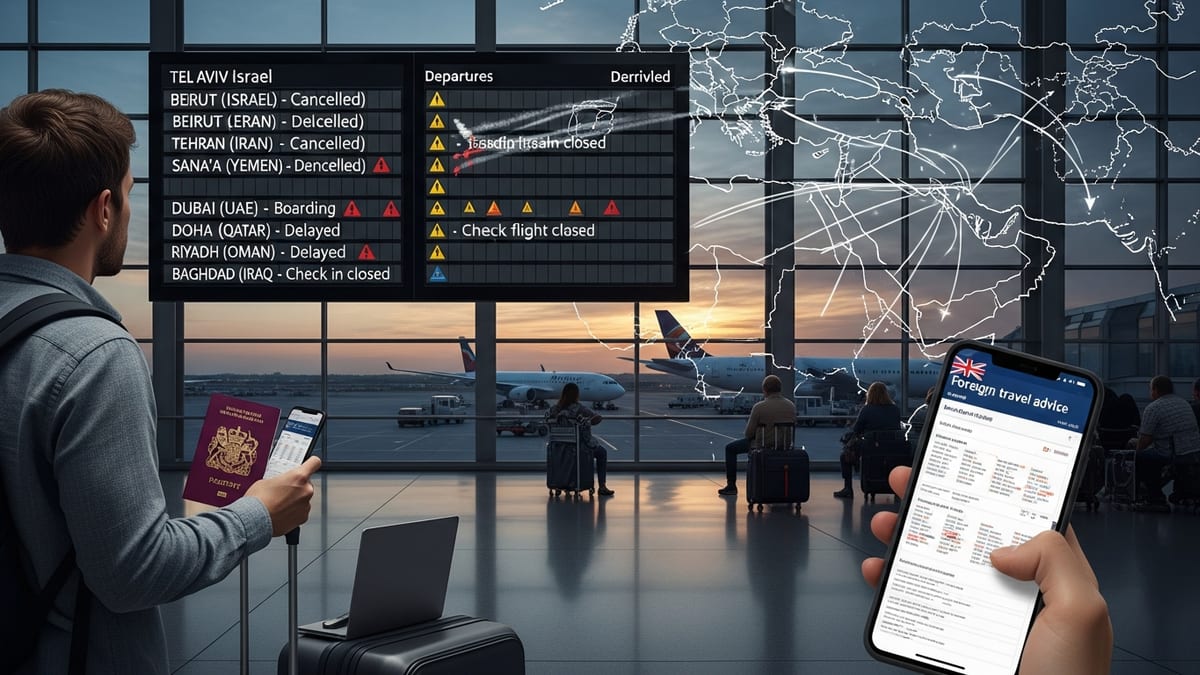
Updated Foreign Office alerts reshape summer plans
Foreign Office travel advice has been updated in recent weeks for a number of popular destinations, with new or reinforced warnings that could directly affect British holiday plans for summer 2026. While most major resorts remain open to visitors, the overall message is that conditions are more volatile than in previous years and that guidance may change at short notice.
Recent changes include renewed warnings around parts of Turkey, Egypt and Spain, where government advisories highlight terrorism risks, regional conflict spillover and episodes of unrest. Publicly available information shows that the advice for Turkey now includes explicit guidance against all travel within 10 kilometres of the Syrian border, underscoring the potential for conflict-related incidents in that area even as coastal resorts continue to welcome visitors.
Reports also indicate a broader reminder that the global threat of terrorism remains elevated, with government travel pages stressing that attacks in or near tourist areas cannot be ruled out. Travellers are being encouraged to monitor official advice both when booking and immediately before travel, as changes to a country’s risk rating can affect flights, package holiday terms and access to consular support.
Travel industry coverage notes that these shifting advisories are already influencing booking patterns, with some British holidaymakers opting for perceived lower-risk destinations or choosing to travel outside the hottest and busiest summer weeks.
Security hotspots and “do not travel” warnings
The strongest alerts this summer continue to focus on specific regions classified as “do not travel” or suitable only for essential journeys. Recent Foreign Office updates list expanded no-go areas in parts of the Middle East and Eastern Europe, and reiterate earlier warnings covering conflict zones and border regions.
In Turkey, the advice against travel near the Syrian frontier has been sharpened, with detailed maps setting out areas to avoid. Safety sections on the government’s public travel pages point to a history of incidents and a continued risk of terrorism, alongside occasional cross-border fire and military operations. British nationals who choose to enter areas under such warnings may find that standard travel insurance is invalid, leaving them exposed to high medical and evacuation costs.
Insurance industry guidance referenced in recent coverage stresses that most mainstream policies exclude claims arising from trips taken against official advice. This means that a holidaymaker injured in a region marked “do not travel” or “all but essential travel” could be left without cover, even if they hold a valid policy. Travellers are therefore being urged to check both the destination’s current Foreign Office status and the small print of their insurance before departure.
Security experts quoted in public reports add that risk levels can vary sharply within a single country. Many coastal resorts, city centres and established tourist regions remain subject to standard safety advice only, while particular provinces, border zones or remote areas carry the strictest warnings.
Extreme heat, wildfires and climate-linked disruption
Alongside security concerns, British holidaymakers are facing a summer defined by extreme weather. The Met Office recently issued an amber extreme heat warning for much of southern England and parts of Wales, signalling temperatures well above seasonal norms and raising concerns about health impacts and infrastructure strain. Similar alerts have been issued across southern Europe, where daytime highs are again pushing towards or beyond 40C.
Weather agencies and public health bodies are warning that such heat can be dangerous for vulnerable people and disruptive for travel, with knock-on effects including rail speed restrictions, power demand surges and increased wildfire risk. Recent coverage from across the Mediterranean describes local authorities placing cities under extreme heat alerts, advising residents and tourists to limit outdoor activity in the hottest hours and to watch for signs of heat exhaustion.
For British tourists, the practical impact can range from uncomfortable conditions by the pool to cancelled excursions, closed hiking trails or sudden evacuations in the event of nearby fires. Travel insurers are also cautioning that standard policies may offer limited cover for heat-related disruption unless it results in specific, documented cancellations or delays.
Industry commentators suggest that these recurring heatwaves are beginning to shift travel patterns, with more people considering “coolcation” alternatives in northern Europe or choosing shoulder seasons instead of peak July and August dates. However, for 2026 many families remain committed to long-booked Mediterranean trips, making awareness and preparation all the more important.
Documentation, border checks and new digital rules
Beyond safety and weather, documentation requirements are another major focus of this summer’s travel warnings. Since Brexit, British passport holders visiting the European Union have had to navigate new rules on passport validity, entry stamps and time limits in the Schengen Area, and these continue to cause confusion for some travellers.
Meanwhile, publicly available government information highlights that the UK itself has tightened its own entry systems, enforcing a digital permission-to-travel regime for many non-visa nationals. While British and Irish citizens are exempt from the new Electronic Travel Authorisation when returning home, the rollout underlines a wider global trend towards digital pre-screening, which British tourists will increasingly encounter when visiting countries such as the United States, Canada and, in the coming years, parts of Europe.
EU border posts have also stepped up checks on arrivals from the UK, especially at busy times such as school holidays. Airlines and ferry operators report that additional document verification, including proof of return travel and accommodation, can lengthen queues at ports and airports when demand spikes. Travellers who arrive with damaged passports, near-expiry documents or incomplete paperwork risk denied boarding or refused entry, even if they have paid in full for their holiday.
Travel experts quoted in consumer coverage are advising British holidaymakers to check both passport validity and any visa or pre-clearance requirements at least several weeks before departure, to reduce the risk of last-minute disruption.
What British holidaymakers are being urged to do now
Across these different strands of guidance, the central message for British travellers is to plan more carefully and to assume that conditions may change between booking and travel. Official advice stresses the importance of checking Foreign Office travel pages regularly, signing up for email alerts where available, and staying in close contact with airlines or tour operators if a destination becomes subject to new restrictions.
Consumer groups and insurers are also encouraging holidaymakers to purchase comprehensive cover as soon as a trip is booked, rather than waiting until just before departure. Policies that include strong medical, cancellation and disruption benefits may cost more but can offer better protection against events such as sudden airspace closures, wildfires near resorts or security incidents that lead to flight cancellations.
Travellers are further being reminded to keep digital and paper copies of key documents, including passports, insurance certificates, booking confirmations and emergency contact details, in case devices are lost or connectivity is poor abroad. Simple steps such as registering medical conditions with insurers and understanding local emergency numbers can also shorten response times in a crisis.
With schools about to break up and peak season departures under way, the new wave of travel warnings is not intended to deter holidays altogether. Instead, it reflects an environment in which global tensions, climate extremes and stricter border regimes are making thorough preparation an essential part of any British summer getaway.