


More news on this day
Flight operations at Lagos’ Murtala Muhammed Airport Terminal 1 have been significantly disrupted after a Nigerian Aviation Handling Company baggage vehicle crashed into the engine of an Air Peace Airbus A320, rendering the aircraft unserviceable and forcing Nigeria’s largest carrier to reshuffle its schedule.
Get the latest news straight to your inbox!
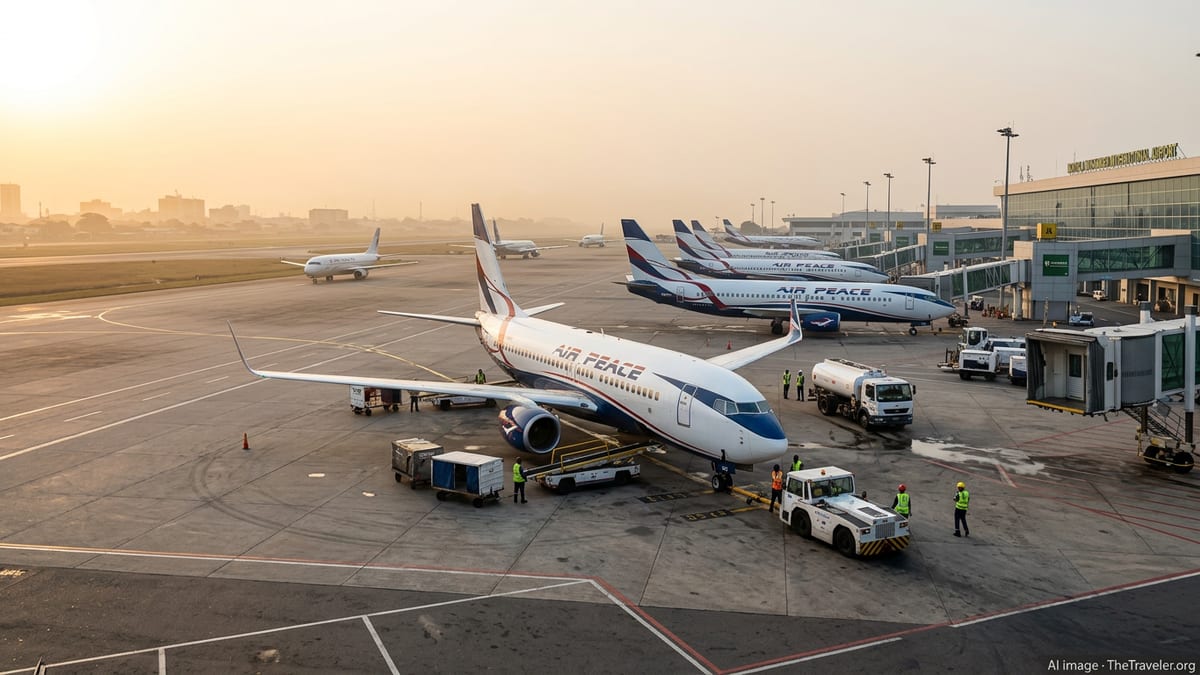
Late-night ramp collision leaves key aircraft grounded
According to multiple Nigerian media reports, the incident occurred late on Tuesday, July 14, 2026, shortly after Air Peace flight P47427 arrived from Kano and passengers had safely disembarked at Murtala Muhammed Airport Terminal 1 in Lagos. A baggage conveyor belt vehicle operated by Nigerian Aviation Handling Company Plc, commonly known as NAHCO, reportedly struck one of the A320’s engines while ground handling activities were underway.
Published coverage describes the impact as severe enough to cause visible structural damage to the engine area, immediately placing the aircraft out of service. Images circulating in local aviation and business outlets show the vehicle positioned close to the engine nacelle, with the aircraft immobilised on the ramp while technical teams assess the extent of the damage.
There were no passengers on board at the time of the collision, and reports indicate that no injuries were recorded among crew or ground staff. The event is being treated as a ground handling accident, focusing attention on ramp safety and operational procedures at one of West Africa’s busiest airports.
The damaged A320 is one of the higher-capacity aircraft in the Air Peace fleet, used on dense domestic and regional routes. Its sudden loss has immediate implications for schedule reliability, especially during peak travel periods when spare capacity is limited.
Network disruptions and passenger impact
Publicly available information from Nigerian news outlets indicates that Air Peace has warned travelers to expect delays and possible cancellations across its network as a result of the incident. With one Airbus A320 grounded and awaiting repairs, the airline is reportedly reassigning smaller aircraft to cover affected routes, creating a ripple effect through its domestic and regional schedule.
Reports suggest that flights originating from or bound for Lagos are bearing the brunt of the disruption, with some services delayed while aircraft and crews are repositioned. Passengers have been advised through media statements to monitor their flight status closely and to anticipate longer wait times at airports in the coming days.
Industry observers note that the timing of the accident adds to operational pressure. Nigerian carriers are managing strong demand on both business and leisure routes, and sudden fleet reductions can quickly translate into crowded terminals, longer queues and reduced flexibility for reaccommodating disrupted travelers.
Travel agents and corporate travel planners in Nigeria are also expected to feel the impact, as they move to rebook clients or adjust itineraries around the reduced capacity. For many passengers, particularly those connecting to international services via Lagos, any additional delay can complicate onward travel plans.
Spotlight on NAHCO’s ground handling standards
The collision has renewed scrutiny of safety practices within NAHCO, one of Nigeria’s leading ground handling providers. Publicly available background information on the company highlights its central role in baggage, ramp and passenger services for multiple airlines at major Nigerian airports, including Lagos.
Local business and aviation coverage points out that this is not the first time NAHCO equipment has been linked to damage involving Air Peace aircraft. Earlier reports referenced previous incidents in which ground handling vehicles or equipment made contact with the airline’s planes, raising questions over training, supervision and equipment maintenance on the ramp.
Aviation analysts quoted in open sources often emphasise that ramp operations are among the most risk-sensitive areas of airport activity. Tight turnaround times, congested parking stands and the simultaneous movement of aircraft, vehicles and personnel create a high potential for human error if procedures are not followed rigorously.
Following this latest event in Lagos, commentators in the Nigerian press are calling for a thorough review of ground operations, including driver training, speed limitations, positioning procedures and communication protocols between handlers and flight crews. The incident is likely to factor into broader discussions about regulatory oversight of ground handling companies in the country.
Safety record, investigations and regulatory context
Reports indicate that Air Peace has notified relevant aviation authorities and is cooperating with an official inquiry into the circumstances of the collision, in line with standard industry practice for ground incidents involving significant aircraft damage. Technical assessments will determine the full extent of the A320’s damage and the scope and cost of repairs.
Globally, occurrences involving vehicles striking aircraft during ground handling are not uncommon, although they rarely result in injuries when aircraft are parked and passengers have disembarked. Such incidents can, however, be extremely costly, as damage to jet engines and associated systems frequently requires extensive repairs and lengthy downtime.
In the Nigerian context, the event comes at a time of increased public interest in aviation safety and reliability, with passengers paying closer attention to how airlines and service providers manage risks on the ground and in the air. Published commentary suggests that regulators may face pressure to tighten enforcement of ramp safety protocols and to ensure that contracted ground service providers adhere to international best practices.
While investigations continue, the Lagos collision underlines the intricate interdependence between airlines and third-party handlers. For Air Peace, the focus in the short term remains on restoring schedule stability, reassuring customers and returning the disabled Airbus A320 to service as soon as it is deemed airworthy.
What travelers using Lagos and Air Peace should know
For travelers planning to fly with Air Peace in the coming days, especially from or through Lagos, publicly available updates advise allowing extra time at the airport and staying alert to possible last-minute schedule changes. Some routes may experience equipment swaps to smaller aircraft, potentially affecting baggage capacity and seat availability.
Travel planners suggest that passengers keep their contact details current with the airline or their booking platform so that schedule changes can be communicated quickly. Those with tight international connections are being encouraged, where possible, to build in additional buffer time or to explore alternative routings if schedules remain constrained.
Airport users at Lagos may also notice increased ramp activity as the airline and handling agents work to reposition aircraft and manage disrupted flights. While most of this work takes place out of direct passenger view, its knock-on effects can appear in the form of rescheduled departure times and busier boarding gates.
As the investigation into the NAHCO vehicle collision progresses, travelers and industry stakeholders alike will be watching closely for any recommended changes to ground handling procedures at Murtala Muhammed Airport. For now, the incident serves as a reminder that aviation safety depends not only on aircraft and pilots, but also on the complex web of support services that operate around every flight.