


More news on this day
Air travel across Europe faced another bruising day as data from tracking services showed at least 1,263 flights delayed and 63 cancelled across the continent, disrupting operations for British Airways, Air France, KLM, SAS and other major carriers at key hubs including London, Paris, Warsaw and several Scandinavian and Dutch airports.
Get the latest news straight to your inbox!
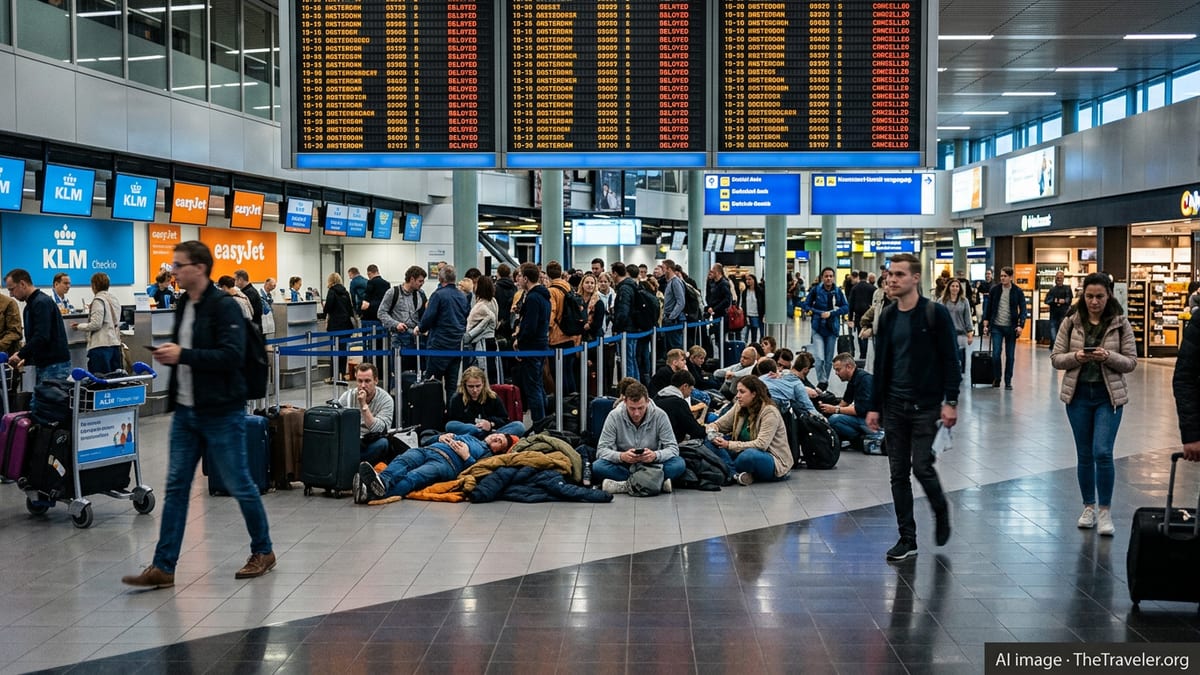
Wave of Delays Hits Major European Hubs
Publicly available flight-tracking dashboards for Wednesday indicated a sharp build-up of disruption across European airspace, with London, Paris, Amsterdam, Copenhagen and Oslo among the most affected hubs. The combined total of 1,263 delayed and 63 cancelled departures and arrivals reflects mounting operational pressure at the height of the summer travel season, when schedules are already running close to capacity.
Reports show that London’s airports, including Heathrow and Gatwick, experienced particularly heavy delay levels as tight turnaround times collided with congestion in nearby airspace. Paris Charles de Gaulle and Orly also recorded significant knock-on disruption, mirroring broader trends in the latest European air traffic flow management statistics, which point to rising average delay minutes per flight across the network.
Further east, services in and out of Warsaw were affected as late-running inbound aircraft and congestion within the European network cascaded through airline timetables. Scandinavian and Dutch airports such as Copenhagen, Oslo and Amsterdam Schiphol also reported higher-than-normal delay rates as carriers adjusted rotations and crew duty times around the evolving situation.
Flag Carriers Forced to Trim and Reroute Schedules
The disruption has directly impacted some of Europe’s best known legacy airlines. Public tracking information indicates that British Airways services at London Heathrow and London Gatwick were among those most affected, with a mix of late departures, extended holding patterns on arrival and a smaller number of outright cancellations.
In France, Air France flights to and from Paris Charles de Gaulle faced growing punctuality challenges as the airline attempted to keep long-haul operations intact while absorbing delays within its short and medium haul network. Delayed aircraft returning from other European cities compounded the situation, with schedule recovery made more complicated by busy peak-time departure banks.
KLM operations at Amsterdam Schiphol were also heavily exposed, given the airline’s role as a major European connector. Even modest delays on feeder routes from the United Kingdom, France, Scandinavia and Central Europe risked misaligning wave departures for onward long-haul services, prompting tactical retiming and, in a few cases, cancellations to restore balance.
SAS and other Scandinavian carriers, operating from Oslo, Copenhagen and Stockholm, reported disrupted rotations as crews and aircraft were caught in system-wide delays. Publicly available information from airports in the region showed increasing schedule gaps as airlines attempted to rebuild buffers into the day’s flying program.
Multiple Causes: Airspace Constraints, Weather and Knock-on Effects
While there is no single trigger behind Wednesday’s spike in disruption, recent European aviation reports highlight a combination of structural and short-term factors that have made the network more fragile. Eurocontrol’s latest operational overviews point to persistent airspace constraints, including capacity limits in busy control sectors and ongoing staffing and route-availability challenges, which can quickly amplify even minor timetable disturbances.
Seasonal weather has also played a role. Localized storms and reduced visibility around some hubs lead to temporary flow restrictions and slower runway movements, which then ripple through already dense schedules. Earlier in the season, heat-related infrastructure issues and precautionary measures around extreme temperatures in parts of Western Europe had already underlined how sensitive rail and air networks can be to climatic extremes.
Operational requirements affecting specific aircraft types have further complicated planning for some carriers. Recent precautionary technical directives in Europe, aimed at portions of the Airbus A320 family fleet, illustrate how airlines can be required to reshuffle aircraft and maintenance slots at short notice, reducing flexibility when irregular operations occur.
As flights are delayed in the morning peak, airlines frequently face crew duty-time restrictions and aircraft positioning challenges later in the day. This can force late cancellations even after underlying weather or airspace issues have eased, contributing to what passengers experience as an all-day disruption rather than an isolated incident.
Passenger Impact Across the UK, France, Netherlands, Nordics and Beyond
The immediate effect for travelers has been longer queues, extended waiting times on board and at gates, and missed connections. Passengers flying with British Airways from London, Air France from Paris, KLM from Amsterdam and SAS from Copenhagen, Oslo and Stockholm have all reported extensive schedule changes and rolling delays as carriers reworked their operations.
Travelers on intra-European routes, including services linking Paris and London with Warsaw and other Central and Eastern European destinations, were particularly prone to missed onward flights where minimum connection times were already tight. Even where flights eventually departed, reduced turnaround margins meant that minor technical checks, catering delays or late-arriving crews could trigger further slippage.
Industry statistics for the summer period show that average delay minutes per flight across Europe have been trending above pre-pandemic norms, underscoring how quickly airport and airspace capacity can be stretched when demand peaks. With major hubs like London Heathrow and Paris Charles de Gaulle handling well over a thousand flights a day, small inefficiencies and minor disruptions can rapidly escalate into hundreds of delayed movements.
Travel forums and consumer-facing platforms reflect growing frustration among passengers who have seen trips interrupted on multiple occasions this year. Many are now building in additional buffer days around key events or long-haul departures from European hubs, wary of the risk posed by cascading delays across the network.
What Travelers Can Do Amid Ongoing Summer Volatility
Consumer guidance from aviation regulators and travel agencies across Europe consistently urges passengers to monitor their flight status closely on the day of travel and to allow extra time at the airport. Publicly available advice emphasizes the importance of using official airline apps, text alerts and airport departure boards to track last-minute changes, rather than relying solely on booking confirmations issued days or weeks earlier.
Passengers are also being reminded to familiarize themselves with their rights in the event of lengthy delays or cancellations on UK and EU carriers. Regulations in both jurisdictions provide for care, assistance and, in some circumstances, compensation, depending on the cause and duration of the disruption and the length of the journey.
Travel experts recommend that, where possible, passengers book longer connection times through major hubs like London, Paris and Amsterdam during the peak summer period. Direct flights, even if slightly more expensive, may reduce exposure to missed connections compared with itineraries involving multiple short-haul legs across different carriers.
With school holidays ramping up and forecasts indicating sustained high demand across European air travel, industry observers warn that further days of elevated disruption are likely over the coming weeks. For now, the tally of more than 1,300 flights delayed or cancelled in a single day serves as a reminder of how finely balanced Europe’s aviation network remains at the height of the season.