


More news on this day
The Netherlands is moving into a commanding position in global cycle tourism as analysts forecast the worldwide market surging toward a projected 321.43 billion dollars by 2033, powered by demand for low-impact travel, e-bikes and dense cycling networks.
Get the latest news straight to your inbox!
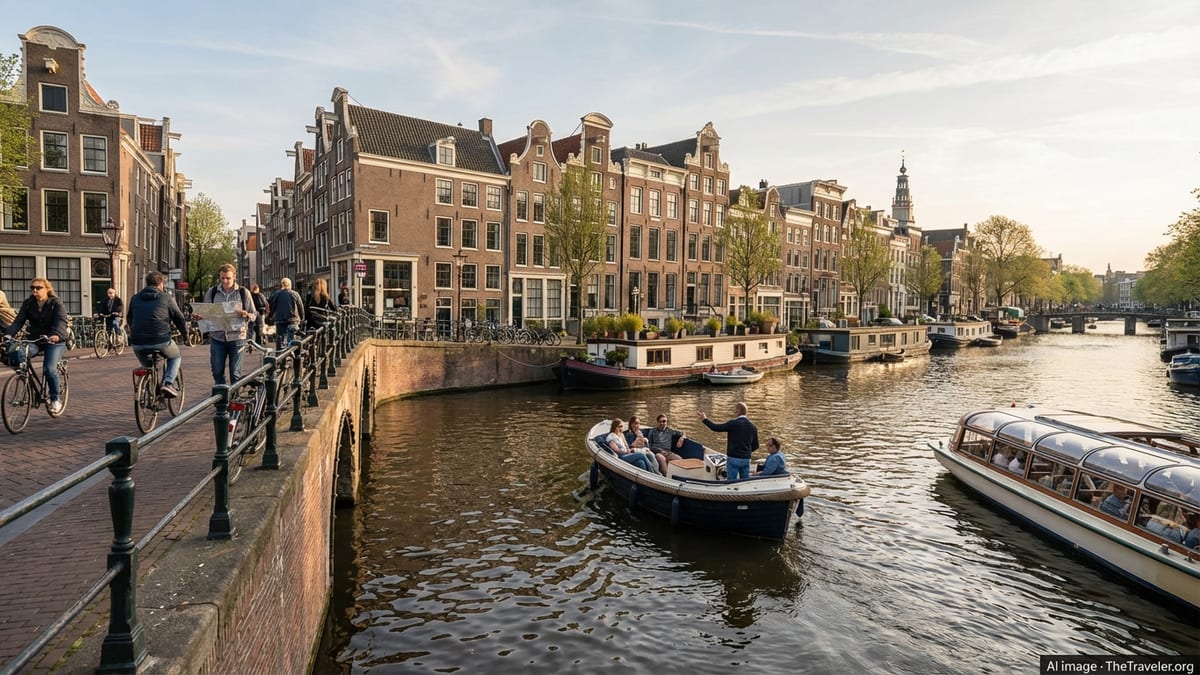
Global Cycle Tourism Accelerates Into a High-Growth Market
Recent market outlooks describe cycle tourism as one of the most dynamic segments of alternative and adventure travel, with valuations that have already passed the 130 billion dollar mark in the mid-2020s and are now tracking a path toward a potential 321.43 billion dollars by 2033. While exact forecasts vary by research provider, most point to sustained annual growth in the high single to low double digits, outpacing many traditional tourism categories.
Analysts link the momentum to converging trends: travelers are actively seeking lower-carbon trips, governments are investing in active-mobility corridors, and tour operators are packaging cycling with food, culture and wellness experiences. Industry reports highlight that cycle tourism is shifting from a niche pursued mainly by enthusiasts to a mainstream option for families, older travelers and first-time visitors who increasingly expect safe, signposted routes and luggage logistics.
The sector’s expansion is also supported by the broader recovery of international tourism, which has seen global arrival volumes approach or surpass pre-pandemic levels. Within that rebound, destinations with established cycling infrastructure and recognizable cycling brands, notably in Europe, are capturing an outsized share of higher-spending visitors who combine overnight stays with multi-day riding itineraries.
Research coverage notes that Europe currently holds the largest regional share of global cycle tourism revenue, reflecting decades of investment in long-distance routes, cross-border trail networks and rail-to-bike connectivity. Within that regional picture, the Netherlands is frequently cited as a high-performing, strategically important market whose policies, infrastructure and visitor products are influencing cycle tourism development elsewhere.
Netherlands Market Set To More Than Double By 2033
New Netherlands-focused cycle tourism analysis indicates the country’s dedicated market was valued at around 8 billion dollars in 2024 and is projected to rise to roughly 19 billion dollars by 2033, implying compound annual growth above 10 percent across the period. That trajectory places the Netherlands among the faster-growing mature cycling destinations, even as its domestic cycling culture is already deeply established.
National and regional tourism strategies increasingly frame cycling as both a leisure product and an economic driver for smaller cities and rural areas. Investment plans are channeling funds into recreational routes, junction networks and digital navigation tools aimed at lengthening stays and spreading visitor spend more evenly throughout the year. Publicly available Dutch policy documents emphasize that cycling tourism supports hospitality, retail, bike services and cultural attractions along established corridors.
Market researchers point to the Netherlands’ dense, segregated bicycle network as a competitive advantage that lowers the barrier to entry for visitors who may not be confident city riders. Extensive wayfinding systems, car-free paths and traffic-calmed streets allow tour operators to design itineraries for a wide range of skill levels, from coastal family rides to longer multi-day circuits between heritage towns.
According to recent economic assessments of the Dutch bicycle sector, international demand for the “Dutch cycling model” is becoming an export opportunity in its own right. Consulting, design and technology services related to Dutch-style cycling infrastructure, as well as Dutch brands in bicycles and equipment, benefit from the country’s visibility as a cycle tourism powerhouse, creating feedback loops between domestic tourism performance and global business growth.
E-Bikes, Greenways And Wellness Travel Power New Demand
Across global markets, the rapid rise of e-bikes is repeatedly highlighted as a structural driver of cycle tourism growth toward 2033. Assisted pedaling is enabling longer daily distances, more ambitious itineraries and greater participation among older or less fit travelers, a demographic trend particularly visible in the Netherlands, where e-bike ownership rates are among the highest in Europe.
Analyst reports note that e-bike adoption changes how visitors plan trips: riders can comfortably link multiple towns in a single day, tackle routes with more elevation and carry more luggage, which in turn favors overnight stays and higher per-trip spending on accommodation, dining and cultural visits. In the Dutch context, the integration of charging points, secure parking and e-bike rentals at rail hubs and hotels is seen as a differentiator that supports this shift.
Wellness and climate-aware travel themes are also feeding into the forecast boom. Industry briefings describe cycling holidays as aligning with travelers’ interest in moderate physical activity, time outdoors and perceived mental-health benefits. At the same time, cycle tourism is marketed as a lower-emission alternative to car-based touring, a message that resonates strongly in northern European origin markets where climate considerations are influencing trip choices.
Greenway development is another factor underpinning optimistic growth projections. Recent research on cycle tourism infrastructure highlights ongoing investment in long-distance routes that connect urban centers with natural landscapes and cultural sites. In the Netherlands, examples include new and upgraded “cycling highways” that link metropolitan areas with surrounding regions, improving both daily mobility and the appeal of multi-day touring for domestic and international visitors.
Infrastructure, Safety And Policy Keep The Netherlands Ahead
Although many destinations are investing in cycling, analysts consistently identify the Netherlands as an international reference point for network completeness, safety standards and user experience. Decades of policy that prioritize cycling in urban design have produced a system of paths, junctions and bridges that supports both everyday mobility and tourism, from iconic structures such as suspended bicycle roundabouts to extensive rural recreational networks.
Publicly available transport and tourism documents from the Netherlands show that a notable share of transport budgets is allocated to cycling infrastructure, including upgrades targeted specifically at leisure routes. These investments are complemented by integrated planning that aligns cycling corridors with public transport, visitor attractions and accommodation clusters, reducing friction for tourists who arrive by train or plane and then continue by bike.
Market research on European cycle tourism emphasizes that safety perceptions are a decisive factor in destination choice. The Netherlands’ separated bike lanes, clear priority rules and traffic calming measures contribute to a sense of security that is particularly important for families and older travelers. As a result, tour operators commonly use Dutch routes as entry-level products for customers who are new to cycling holidays.
Policy frameworks that link cycling to wider goals, including emissions reduction, congestion management and public health, are seen as another reason the Netherlands is well positioned as global spending on cycle tourism climbs toward the 2033 projections. With infrastructure, regulatory support and strong consumer awareness already in place, the country is expected to remain a leading beneficiary of the sector’s forecast multi-hundred-billion-dollar expansion.
Opportunities And Challenges In A Fast-Growing Market
While global cycle tourism is widely forecast to reach or approach a 321.43 billion dollar valuation by 2033, industry analyses caution that realizing this potential will depend on how destinations manage capacity, seasonality and climate resilience. Popular cycling regions in Europe already report congestion on marquee routes at peak times, raising questions about route diversification and the protection of local communities.
In the Netherlands, tourism and mobility planners are increasingly focusing on spreading visitor flows beyond a handful of famous hotspots and into lesser-known provinces. Strategies highlighted in recent Dutch and European policy literature include promoting alternative itineraries, investing in wayfinding for secondary routes and encouraging off-peak travel through marketing and pricing.
Climate-related disruptions, such as heatwaves and heavy rainfall, are another emerging concern in market commentary. Research into cycle tourism participation finds that weather variability can significantly influence both day-trip and multi-day cycling activity. For low-lying destinations such as the Netherlands, planners are weighing resilience measures, including shaded routes, rest facilities and adaptive maintenance of paths in areas exposed to flooding.
Despite these challenges, analysts view the combination of demographic trends, technological change and policy support as favorable for continued expansion. As global travelers seek slower, more experiential ways to explore regions, the Netherlands is expected to play an outsized role in shaping what high-quality cycle tourism looks like in a market racing toward a projected 321.43 billion dollars by 2033.