


More news on this day
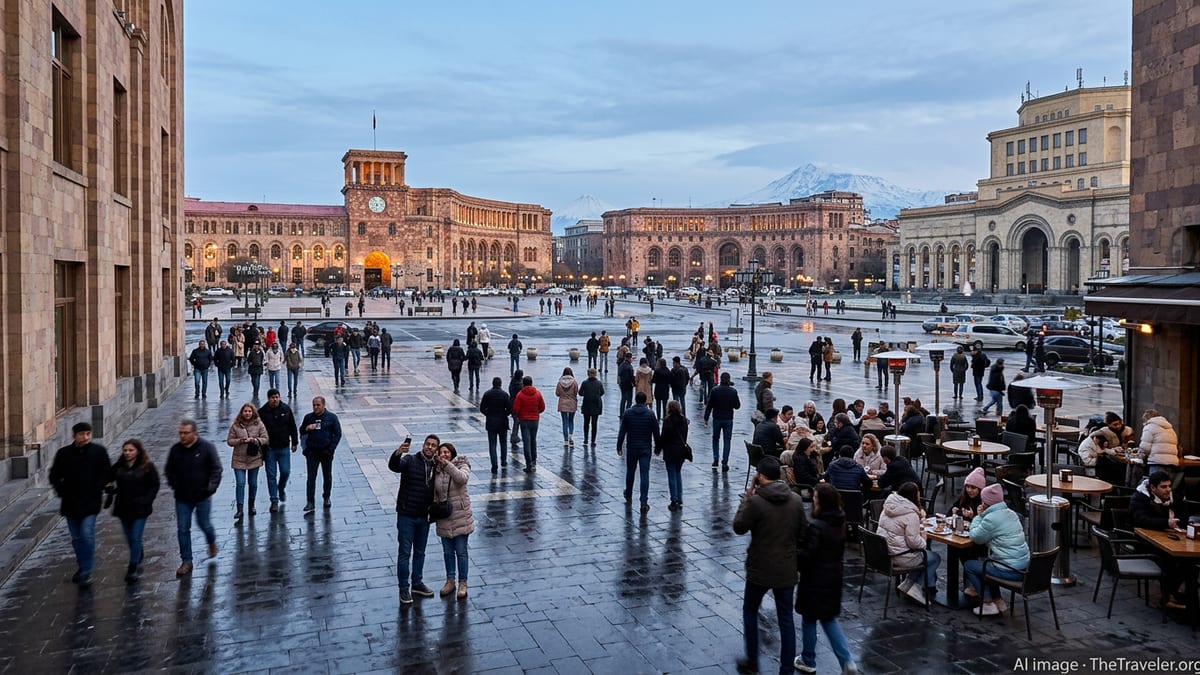
Long overshadowed by better-known mountain destinations, Armenia is rapidly transforming into one of the Caucasus region’s most dynamic alpine playgrounds, combining high-altitude landscapes, new infrastructure and targeted reforms that are drawing a growing wave of overseas explorers.
Get the latest news straight to your inbox!
Visitor Numbers Climb as Armenia Targets Adventure Travelers
Recent tourism data indicate that Armenia welcomed around 2.2 million international visitors in 2024, only slightly below its all-time high in 2023, underscoring a strong recovery and renewed global interest in the country’s rugged outdoors. Analysts note that arrivals have more than tripled compared with the mid-2000s, reflecting a long-term pivot from niche heritage destination to broader, experience-driven market.
Publicly available economic reports from European partners highlight tourism as one of Armenia’s fastest-growing sectors, with international travelers increasingly seeking hiking, trekking and winter sports rather than solely cultural or religious tours. Officials have framed this shift as a structural transition toward higher-value, longer-stay tourism that can support jobs in remote mountain communities.
Growth has been supported by aviation liberalization and the entrance of multiple low-cost carriers that now connect Yerevan with key hubs in Europe and the Middle East. Industry observers say better connectivity has put Armenia’s alpine regions, which once required complex multi-leg journeys, within easier reach of independent travelers and organized adventure groups.
Tourism planners also point to a gradual diversification of source markets. While regional visitors still account for a significant share of arrivals, data published by national and foreign institutions show increasing interest from Western Europe and other long-haul markets, where Armenia’s combination of affordability, altitude and relative novelty is gaining traction among hikers and skiers.
New Alpine Resorts and All-Season Mountain Experiences
Against this backdrop, Armenia has begun rolling out an array of new alpine products designed to keep visitors in the mountains year-round. One of the most visible investments is the Myler resort, which opened on the slopes east of Mount Aragats and has been described in trade reports as an all-season complex focused on skiing, snow activities and summer mountain recreation.
Industry briefings suggest that Myler is intended as a proof-of-concept for modern, purpose-built alpine infrastructure in a country where winter tourism has historically been underdeveloped. The resort adds to existing ski areas while signaling that Armenia aims to compete more directly with established regional destinations on quality of slopes, accommodation and services.
Beyond large resorts, smaller-scale projects are reshaping local mountain economies. Adventure-focused operators promote ski touring in regions such as Vayots Dzor and the broader Armenian Highlands, emphasizing long descents on uncrowded snow and a season that can extend well into spring at higher elevations. Commercial websites and promotional materials highlight the country’s steep couloirs, open bowls and off-piste terrain as an emerging alternative for experienced backcountry enthusiasts.
The push for all-season use is equally visible in warmer months. From paragliding over deep valleys to newly developed mountain bike parks, Armenia’s highlands are being positioned as a multi-activity arena where visitors can shift from alpine meadows to cultural sites and thermal springs within the same trip, strengthening the case for longer stays.
Trail Networks Turn Armenia into a Long-Distance Hiking Hub
Hiking infrastructure has become a central pillar of Armenia’s tourism strategy, with the country’s mountainous terrain now threaded by an expanding network of marked routes. National tourism portals describe dozens of alpine and subalpine trails that cross high passes, lakes and forests, and connect to medieval monasteries and remote stone villages.
One of the most high-profile efforts is the integration of Armenian sections of the Transcaucasian Trail, a long-distance route that aims to link the region’s major mountain ranges. In areas such as Dilijan National Park, publicly available project documentation shows that trail networks have been rehabilitated and extended, including new segments that connect scenic points like Lake Parz with existing paths and forest roads.
Local non-profit groups have played a prominent role in this process. Organizations such as Trails For Change, working alongside international partners and national park authorities, report building and restoring multiple kilometers of trail around Dilijan and other alpine zones, often training young Armenians in sustainable trail design and maintenance.
Outdoor clubs and specialist tour companies have moved quickly to capitalize on this infrastructure, marketing hut-to-hut style routes, guided treks to high peaks and multi-day backpacking trips that highlight Armenia’s position as one of the world’s most mountainous countries by land area. This combination of new paths and organized services is steadily positioning the nation as a serious contender in the global long-distance hiking market.
Policy Reforms and Training Undergird a Mountain Tourism Strategy
Underpinning these physical changes is a deliberate policy shift. In early 2026, Armenia approved a national Tourism Development Strategy for 2026 to 2030, which identifies adventure and winter tourism as one of three core pillars alongside cultural and gastronomic offerings. The strategy, according to official documentation, seeks to coordinate legislation, infrastructure projects and marketing to raise international competitiveness.
Adventure tourism is also being targeted through capacity-building initiatives aimed at improving safety and service standards in alpine environments. A training program launched in late 2024 under the “Living Landscapes for Market Development in Armenia” project, backed by development partners, has focused on mountain, sports and adventure tourism, with an emphasis on risk management, guiding skills and sustainability.
Parallel efforts in protected areas such as Dilijan and Lake Sevan, including upgrades to visitor facilities and planning for new eco-sensitive infrastructure, indicate an attempt to balance growth in visitor numbers with conservation goals. World Bank and other multilateral documents reference investments in basic amenities and zoning to ensure that high-traffic alpine corridors can absorb more hikers without degrading fragile ecosystems.
Armenia’s mountaineering and hiking federations, together with a growing number of private outdoor clubs, have become key conduits between policy and practice, offering structured excursions and promoting safety norms in a landscape where informal hiking was once more common. This institutionalization of adventure activity is seen by analysts as critical to sustaining the sector’s expansion.
Overseas Explorers Seek Out Armenia’s “Secret” Highlands
While Armenia is increasingly visible in specialist hiking and skiing circles, it still retains a degree of anonymity in mainstream travel markets. This relative obscurity, paradoxically, has become part of its appeal for international visitors looking to sidestep overcrowded alpine hotspots in Europe and North America.
Travel coverage describes Armenia’s highlands as a place where hikers can traverse ridgelines for hours without encountering large tour groups, and where backcountry skiers may share entire valleys with only a handful of locals. Combined with comparatively low prices for accommodation and guiding, this sense of space is encouraging more independent travelers and small groups to experiment with itineraries that would have been considered adventurous only a decade ago.
Growing digital word-of-mouth is amplifying the message. Social media posts, blog reports and community forums increasingly feature Armenian peaks, lakes and forests, with recent discussions on hiking platforms singling out local operators and newly maintained routes as standouts in the region. For many of these visitors, Armenia’s blend of alpine topography, deep historical layering and emerging adventure infrastructure is turning a once-overlooked corner of the Caucasus into a new frontier for global mountain travel.