


More news on this day
More than 380 U.S. flight cancellations and at least 7,800 delays swept across Chicago, Denver and Dallas in early June, snarling travel on some of the country’s busiest routes and putting a spotlight on the strain facing carriers such as SkyWest, Southwest and Envoy Air at the start of the summer season.
Get the latest news straight to your inbox!
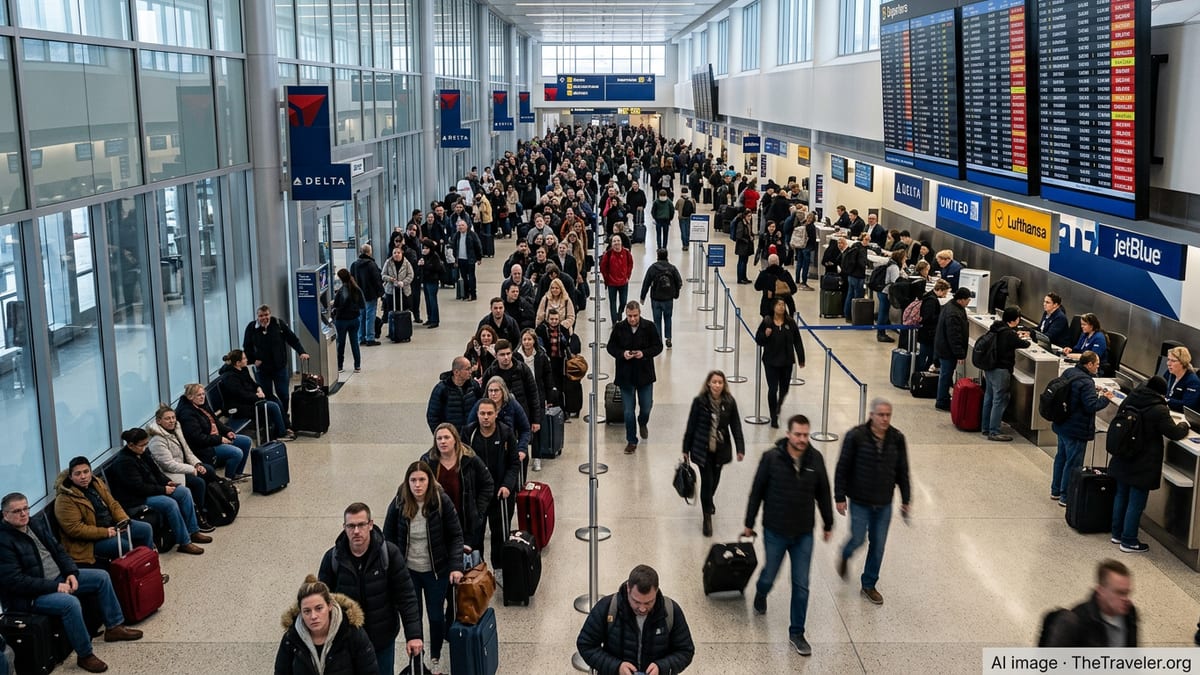
Wide Disruptions Across Major Midwestern and Mountain Hubs
Tracking data from multiple flight-monitoring platforms shows that the first full week of June brought an intense wave of operational disruptions at Chicago O’Hare and Midway, Denver International and Dallas–Fort Worth, with cancellations and late departures rippling across the national network. Chicago and Denver, already among the most delay-prone hubs because of heavy traffic and variable weather, saw schedules compressed as storms, congestion and aircraft re-positioning combined to push flights off timetable.
Publicly available flight histories indicate that hundreds of services into and out of these hubs either never left the gate or arrived significantly behind schedule, contributing to more than 7,800 delayed operations nationwide. While some airports along the East Coast also experienced issues, the clustering of problems at Chicago, Denver and Dallas underscored how disruptions at a few key hubs can quickly spread.
The pattern has been especially visible on heavily traveled links such as Chicago to Denver and Dallas to Chicago, where data compiled by independent trackers shows average delays stretching well beyond half an hour on some days. When combined with outright cancellations, those setbacks have created missed connections, overnight stays and rebookings that are likely to echo through the travel week.
For passengers, the result has been crowded terminals, rolling updates at departure boards and a renewed reminder that early summer can be one of the most volatile periods for U.S. air travel.
Regional Workhorses Under Pressure: SkyWest and Envoy Air
SkyWest and Envoy Air, two of the largest regional operators in the United States, sit near the center of the current turbulence. Both companies operate flights on behalf of major network airlines, feeding passengers from smaller cities into hubs such as Chicago O’Hare, Denver and Dallas–Fort Worth. Schedules published by the carriers and their mainline partners show dense webs of short-haul routes that leave little room for error when storms or ground delays hit.
Recent departure boards from regional airports illustrate how quickly those systems can seize up. In the Upper Midwest and Great Plains, for example, several early morning departures to Chicago, Denver and Dallas operated by SkyWest or Envoy for larger brands have posted late takeoffs, setting off a chain reaction for subsequent legs later in the day. Because many of these aircraft are committed to multiple flights in quick succession, a delay on the first sector can reverberate through the entire rotation.
Industry filings and annual reports highlight that regional airlines are typically compensated based on completed flights and block hours rather than ticket sales, which can create added financial and scheduling pressure during periods of widespread disruption. When weather or congestion forces cancellations, regional carriers must juggle crews, maintenance requirements and aircraft positioning to protect as much of the schedule as possible.
Staffing constraints also remain a factor. While pilot and technician hiring has improved compared with the immediate post-pandemic years, several regional operators have acknowledged in public documents that recruiting and training remain challenging, particularly at hubs with demanding schedules and variable weather patterns such as Chicago and Denver.
Southwest Faces Hub Shifts and Operational Strain
Southwest Airlines, one of the largest presences at both Chicago Midway and Denver, has been navigating its own early summer challenges just as it reshapes its Chicago footprint. The airline is in the process of consolidating its Chicago operations around Midway as service at O’Hare is phased out in June, a move that concentrates more of its schedule and passengers into a single, already busy airport.
Public coverage of the airline’s network adjustments has noted that O’Hare and other constrained hubs operate near capacity for large stretches of the day. When summer thunderstorms, air traffic control initiatives or ground stoppages occur, those tight margins can lead to cascading delays for carriers, particularly those with dense turn schedules that depend on quick aircraft turnaround times.
Flight-tracking histories for early June show Southwest aircraft into and out of Midway and Denver recording a mix of modest and more severe delays as localized storms passed through the central United States. On some days, late arrivals into Denver have forced later-than-planned evening departures onward to other cities, compounding congestion during already busy evening banks.
At the same time, traveler accounts circulating on public forums describe last-minute gate changes, aircraft swaps and rolling departure estimates on several Southwest routes touching Chicago and Dallas. While such anecdotes do not represent the experience of every flight, they echo the broader data showing that the carrier is contending with a challenging operating environment at the very moment many leisure travelers are returning to the skies.
Weather, Congestion and Fleet Constraints Combine
Analysts and airline observers point to a familiar mix of culprits behind this June disruption wave: fast-moving storm systems across the central United States, high traffic volumes at key hubs and the lingering impact of fleet and crew constraints that leave carriers with limited backup options. Thunderstorm lines moving across Texas and the Midwest have led to reroutes, ground holds and diversions in recent days, particularly around Dallas–Fort Worth, further squeezing already packed schedules.
In Chicago, the debate over how many daily operations O’Hare can reliably handle has resurfaced in recent months, with airport officials and federal regulators weighing capacity limits designed to prevent exactly the kind of widespread delays seen this week. Even without formal caps, heavy peak-hour traffic at both O’Hare and Midway means that small operational hiccups can quickly balloon into major logjams when weather turns unfavorable.
Fleet planning has also played a role. Public discussion among airline watchers has highlighted that some carriers, including Southwest, are not receiving as many new aircraft as originally expected this year, in part because of delayed deliveries from manufacturers. With fewer spare jets available, it becomes more difficult to swap in a replacement aircraft when a plane encounters mechanical issues or arrives late from a previous leg.
Regional fleets are similarly tight, with SkyWest and Envoy juggling high-utilization aircraft across multiple partner networks. When those regional jets are delayed or grounded, mainline carriers can suddenly find themselves short of feeder capacity into major hubs, further complicating efforts to recover the broader schedule.
What Travelers Through Chicago, Denver and Dallas Can Expect Next
With the peak of the summer travel season only beginning, passengers connecting through Chicago, Denver and Dallas should be prepared for more days of significant disruption, particularly when thunderstorms are in the forecast. Historical patterns and current traffic levels suggest that even incremental weather events can trigger notable slowdowns at these hubs, especially during morning and late-afternoon banks when traffic is densest.
Travel experts caution that while no traveler can completely avoid the risk of delays, certain strategies can reduce exposure. Early-morning departures tend to be less affected by same-day knock-on delays, and routing through less congested hubs, when possible, may offer more resilience when storms threaten the central United States. Allowing longer connection windows and monitoring flight status across multiple tracking platforms can also provide more flexibility if schedules start to unravel.
For airlines, the June crunch is another test of investments in technology, staffing and schedule design made since the pandemic. Carriers have pledged to improve resilience after several headline-grabbing meltdowns in recent years, yet the combination of crowded skies, volatile weather and operational constraints continues to expose weak points in the system.
As the month progresses, traveler experiences through Chicago, Denver and Dallas will offer a telling measure of how well SkyWest, Southwest, Envoy Air and their mainline partners can manage the complex web of regional and long-haul operations that underpin the U.S. air travel network at its busiest time of year.