


More news on this day
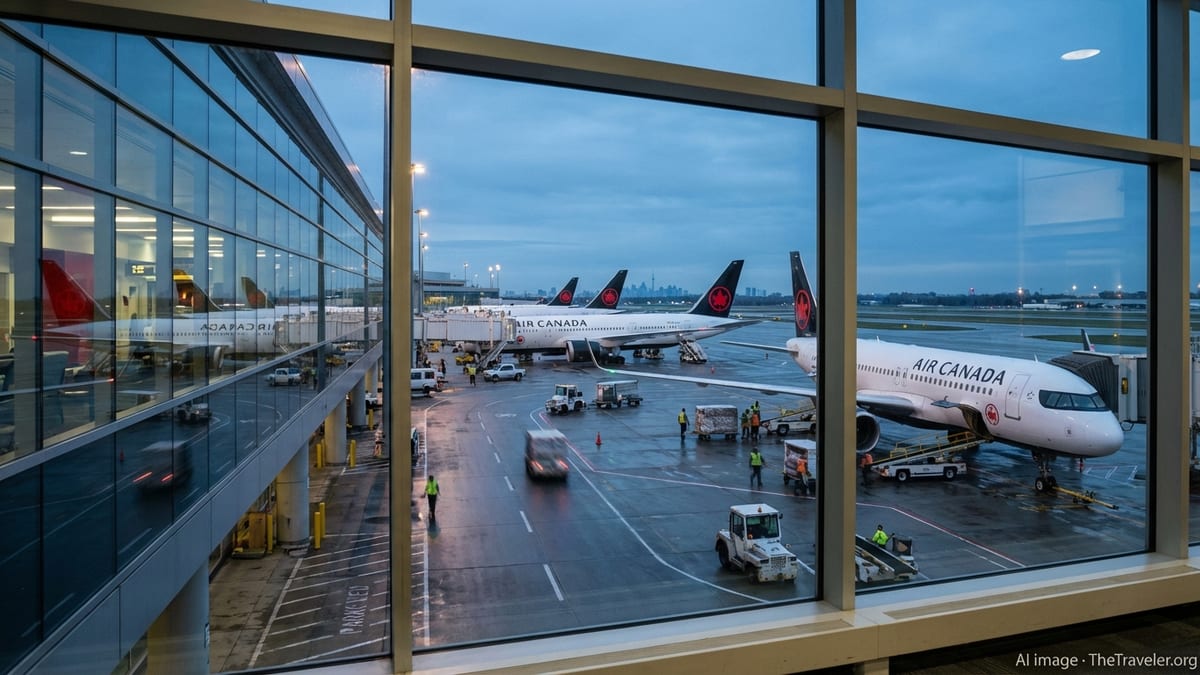
A sweeping strategic partnership between Air Canada and Latin America-focused Abra Group is set to redraw air travel across the Americas, promising tighter links between Canada, key Latin markets and long-haul networks in Europe and Asia.
Get the latest news straight to your inbox!
A Strategic Bet on the Americas
Air Canada and Abra Group, the holding company behind Avianca and Brazil’s GOL, have signed a memorandum of understanding that lays the groundwork for a long-term, expanded commercial partnership. Publicly available information indicates the MoU was unveiled on June 7, 2026 during the IATA Annual General Meeting in Rio de Janeiro, underscoring its regional significance.
The agreement is described in published coverage as a strategic framework for closer cooperation, rather than an immediate joint venture. The parties are aiming for revenue-sharing on select markets, a broader codeshare network, integrated scheduling and cargo alignment, along with deeper coordination between their loyalty programs.
Abra Group commands a large footprint in Latin America through Avianca’s hub in Bogotá and GOL’s network in Brazil and surrounding markets. Combined with Air Canada’s transcontinental, transatlantic and transpacific reach, analysts say the tie-up could create one of the most extensive north–south travel corridors in the Western Hemisphere.
Early commentary in industry reports frames the move as part of Air Canada’s effort to secure a stronger position in Latin America, traditionally a challenging region for North American carriers because of regulatory complexity, currency volatility and fragmented competition.
What Travelers Can Expect on Canada–Latin America Routes
For passengers, the most visible change is expected to be a denser web of one-stop itineraries between secondary cities in Canada and an expanded list of destinations across Latin America. Reports on the deal highlight plans to significantly increase codeshare coverage via Avianca’s and GOL’s hubs, in particular through Bogotá and São Paulo, once regulators approve the arrangement.
Existing cooperation between Air Canada and Avianca is already growing. Route-tracking services show an expanded codeshare structure since March 2026, with additional flights marketed under shared codes through Bogotá and Montreal. The new MoU points to a similar approach being extended to GOL’s Brazilian network, which could open easier Canadian access to major Brazilian cities and tourism hotspots that currently require multiple tickets or longer transits.
In practical terms, travelers may see more through-checked itineraries, coordinated schedules and a greater choice of departure times on key corridors such as Toronto–Bogotá, Montreal–Lima or connections into Brazil. Over time, if revenue-sharing is implemented, timetable planning and pricing could become more closely aligned across partners, which often translates into more seamless transfers and potentially broader fare options.
Industry observers also note that cargo integration is part of the plan, which could benefit trade lanes between Canada and Latin manufacturing and agricultural centers. While not a direct consumer feature, more robust cargo demand can support year-round passenger capacity on routes that might otherwise be seasonal.
Loyalty, Connectivity and the Competitive Shake-Up
Published details of the MoU indicate a strong focus on loyalty integration, signaling that Aeroplan members and frequent flyers with Avianca and GOL may eventually gain access to a wider set of earn-and-burn opportunities. Although specific timelines and benefits have not yet been disclosed, closer alignment generally leads to more reciprocal recognition of status and access to priority services.
The planned partnership arrives as Air Canada is already in the midst of a broader international expansion strategy. In recent months the carrier has announced an enlarged Latin America schedule for upcoming winter seasons, including more frequencies to South American capitals and new sun destinations. Independent travel outlets report increased service to cities such as Rio de Janeiro, Santiago, Lima and Bogotá, along with additional flights to Central American and Caribbean destinations.
This push coincides with a gradual rebalancing of capacity following earlier route suspensions tied to fuel prices and localized demand shocks. Earlier in 2026, the airline temporarily halted services to Cuba in response to fuel supply issues on the island, while also trimming some North America routes as jet fuel costs surged. The new Latin-focused strategy appears to shift emphasis toward markets where long-haul demand, connecting flows and tourism partnerships are supporting growth.
Competitive dynamics are also likely to sharpen. Other North American carriers, including members of competing alliances, have been building their own Latin American joint ventures. Analysts suggest that a reinforced Air Canada–Abra platform could intensify competition on prices and product offerings, particularly for travelers originating in Western Canada or secondary Canadian cities that rely heavily on connections.
New Routes, Fleet Moves and Network Synergies
The Abra Group deal does not exist in isolation. Over the past year, Air Canada has steadily laid out a series of route announcements and fleet plans that point toward a multi-year strategy to deepen connectivity across the Americas. Upcoming seasons include the introduction of new routes to Quito and enhanced service to Latin America from hubs such as Toronto, Montreal and Vancouver, according to route-focused travel publications.
At the same time, Air Canada is preparing to deploy new aircraft types that allow it to serve thinner long-range markets more efficiently. Industry analyses highlight the Airbus A321XLR as a key component of the airline’s winter 2026–27 program, including flights to leisure destinations like Tenerife. Similar narrowbody, long-range aircraft can be used to link Canadian cities with mid-size Latin American markets, supporting year-round operations that previously may not have been viable.
In Mexico, network announcements from airport operators and the airline indicate further expansion for winter 2026–27, with new or reinforced links from Canadian cities into northern industrial hubs and Pacific coastal resorts. A new Monterrey–Vancouver seasonal route scheduled between December 2026 and April 2027 has been presented as an example of how Air Canada is using targeted additions to strengthen its north–south corridor.
These developments suggest that when the strategic partnership with Abra matures, Air Canada will already have a broader set of Canadian departure points and long-haul spokes in place. In turn, Avianca and GOL can channel traffic into those flights, potentially boosting load factors and underpinning further growth.
What Travelers Should Watch Next
For now, the agreement between Air Canada and Abra Group remains an MoU, meaning that many details depend on regulatory approvals and the negotiation of binding contracts. Government competition authorities in Canada and several Latin American jurisdictions are expected to review any revenue-sharing or joint business elements that could affect market competition.
Travelers watching the Canada–Latin America market may want to track announcements about specific codeshare expansions, loyalty program changes and new routes filed in reservation systems. These are usually the first visible signs that a strategic framework is turning into day-to-day benefits.
Consumer advocates point out that while deeper cooperation can improve connectivity and reliability, it can also reduce the number of independent competitors on some routes. Observers therefore anticipate close scrutiny of how schedules and fares evolve once the partnership is fully implemented, especially on trunk routes between major Canadian hubs and key Latin capitals.
For leisure and business travelers alike, the emerging picture is of a more tightly integrated Americas network centered on a Canada–Latin America axis. As carriers across the region adapt to shifting demand, currency movements and fuel costs, this new deal positions Air Canada and Abra Group to be central players in the next phase of north–south air travel growth.