


More news on this day
Winter fog has become a familiar culprit behind long queues at departure boards, with quiet, windless mornings repeatedly triggering ground delays and diversions even at major international airports.
Get the latest news straight to your inbox!
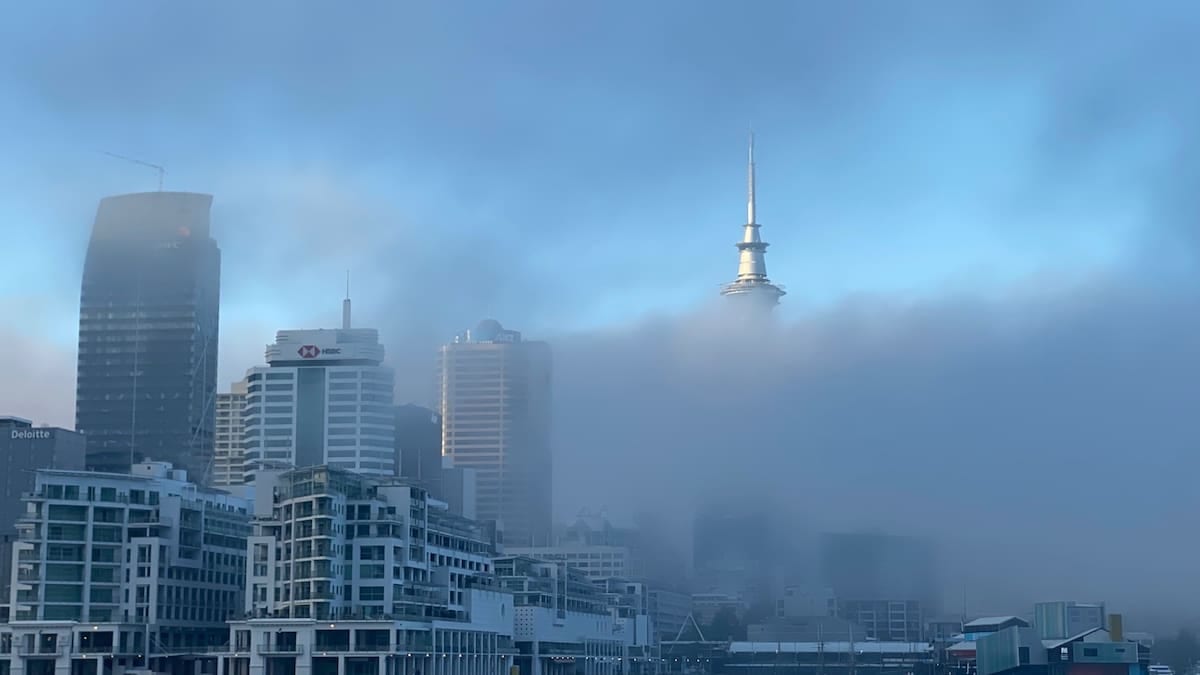
What Makes Fog Worse in Winter?
Fog is essentially a cloud at ground level, made up of tiny water droplets suspended in the air. It forms when the air near the surface cools to its dew point so that the moisture it contains begins to condense. In practical terms, that means visibility can drop from several kilometres to just a few hundred metres, or even less, in a short period of time.
Winter provides ideal conditions for the most disruptive kind of fog, commonly called radiation fog. Longer nights allow the ground to cool for many hours, and clear skies let that heat escape efficiently into the atmosphere. As the surface cools, the layer of air just above it also cools and, if it becomes saturated, a layer of dense fog develops close to the ground.
Cold air is also denser and more stable. In winter, that stable air can become trapped near the surface beneath a warmer layer higher up, a pattern known as a temperature inversion. Once that happens, there is little vertical mixing of the atmosphere to disperse the fog. The result is that winter fog often lingers well into the morning and can persist for days in valleys and basins, significantly lengthening the window of disruption for airports.
In many mid-latitude regions, winter follows wetter periods, so the ground and near-surface air tend to hold more moisture. That extra humidity means the temperature does not need to fall very far overnight before the air reaches saturation, making dense fog episodes more likely and more frequent than in summer.
Types of Fog That Trouble Aviation
Different fog types form through different processes, and several of them are far more common and more problematic in the colder months. Radiation fog, driven by overnight cooling of the ground under clear and calm conditions, is one of the most frequent. It often forms in low-lying areas, river valleys and inland basins, including locations that host busy regional airports.
Advection fog, another concern for aviation, develops when moist air moves over a cooler surface and is chilled to its dew point. In winter, this can happen when relatively mild, moist air flows over cold land or snow-covered ground. Coastal and island airports are particularly exposed, as marine air moving over colder nearshore waters can generate thick banks of fog that drift inland toward runways.
Freezing fog is a specialised winter hazard. It occurs when fog droplets remain liquid even though air temperatures are below freezing. On contact with aircraft surfaces, those supercooled droplets can form a layer of ice, adding a contamination risk on top of already poor visibility. Freezing fog can also glaze runways, taxiways and ground equipment, creating operational challenges beyond the airspace itself.
In some very cold regions, ice fog made up of tiny ice crystals instead of liquid droplets can affect visibility during prolonged cold spells. While less widespread than radiation or advection fog, it can still reduce visibility below aviation thresholds, particularly at smaller northern airports that may have more limited low-visibility handling capabilities.
How Low Visibility Disrupts Airport Operations
For aviation, fog becomes critical when it pushes visibility below defined operational thresholds. Aviation guidance typically treats fog as a condition where horizontal visibility is reduced to less than one kilometre, with dense fog often defined at under 100 metres. At those levels, pilots have difficulty seeing runway markings, lights and other aircraft, and ground controllers cannot reliably see aircraft and vehicles on taxiways and aprons.
Modern airliners can use sophisticated instruments and automatic landing systems to operate in very low visibility. However, those systems only function within strict limits. Aircraft need certified equipment, flight crews must be trained and current for low-visibility procedures, and the airport must have properly calibrated instrument landing systems, lighting and surface monitoring. Many regional airports, and some individual runways at larger hubs, do not support the lowest visibility categories, which means flights cannot land or depart when fog becomes too thick.
Even where advanced systems are available, safety rules require a margin of caution. Air traffic management procedures often mandate greater spacing between aircraft on approach and departure during low-visibility operations. Controllers must guard against runway incursions and misidentification of aircraft positions, so they reduce the number of movements per hour. That immediately cuts an airport’s capacity, turning what would ordinarily be a busy morning schedule into a bottleneck.
Fog also slows ground operations. Aircraft taxi at lower speeds, and ground vehicles move more cautiously around stands and service areas. De-icing and anti-icing treatments may be required in freezing fog, extending turnaround times. The combined effect is that each individual flight takes longer to move through the system, amplifying the impact of the visibility restrictions in the air.
Why Winter Fog Delays Ripple Across Networks
Winter fog often forms at the very times when airports plan their densest schedules, particularly in the early morning. Long winter nights allow fog to thicken before dawn, so the first wave of arrivals and departures frequently coincides with the lowest visibility of the day. When low-visibility procedures are triggered at that moment, the reduced runway capacity immediately clashes with a peak of scheduled movements.
Because many airports operate close to capacity even in good weather, any cut in the flow of aircraft quickly leads to queues on the ground and holding patterns in the air. Airlines and air traffic managers may impose ground delay programs, holding departing flights at their origin airports until destination conditions improve. While this limits airborne congestion, it also means passengers can experience long waits before pushback.
Winter schedules amplify these effects. Aircraft and crews are tightly rostered across multiple sectors in a single day. When a morning fog event forces a series of delays or cancellations at one hub, the same aircraft and crews are often unable to operate subsequent flights on time. That creates a cascade of knock-on delays that can persist into the afternoon or evening, long after the fog itself has lifted.
Seasonal passenger patterns can make recovery harder. Winter holidays and ski seasons concentrate demand on specific travel days, leaving airlines with limited spare capacity to rebook disrupted travellers. As a result, a single severe fog episode on a peak travel morning may lead to missed connections and overnight stays for passengers far beyond the region affected by the original weather.
Can Technology and Planning Reduce Winter Fog Disruption?
Advances in meteorology have improved short-term forecasts of fog, particularly around large airports where dense networks of sensors and high-resolution models are in use. Forecasters can often identify when atmospheric conditions are aligning for dense radiation fog several hours in advance, giving airlines and airport operators a window to adjust schedules, redistributing flights to different time slots or, where possible, to less affected airports.
On the infrastructure side, many major hubs have invested in higher-category instrument landing systems, enhanced runway and taxiway lighting, and surface radar to track aircraft and vehicles in poor visibility. These systems allow operations to continue in lower visibility than was possible in the past, although they do not remove the underlying physical limits on how many aircraft can move safely when humans can see very little outside the cockpit or control tower.
Operational planning is increasingly focused on resilience during winter. Airlines may build longer connection times into schedules at key fog-prone hubs, position reserve aircraft and crews where regular winter disruptions are expected, and pre-emptively trim frequencies on the busiest days. Airports can coordinate more closely with air traffic management and ground service providers to stage equipment and staff for early-morning low-visibility events.
Despite these measures, winter fog remains a challenging hazard because it combines predictable seasonal patterns with a high degree of local variability. Small changes in wind speed, cloud cover or surface moisture can make the difference between a clear morning and visibility reduced to just a few runway lights. For travellers, that means winter will likely continue to be the season when fog is most likely to turn a routine flight into an unexpected wait at the gate.