


More news on this day
Severe thunderstorms sweeping across major U.S. hubs have triggered the cancellation of more than 3,000 flights in recent days, leaving stranded travelers asking the same question at airport gates and on customer-service chats: when weather wipes out your flight, do you actually get your money back?
Get the latest news straight to your inbox!
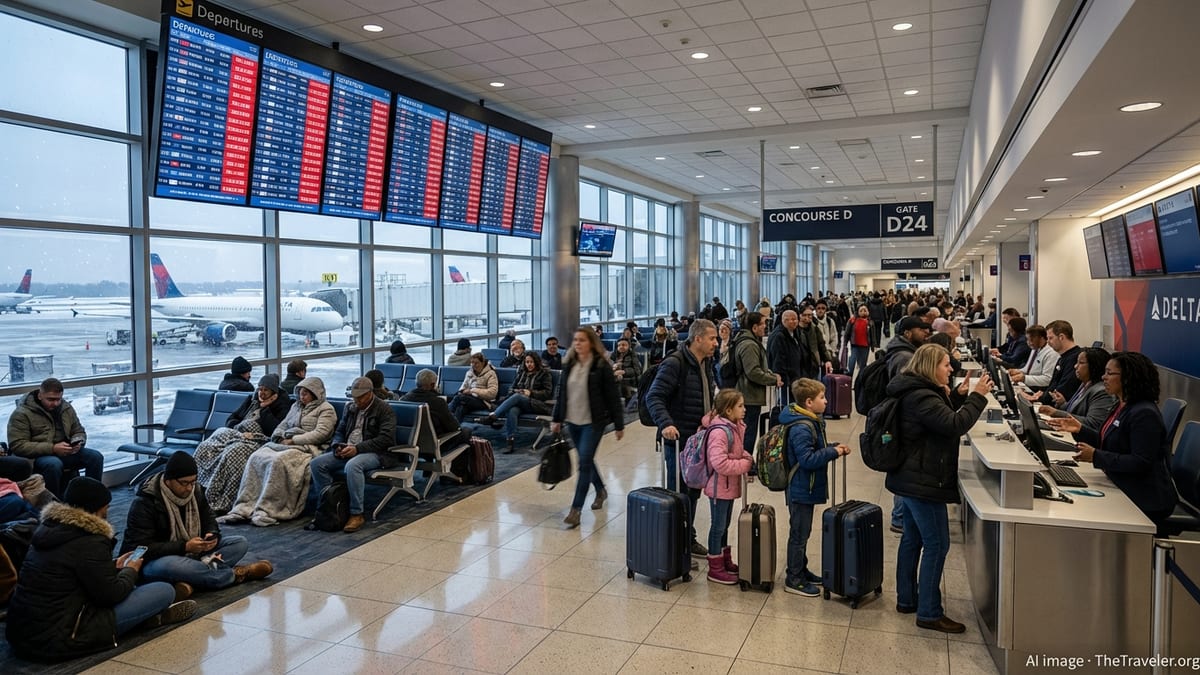
Storm Disruptions Hit Major U.S. Airports Again
Powerful storm systems moving through the Northeast and parts of the South this week have led to widespread air travel disruption, with data from flight-tracking services and passenger-rights groups indicating thousands of cancellations and delays across the network. Recent thunderstorms around Boston, New York and Atlanta produced ground stops and tight spacing between arrivals, quickly backing up already crowded summer schedules.
Reports from aviation analytics firms indicate that single days of bad weather have seen 500 or more flights canceled and several thousand delayed, particularly on July 21 and 22. At Boston Logan International Airport alone, published data show more than 300 flights canceled and over 400 delayed on Tuesday after a line of thunderstorms moved through the region. Similar patterns appeared earlier this month around Chicago O’Hare, New York area airports and Atlanta.
Airlines have responded with a series of weather waivers for affected hubs, allowing customers to move their trips without typical change fees as long as they travel within specific windows or keep the same origin and destination. Recent bulletins from major carriers cover July travel dates for storms in the Northeast, New York City, Atlanta and other impacted regions, reflecting how frequently rough weather has been forcing schedule changes at the height of the U.S. summer travel season.
For passengers, the immediate disruption is only one concern. As cancellations cascade through the system and alternative flights fill up, travelers are also trying to understand what they are entitled to receive in refunds, rebooking or compensation when the cause is severe weather rather than a mechanical problem.
What Federal Rules Say About Canceled Flights
Under current U.S. regulations, the key point is that the reason for a cancellation does not change a passenger’s basic right to get their money back if the airline cancels their flight and the customer decides not to travel. Guidance from the U.S. Department of Transportation states that when a flight is canceled or subject to a significant schedule change and the passenger declines the alternative offered, the airline must provide a prompt refund to the original form of payment.
This refund requirement applies even to nonrefundable tickets and covers the unused portion of the journey, including any mandatory fees for seat selection or bags that can no longer be used. Regulations and recent enforcement notices clarify that providing a travel credit or voucher is not enough if the traveler prefers a refund; the customer must be offered cash back rather than only a credit for future travel.
New refund rules and enforcement guidance, which the Transportation Department has been rolling out since late 2025 and reaffirming in 2026, aim to tighten compliance after years of complaints during major disruptions. Federal notices highlighted the obligation to return funds after cancellations, and recent regulatory documents extend the agency’s enforcement stance on airline refunds for another year, signaling continued scrutiny of how carriers handle weather-related schedule disruptions.
The rules do not require airlines to provide additional cash compensation for missed vacations or lost time when weather is to blame. However, they do define the baseline financial protection: if the airline cannot or will not operate the flight as sold, and a passenger chooses not to accept the replacement itinerary, that traveler is entitled to get their ticket cost back.
Refunds Versus Rebooking, Vouchers and Credits
In practice, stranded passengers most often encounter a menu of options offered by the airline’s website, app or agents at the airport. For same-day disruptions caused by storms, carriers typically highlight free rebooking on the next available flight. Weather waivers, which many major airlines issued this week for the Northeast and key hubs, allow customers to change to earlier or later departures without paying a change fee and sometimes without paying a fare difference, as long as they stay within a specified date range and cabin.
Travelers who still want to take the trip can generally accept these rebooking offers, but that choice can affect refund eligibility. If a passenger takes the airline’s alternative flight and completes the journey, they are usually not entitled to a cash refund for the original flight, even if the delay or overnight stay was inconvenient. By contrast, if the passenger decides that the revised itinerary no longer works and cancels entirely, current federal policy supports a refund to the original form of payment.
Airlines may also propose future travel credits or vouchers in place of cash, particularly during widespread disruptions when call centers are stretched. Consumer advocates note that these credits often come with expiration dates or restrictions. Under federal guidance, passengers may accept a credit if they prefer, but they are not required to do so when a cancellation or significant schedule change is involved and they are declining to travel. In those circumstances, they can request their money back instead.
Separate from refunds, a Transportation Department dashboard summarizing airline customer-service commitments shows that many major U.S. carriers voluntarily provide meal vouchers, hotel stays or ground transportation when passengers are stranded overnight due to issues within the airline’s control, such as crew or maintenance problems. Most airlines do not promise those extra benefits when weather is the cause, though some may still offer limited assistance on a case-by-case basis. The basic refund right, however, does not depend on the cause of the cancellation.
How Major Airlines Are Handling This Week’s Storms
Recent weather advisories from major U.S. carriers provide a snapshot of how storm-related disruptions are being managed in real time. Delta Air Lines has issued multiple bulletins this week for thunderstorms around Atlanta and the Northeast, allowing customers booked on affected dates in July to rebook once without paying a fare difference if they travel by certain deadlines and keep the same origin and destination. The carrier’s guidance also states that when Delta cancels a flight due to the storms and no acceptable alternative is available, travel agents may refund totally unused nonrefundable tickets.
Other large airlines have circulated similar summer storm policies, outlining how passengers can move travel earlier to avoid storms or shift to later dates when flights are expected to operate more reliably. An American Airlines information sheet on cancellations due to weather explains that travelers retain the right to a full refund if a flight is canceled and the proposed alternatives do not work, while emphasizing the airline’s preference to reaccommodate passengers on the next available service.
Airline and airport data this month illustrate how quickly thunderstorms can ripple through the network. Sudden restrictions on arrivals and departures at large coastal or hub airports can cause dozens or hundreds of flights to be grounded within hours. With aircraft and crews out of position, disruptions can extend across multiple days, which is why carriers often widen travel-waiver windows to cover several days on either side of the most severe weather.
Because these policies are set individually by each airline, the specific rules on fare differences, ticket validity and hotel or meal support vary. Passengers are being advised by consumer groups to review the detailed terms of each carrier’s weather waiver and to document any cancellations or significant delays, including screenshots or emails, in case refund requests need to be escalated.
Steps Travelers Can Take When Flights Are Canceled
When storms shut down flights, timing and documentation are critical for preserving rights and securing a satisfactory outcome. Consumer advocates recommend monitoring flight status closely through airline apps or text alerts, particularly in the 24 hours before departure when weather forecasts become clearer and carriers start to make more aggressive schedule adjustments.
If a flight is canceled, travelers who decide they no longer wish to take the trip can request a refund instead of rebooking or accepting a credit. Federal guidance indicates that travelers should receive a prompt refund back to the original form of payment, not just a travel voucher, when they decline a significantly changed itinerary. Keeping records of cancellation notices, rebooking offers and any additional expenses can help support later disputes with airlines or credit card issuers.
For those who still want to travel, searching for alternative routes or nearby airports can provide more options, though availability may be limited during peak disruptions. Passengers who accept an airline’s rebooking may still ask for partial relief, such as a refund of seat fees or bag charges if those services can no longer be provided as originally purchased. Travel insurance, where purchased before the storms were forecast, may also cover some out-of-pocket costs, depending on the policy’s terms.
With volatile summer weather expected to continue, travel organizations are encouraging passengers to build buffer time into itineraries, consider earlier departures on storm-prone days and familiarize themselves with both federal refund rules and each airline’s current customer-service commitments before heading to the airport.