


More news on this day
More than fifty years after Interrail first opened European railways to young backpackers, the once-niche pass is emerging as a global connector, uniting travelers from Europe and beyond under a single, increasingly digital rail system that promises flexible, borderless journeys across the continent.
Get the latest news straight to your inbox!
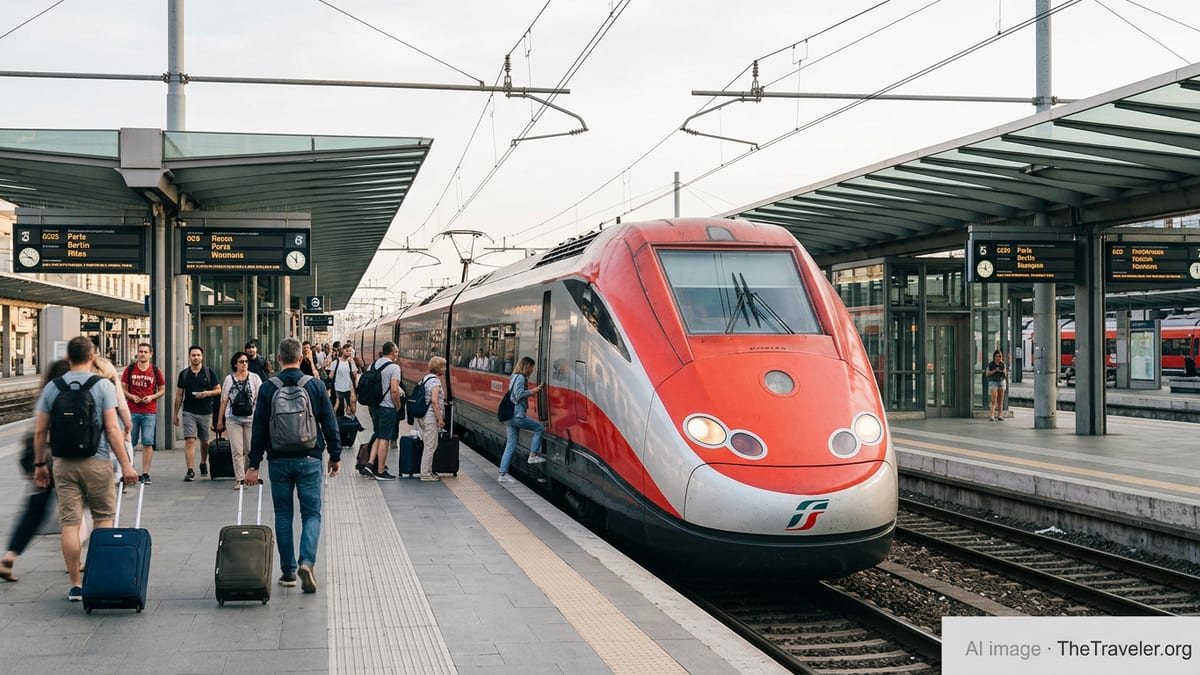
From Youth Experiment to Pan-European Travel Icon
The Interrail Pass began in 1972 as a special ticket for travelers under 21, offering a month of unlimited train travel across more than 20 European countries. Historical summaries of the scheme describe it as a pivotal tool in opening rail networks to a new generation of budget-conscious youth and encouraging cross-border mobility on an unprecedented scale.
Over time, the product evolved from a youth initiative into a mainstream mobility tool. Interrail’s own historical materials indicate that the original age limit was progressively lifted and the offer expanded, with major reforms in 2007 replacing a zonal system with the Interrail Global Pass and a family of One Country Passes, covering most of Europe under a unified brand and conditions of use.
Research into the early decades of Interrail describes these journeys as formative experiences that helped young Europeans navigate new social encounters and spaces. Academic work drawing on travelers’ memories highlights Interrail trips as key moments for building “communities of belonging,” suggesting that the pass functioned not only as a ticket but as an entry point into a shared European youth culture on the move.
Half a century on, Interrail’s 50th-anniversary materials frame the pass as both a nostalgic symbol and a still-relevant product, underlining continuity between the analog backpacking era and today’s app-based rail planning culture.
One Pass, Two Brands: A Global Network on Rails
What began as a European youth ticket has effectively become a worldwide rail gateway. Interrail is today marketed to European residents, while a parallel Eurail-branded pass is offered to non-European travelers; both are managed by Utrecht-based Eurail B.V., a company owned by more than 35 railway and ferry operators across the continent. Publicly available information describes the combined pass network as covering around 250,000 kilometers of railway, alongside discounts on select private lines and ferries.
The distinction between Interrail and Eurail is largely administrative. Guidance published in 2023 and 2024 explains that eligibility depends on place of residence, not nationality, but that both products grant comparable access to trains across participating countries. This effectively means that backpackers from Asia, the Americas, Africa or Oceania can slot into the same infrastructure and planning tools as their European counterparts, taking advantage of similar itineraries, night trains and cross-border routes.
Contemporary user guidance notes that most national rail operators in the network accept the passes, with some requiring seat reservations or charging modest supplements, particularly on high-speed and night services. Recent documentation on conditions of use also highlights pilot programs that adjust rules around using the pass in a traveler’s country of residence, reflecting how the product is being fine-tuned as demand increases and travel patterns diversify.
Together, these developments have given Interrail a reach that extends well beyond European borders, fostering a global rail community that shares common tools, timetables and travel cultures under a twin-brand system.
Digital Rail Planner Culture and the Mobile Pass
Interrail’s transition into the digital age has been central to what observers increasingly describe as an “Interrail effect” on contemporary travel habits. Since 2013, the Rail Planner app has served as a combined timetable, journey planner and pass management platform for both Interrail and Eurail users, integrating real-time route data with pass validation and inspection functions.
Interrail’s own product pages now promote the mobile Pass as the default format, emphasizing paper-free travel where customers can plan journeys, activate travel days and generate digital tickets for inspection directly on their smartphones. Conditions of use published for 2024 confirm that both paper and mobile formats are valid, but the mobile option is presented as the most flexible solution for multi-country itineraries.
Frequently asked questions highlight some of the operational details behind this digital system. Public explanations note that the app must periodically connect to the internet so that passes remain active, and that a single QR code in the app serves as the travel document, while seat reservations are often booked via rail operators or third-party platforms. This division reflects a broader shift in which the Interrail/Eurail pass acts as a universal access key, layered on top of a growing ecosystem of digital reservation channels.
The move toward mobile passes and app-based planning has lowered barriers for first-time visitors from outside Europe. Online travel communities are increasingly filled with reports of travelers using a single app to stitch together journeys from Amsterdam to Zagreb or Stockholm to Rome, illustrating how digital tools have turned what was once a complex, paper-heavy system into something closer to a seamless rail subscription model.
New Routes and Partnerships Reshape the Map
The reach of the Interrail and Eurail passes is also expanding geographically, reinforcing the sense of a single, shared rail space. Interrail’s own editorial coverage in 2024 highlighted new or promoted routes that can be traveled using the Global Pass, including Alpine sleepers and seasonal night trains between Sweden and Austria, reflecting the renewed interest in low-carbon long-distance rail across Europe.
At the same time, new operators are being integrated into the pass network. Communications shared in 2024 indicated that Spanish high-speed operator iryo is in the process of joining the Interrail and Eurail system, signaling that recently liberalized high-speed corridors on the Iberian Peninsula are gradually being folded into the shared pass framework. This supplements earlier expansions involving private and open-access operators in Italy, Austria and other markets.
National railways are also using targeted discount campaigns to encourage take-up of Interrail and Eurail passes among domestic customers. Media coverage in March 2026, for example, reported that Spanish operator Renfe launched a 15 percent discount on both Interrail and Eurail passes purchased within a defined promotional period, positioning the product as an affordable route to explore Europe from Spain while tapping into a broader European marketing push.
These route additions and commercial campaigns underscore how the pass is no longer an isolated youth product but a component of wider European rail strategy, intersecting with climate objectives, tourism development plans and the revival of overnight trains.
The “Interrail Effect” on Identity and Sustainable Mobility
A growing body of academic work is examining what some researchers describe as an Interrail effect on identity and mobility norms. Studies of Finnish and other European travelers between the 1970s and 1990s emphasize how Interrail journeys fostered feelings of belonging that stretched beyond national borders, as young people navigated shared compartments, hostel dormitories and transcontinental routes. More recent scholarship on Interrail photography suggests that the act of documenting these encounters helped define the trip as a distinctly transnational youth space.
Contemporary research into youth mobility within Europe situates Interrail alongside programs such as DiscoverEU and Erasmus, arguing that subsidized or flexible travel opportunities can strengthen identification with Europe and normalize cross-border experiences. Within this framework, the modern, globally marketed Interrail and Eurail passes are interpreted as tools that not only facilitate movement but also contribute to evolving understandings of what it means to be European or to travel in Europe.
Environmental considerations are intensifying this effect. As long-distance rail is promoted as a lower-emission alternative to short-haul flights, Interrail and Eurail passes are frequently cited in public discourse as practical mechanisms for decarbonizing leisure travel. The ability to cross multiple borders on a single ticket, including via new and revived night trains, aligns with broader policy discussions about shifting passengers from air to rail on key corridors.
Combined with the twin branding that serves both European residents and visitors from the rest of the world, these developments point to a new phase in the Interrail story. The pass is emerging as a shared platform where sustainability, digital connectivity and cross-cultural exchange converge, effectively uniting travelers worldwide under a single, evolving rail system.
Sources: Interrail 50th anniversary information; Interrail 2024 route coverage; Interrail background overview; Renfe 2026 Interrail/Eurail discount campaign; Recent academic study on Interrail travel culture