


More news on this day
Flight disruption that has rippled across several regions in recent days is easing, with major airports reporting a steady return to planned schedules as technical failures, industrial action and volcanic ash alerts subside.
Get the latest news straight to your inbox!
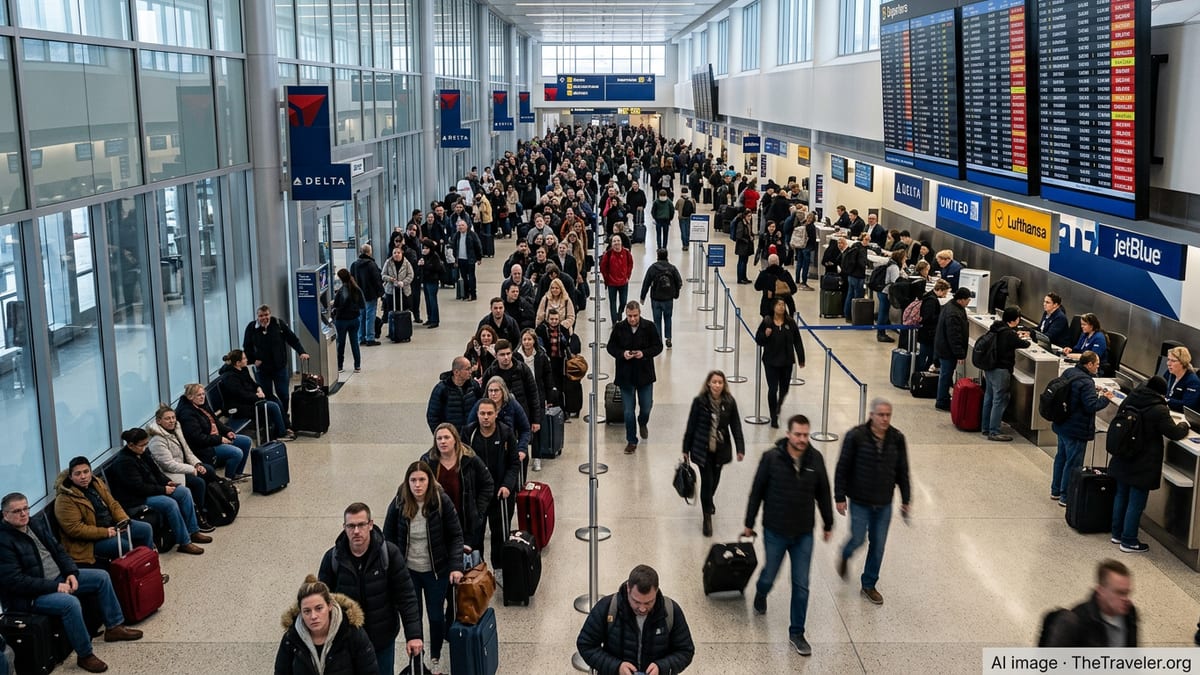
Airports reopen after severe disruption in the UK and Ireland
In the United Kingdom and Ireland, airports are steadily restoring normal operations following a major air traffic control systems failure earlier in the week. Publicly available coverage indicates that the outage led to thousands of delays and cancellations as airports temporarily halted departures and restricted arrivals while contingency procedures were activated.
By Thursday, Heathrow Airport was reporting a sharp reduction in cancellations compared with the peak of the disruption, and airlines were working to restore full schedules. Industry reports noted that, as of early morning, only a few dozen flights were still listed as cancelled at Heathrow, down from hundreds of affected services on the worst day of the incident.
Elsewhere in Ireland, airports that had reported substantial knock-on impacts are now largely back to normal. According to national media coverage, Cork Airport confirmed that all flight operations had returned to normal the morning after nine flights were cancelled, while Shannon Airport indicated that the vast majority of its services were operating as planned as schedules recovered.
Aviation analysts describe these patterns as typical after a large-scale systems issue. Aircraft and crews that were left out of position gradually rotate back into their scheduled routes, which can leave some residual cancellations and delays even after technical systems are restored.
Volcanic ash disruption in Indonesia subsides
In Southeast Asia, Indonesian airports affected by volcanic ash from Mount Anak Krakatau have also resumed operations after several days of closures and diversions. According to recent reporting, aviation authorities lifted restrictions at all airports that had suspended flights as ash clouds drifted across key air corridors.
National disaster and transport agencies indicated that safety assessments and aircraft inspections were carried out before flights restarted. Local coverage notes that at least seven airports experienced temporary closures at the height of the eruption’s impact, with some facilities reopening in stages as visibility improved and ash concentration levels decreased.
By Tuesday, all previously affected airports had reopened to commercial traffic following these inspections, and both arriving and departing flights were being facilitated. Officials continue to monitor the volcano and associated ash dispersion, with warnings that conditions can change rapidly even as normal operations resume.
For travelers in the region, airlines continue to advise checking flight status before departure, given the possibility of further adjustments if volcanic activity intensifies again or ash drifts back into busy airspace.
Labor disputes and operational limits show signs of stabilization
Beyond technical incidents and natural hazards, industrial action and structural capacity limits have also contributed to recent disruptions, but there are indications of stabilization in several markets. In Kenya, airport operations have returned to routine levels following a go-slow by aviation workers that had caused widespread delays and stranded passengers at key hubs.
According to coverage from Nairobi-based outlets, the Kenya Airports Authority reported that all airports across its network were operating normally after a return-to-work agreement was reached. Within a nine-hour period on the first full day of recovery, major airports handled more than 240 flights, a figure broadly in line with usual activity for the time of day.
In Israel, media reports describe a new agreement between the airports authority and workers’ representatives that aims to safeguard smooth operations at Ben Gurion International Airport ahead of a busy holiday period. The deal followed concerns that previous disruptions had exposed vulnerabilities during peak travel demand, prompting calls for clearer staffing and contingency arrangements.
Elsewhere, longer-term capacity management efforts remain in place even as day-to-day schedules normalize. In the United States, for example, federal regulators have extended an order limiting arrivals and departures at Newark Liberty International Airport through late 2026 in an effort to reduce congestion and improve punctuality during high-traffic periods.
European network performance improves after summer strains
Across continental Europe, network performance indicators suggest that disruption levels are trending lower than earlier in the summer, despite isolated incidents. Weekly briefings from the region’s air traffic network manager show that average air traffic flow management delay per flight has recently declined compared with earlier weeks, even as overall traffic remains strong.
The most recent summer overview notes that average delays per flight have fallen by double-digit percentages compared with a previous reference period, supported by what is described as early operational planning and adherence to a common network plan. While some weeks have still recorded pressure on specific air traffic control centers and busy hubs, the aggregate data points to a more resilient system.
Arrival punctuality, while not yet at pre-disruption targets in all markets, has also shown incremental gains. Industry observers highlight that improved staffing levels at air navigation service providers, ongoing technology upgrades and more conservative scheduling by some airlines have contributed to more reliable operations even during peak travel days.
Nonetheless, the experience of recent weeks, including the UK air traffic control outage and localized technical problems elsewhere, has reinforced calls for continued investment in redundancy and cross-border coordination to avoid cascading delays when a single node encounters difficulties.
What passengers should expect in the coming days
With airports in the UK, Ireland, Indonesia, Kenya and other markets largely back to normal, travelers can expect a more typical pattern of operations in the short term. Schedules published for the coming days show a return to standard frequencies on most routes affected by recent disruptions, although some airlines are still making minor timetable adjustments as they reposition aircraft and crews.
Travel organizations and airport operators continue to encourage passengers to monitor airline communications closely, particularly for early-morning and late-night departures, which can be more vulnerable to residual knock-on effects. Many carriers are keeping flexible rebooking policies in place for itineraries that were directly affected, allowing travelers to shift their plans without additional charges for a limited time.
Looking ahead to the rest of September, network forecasts in Europe project daily traffic peaks comparable with or slightly above last year’s levels, but with fewer systemic delays if weather remains benign and major technical or labor issues are avoided. In other regions, including Southeast Asia and East Africa, attention remains focused on potential environmental and industrial risks, but the immediate outlook points to routine operations.
For now, the broad picture across several previously affected hubs is one of gradual normalization, with air travel conditions improving and on-time performance rebuilding after a turbulent spell for passengers and airlines alike.
Heathrow disruption easing as normal flight schedules set to resume today
Airports handle 244 flights as operations return to normal
Indonesia says all airports reopen as Anak Krakatau ash disruption eases