


More news on this day
Australians heading overseas in coming weeks are being urged to review their plans and prepare for possible disruption, as updated government advice highlights elevated security risks and fresh aviation uncertainties in several parts of the world.
Get the latest news straight to your inbox!
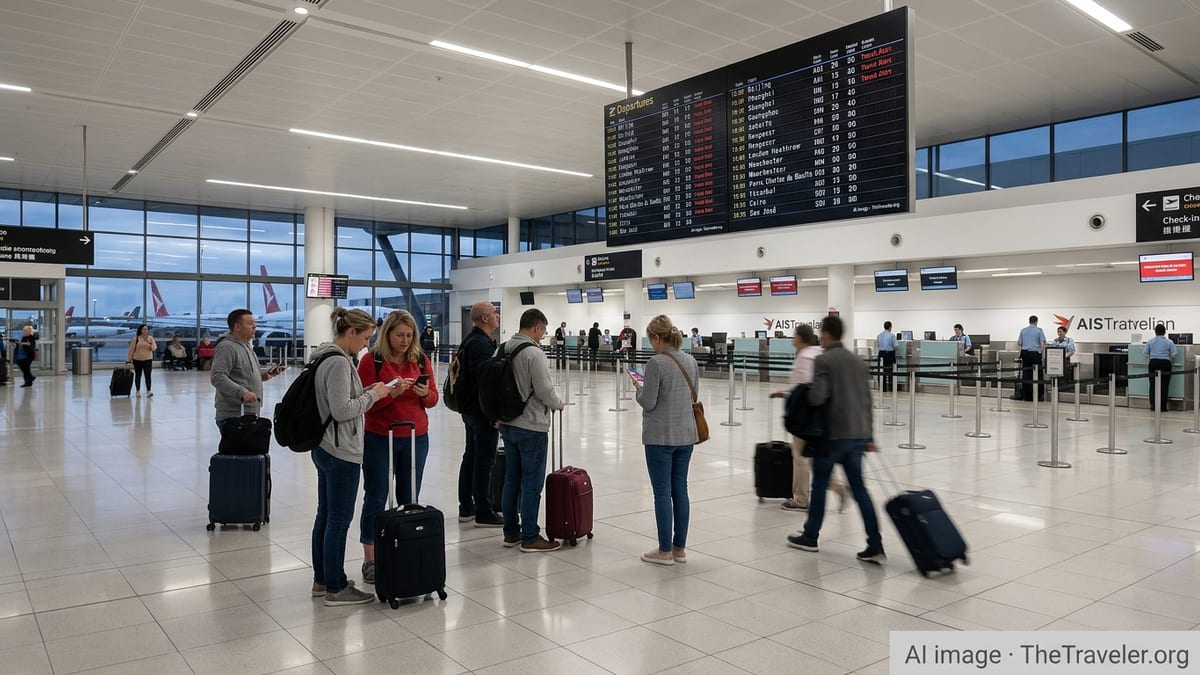
Updated Smartraveller advice targets global hotspots
Recent updates published on the Australian Government’s Smartraveller service outline heightened risks for Australians travelling through parts of the Middle East and other security hotspots. The changes follow ongoing regional tensions, with travel advisories now stressing that circumstances can deteriorate quickly and without warning.
Information released on the Smartraveller news and updates page in late July notes that conflict in the Middle East continues to affect travel and security, including for those merely transiting through regional hubs. Travellers are being urged to check the individual country pages before departure, as risk levels can vary sharply between neighbouring states.
The government’s destination advisories also show a broad spread of risk levels globally, ranging from “exercise normal safety precautions” in nearby New Zealand to “do not travel” warnings for parts of Eastern Europe and other conflict-affected regions. Travellers are encouraged to treat these levels as a key planning tool rather than a formality to be checked only at the airport.
Publicly available government material emphasises that advice levels are not static and can be raised at short notice. Australians are therefore being encouraged to register contact details, monitor updates close to their departure date and remain alert to local developments after arrival.
Middle East conflict triggers new airspace and transit concerns
The strongest of the latest messages focuses on the impact of conflict in the Middle East on flights and transit routes. Australian travel advisories highlight that airspace restrictions, airline schedule changes and security incidents can have knock-on effects far beyond the immediate conflict zones.
According to recent Smartraveller updates, guidance from international aviation regulators has included advice for airlines to avoid some Gulf airspace at least through late July, leading to diversions and potential delays on long-haul routes between Australia and Europe. Airlines may reroute or cancel services at short notice, leaving travellers facing missed connections or forced layovers.
Australians passing through major transit hubs in the region are being urged to keep in close contact with airlines and travel agents, and to allow generous connection times where possible. The updated guidance also highlights the importance of checking that travel insurance policies remain valid if routes are altered due to changing security conditions.
Travel advisories further warn that security conditions in some Middle Eastern destinations remain volatile, even where border controls and tourism infrastructure continue to function normally. Australians are therefore encouraged to follow local alert systems, remain aware of nearby government or security facilities, and consider alternative routes if a destination’s risk level escalates.
Europe-bound Australians face delays and tighter screening
While security concerns are most acute in the Middle East, Australians heading for Europe are also being warned to build extra time into their journeys. Official travel information notes that new digital entry and exit systems in parts of Europe are already contributing to congestion at some airports, particularly during peak summer travel periods.
Reports indicate that the roll-out of these border technologies has resulted in longer queues and occasional system outages, creating knock-on delays for connecting flights and ground transport. Australian travellers are being encouraged to expect more comprehensive questioning at border control, especially if their itinerary includes multiple Schengen-area countries or onward travel to higher-risk regions.
Some European destinations are further complicated by domestic security concerns and the potential for large demonstrations, sporting events or political gatherings. Travel advisories point to the possibility of short-notice public order incidents and localised transport shutdowns, and suggest that visitors avoid known protest locations and remain flexible with daily plans.
For Australians visiting Europe primarily for holidays, including popular summer hotspots, the updated guidance is not designed to deter travel but to reinforce the need for preparation. Authorities are recommending that travellers keep copies of key documents, share itineraries with family or friends at home and closely monitor local news once on the ground.
New AusAlert system underscores focus on citizen safety
At home, the launch of a new national emergency warning system, AusAlert, is reinforcing the broader emphasis on preparedness for Australians wherever they are. The system, which is being rolled out nationally following testing in mid-2026, is designed to deliver real-time alerts to mobile phones within defined geographic areas during serious emergencies.
Government agencies have outlined that AusAlert will sit alongside offshore advisory tools such as Smartraveller, forming part of a broader effort to ensure Australians receive clear, timely warnings about threats ranging from natural disasters to security incidents. Only authorised emergency organisations will be able to issue messages through the platform, which relies on cell broadcast technology rather than standard text messaging.
While AusAlert is primarily focused on incidents within Australia, officials have stressed in public information campaigns that it represents a shift towards more coordinated risk communication. Travellers are being encouraged to see it as part of a continuum of alert systems, which also includes local warning platforms in the countries they visit and international aviation advisories.
Testing of the system in July, including a nationwide phone alert, has been accompanied by guidance urging people to familiarise themselves with the distinctive sound and format of the messages. This domestic focus on preparedness is being mirrored in calls for Australians heading overseas to take simple but proactive steps such as downloading local alert apps, registering for travel updates and rehearsing what they would do in an emergency abroad.
What Australian travellers are being urged to do now
In light of the latest travel warnings, Australians planning overseas trips are being encouraged to review itineraries with a particular focus on transit points, travel insurance cover and the security posture of final destinations. Government advisories recommend checking whether any part of a journey passes through airspace or airports currently subject to additional risk assessments.
Travellers are also being urged to pay close attention to the fine print of insurance policies, especially clauses related to war, civil unrest and government travel advisories. Publicly available consumer guidance notes that some policies may limit coverage if a destination is rated at higher risk, or if travellers ignore updated advice to reconsider or avoid travel.
Practical preparations remain central to the official messaging. Australians are advised to keep digital and printed copies of passports, visas and insurance certificates, to store emergency contact numbers offline, and to maintain regular communication with family or friends at home. Simple steps such as monitoring airline apps, enabling notifications from local authorities and carrying a backup power source for mobile devices are being promoted as low-cost ways to improve resilience on the road.
With international travel from Australia continuing to rebound, the latest wave of warnings is framed less as a call to stay home and more as a reminder that the global environment is fluid. For many popular destinations, the overall advice still allows travel, but Australians are being reminded that informed, flexible planning is now an essential part of any overseas itinerary.