


More news on this day
Newly updated travel advisories are drawing attention to rising risks in three destinations popular with regional and niche travelers, as fresh guidance highlights a mix of conflict, political tension and crime that could affect upcoming trips.
Get the latest news straight to your inbox!
Jordan: Escalating regional tensions push risk levels higher
Jordan, long viewed as one of the steadier gateways to the Middle East, is now facing sharper scrutiny from travel risk trackers following a recent update to its advisory level. Data aggregating US State Department notices shows Jordan listed at Level 3, meaning travelers are urged to reconsider nonessential trips in light of the security outlook and its proximity to wider regional tensions.
Recent reporting on the region describes a more volatile environment across several neighboring states, with missile and drone incidents, cross-border strikes and infrastructure threats adding to concern about potential spillover effects. Publicly available embassy messaging has stressed the possibility of sudden changes in the security situation, including near military or government facilities and transport hubs.
Travel risk analysts note that while core tourism areas in Amman, Petra and the Red Sea resorts have not been the focus of recent incidents, the broader regional picture is driving a more cautious tone. Travelers are being advised to maintain flexible itineraries, stay alert to curfews or movement restrictions, and monitor local news closely for any changes that could affect overland routes or air links.
For visitors who do proceed, specialist operators suggest placing greater emphasis on vetted local guides, private transfers arranged in advance, and contingency plans in case flights are rerouted or border crossings are temporarily closed. Travel insurance policies that explicitly cover security disruptions, last-minute cancellations and emergency evacuation are also gaining renewed relevance for trips to Jordan and its neighbors.
Sudan: Conflict and instability underpin a strict warning
Sudan features among the most strongly worded entries on current advisory lists, with an updated rating at the highest level that effectively advises travelers not to visit. This stance reflects a prolonged internal conflict marked by armed clashes, disruption to basic services and an unpredictable security environment in both urban centers and remote regions.
Monitoring platforms that compile official advisories indicate that the situation in Sudan deteriorated further in mid July, prompting a renewed warning and confirmation of its Level 4 status. Reports from humanitarian organizations and international media describe continued fighting in and around Khartoum and other key cities, as well as reports of blocked roads, checkpoints and interruptions to fuel, food and medical supplies.
Air connectivity has also been affected, with periodic suspensions and rerouting of commercial flights into and out of Sudanese airspace during spikes in violence. Analysts caution that even travelers intending to transit through the country, or route overland from neighboring states, could encounter sudden closures, detentions or demands at ad hoc checkpoints.
Public travel guidance recommends that foreign nationals avoid all travel to Sudan until there is clear and sustained improvement in security conditions. Those who have compelling reasons to be in the country are urged, according to open-source safety briefings, to keep a low profile, stock essential supplies, maintain multiple communication channels and identify more than one exit route in case airports or land borders are abruptly shut.
Cuba: Crime, shortages and localized unrest weigh on visitors
Cuba, traditionally associated with beach resorts and cultural travel from Europe, Canada and parts of Latin America, has also drawn a fresh advisory update flagging a higher level of caution. Recent tracking of US government ratings shows Cuba classified at Level 2, meaning travelers are advised to exercise increased care because of concerns that include crime, public-order incidents and strains on local services.
Reports from travel risk mapping services and international news outlets describe a combination of opportunistic thefts, scams and occasional confrontations in urban areas, alongside intermittent protests linked to economic hardship and tight supplies of fuel, food and medicines. These conditions have, at times, translated into blackouts, public transport disruptions and long queues at service stations and supermarkets.
While the main resort corridors and organized tour circuits continue to operate, visitors are being urged to take practical steps such as limiting displays of valuables, using hotel safes, arranging airport transfers with reputable providers and staying informed about any planned demonstrations that could block roads. Travelers with medical needs are frequently advised in public guidance to bring a full supply of prescription medicines and essential items, as pharmacies and clinics may not consistently stock specific products.
Advisory summaries also indicate that visitors should be prepared for slower consular assistance and bureaucratic procedures in the event of lost passports, accidents or legal issues. Some travel insurers have begun to highlight Cuba-specific conditions in their policy wording, underscoring the importance of checking exclusions for civil unrest and verifying what types of medical evacuation, if any, are included.
What changing advisories mean for trip planning
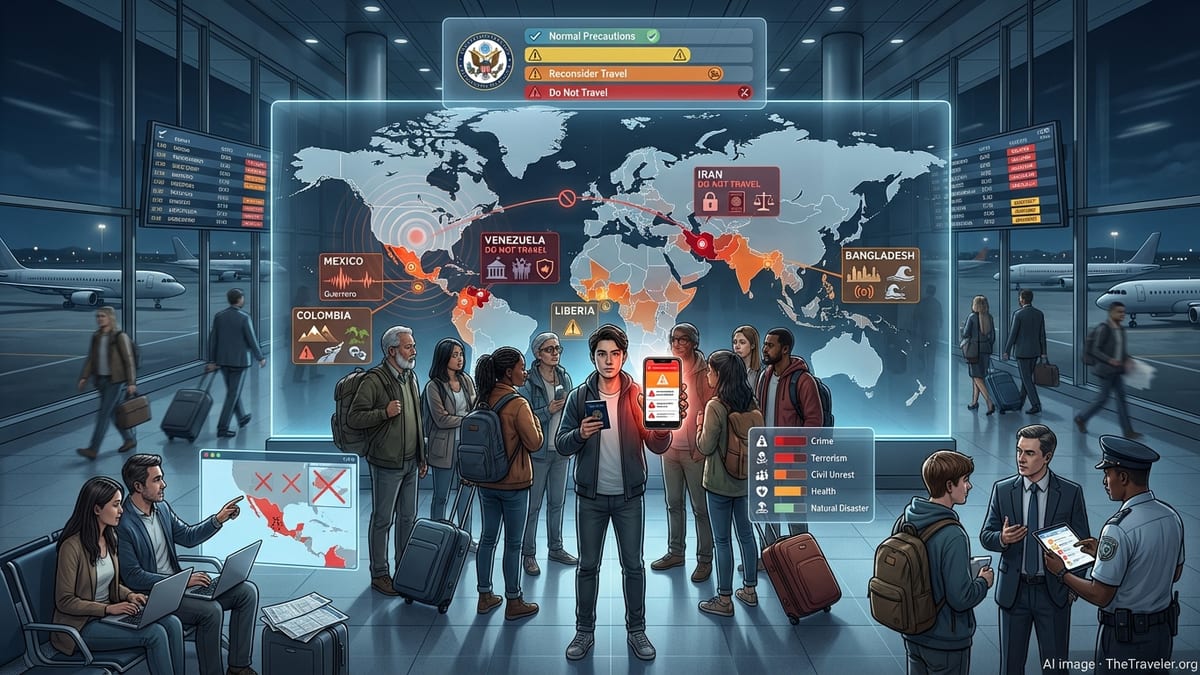
The recent focus on Jordan, Sudan and Cuba illustrates how quickly the risk profile of a destination can shift and how closely governments and private risk services now track global developments. Advisory systems typically range from Level 1, indicating standard precautions, to Level 4, advising travelers not to go, and they can move up or down in response to security incidents, political changes, natural disasters or health emergencies.
Travel industry analysts note that a higher advisory level does not always translate into an outright halt in tourism. In destinations such as Jordan and Cuba, many trips continue to operate, particularly in lower-risk regions, but with revised itineraries and additional safeguards in place. Sudan, by contrast, currently sits in a very small group of countries where official guidance and on-the-ground reports both point to conditions that are broadly incompatible with leisure travel.
For travelers, the latest warnings underscore the need to check the most recent country-level notices from their own government and to revisit plans when an advisory changes. Booking flexible airfares and accommodation, reading policy fine print on cancellations and evacuations, and registering contact details with consular services are among the measures being recommended in widely available safety materials.
The evolving picture in these three countries also highlights a wider trend toward more granular, frequently updated guidance. For those planning trips in the coming months, especially to regions affected by conflict or economic stress, keeping a close eye on advisory changes in the weeks and days before departure is becoming an essential part of responsible travel planning.