


More news on this day
More than 140 years after the first Orient Express helped define the romance of European train travel, a new incarnation dedicated to Italy, La Dolce Vita Orient Express, is welcoming passengers on design-led journeys that blend retro glamour with modern slow travel.
Get the latest news straight to your inbox!
A new Italian chapter for a storied name
La Dolce Vita Orient Express entered service in April 2025 as a luxury rail experience focused on itineraries within Italy, with Rome as the primary hub. The project is the result of a partnership between French hospitality group Accor’s Orient Express brand and Italian luxury operator Arsenale, working with Italy’s state railway companies. Public information shows that the train is conceived as Italy’s first private luxury rail fleet, with several sister trains planned in the coming years.
The service runs multi-day journeys that link Rome with destinations such as Venice, Portofino, Palermo and Tuscany. Reports indicate that itineraries are designed as “cruises on rails,” emphasizing scenery, regional cuisine and wine, and extended stops in historic towns rather than simply point-to-point transport. Seasonal specials, including festive departures such as New Year routes, are being used to position the train as a high-profile addition to Italy’s tourism calendar.
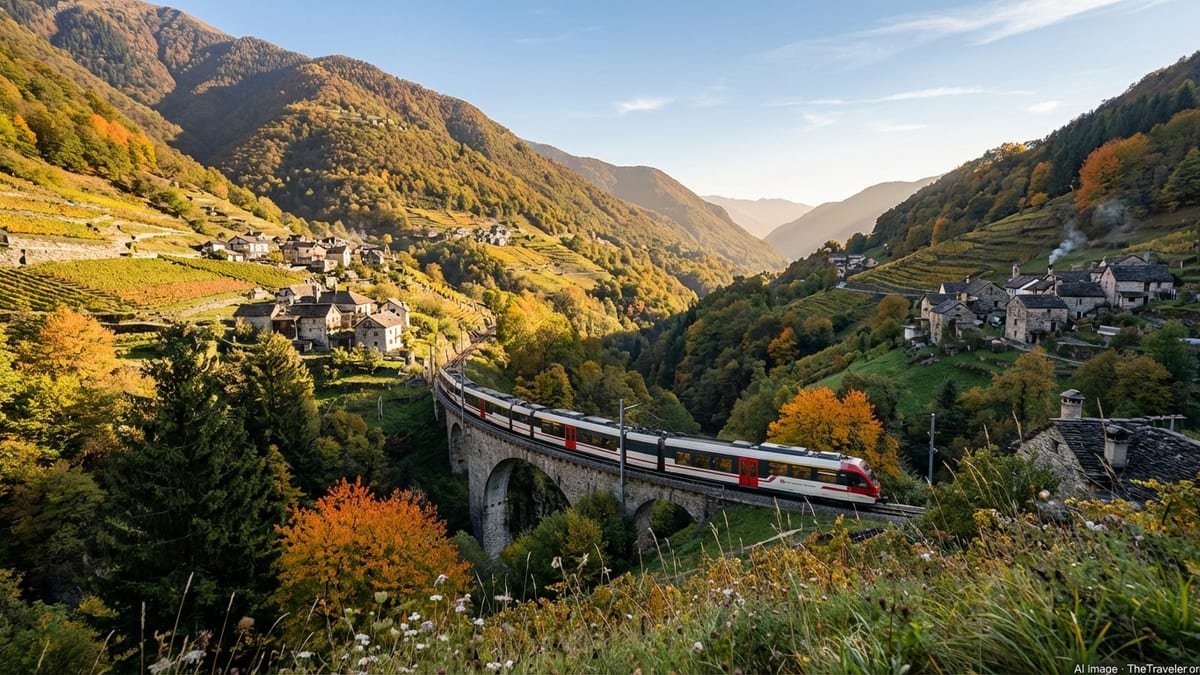
La Dolce Vita Orient Express differs from the Venice Simplon-Orient-Express, which is operated by Belmond and traditionally serves long European routes such as London to Venice. The Italian train instead concentrates on domestic routes and short cross-border ventures, offering two and three night itineraries that highlight Italy’s landscapes, from coastal stretches to Alpine passes.
Looking ahead, coverage of the brand’s expansion indicates that a Rome to Istanbul journey aboard La Dolce Vita is planned from 2026, directly evoking the historic eastbound paths that made the original Orient Express famous but with an Italian-inflected onboard experience.
Designing “la dolce vita” on rails
The interiors of La Dolce Vita Orient Express are central to its identity. The train has been designed by Milan-based studio Dimorestudio, which has drawn on the aesthetics of mid-20th-century Italian design and cinema. Publicly available images show lacquered panels, warm woods, graphic carpets and brass details that recall the 1960s, a period strongly associated with the idea of “la dolce vita.”
Cabins and suites are compact but highly finished, with a strong focus on mood rather than overt opulence. Reports describe a palette of ochres, creams and deep jewel tones, along with custom lighting and built-in furniture that seeks to evoke the Italian art of living more than the paneled grandeur of early 20th-century European trains. The train includes a lounge car and dining spaces conceived as social hubs where live music, cocktails and tasting menus are part of the experience.
The onboard gastronomy leans heavily into regionality. Menus spotlight Italian products and wine, and some itineraries feature collaborations with wineries or local producers that guests visit en route. Industry brochures emphasize the train’s ambition to promote “slow tourism,” encouraging travelers to linger over meals, landscapes and conversations instead of rushing through a checklist of sights.
Sustainability messaging also features in the project. By running over existing rail infrastructure, including sections of historic non-electrified lines, the train positions itself as a lower-impact alternative to short-haul flights and cruise ships, while still operating firmly in the ultra-luxury segment of the market.
From 1883 to today: what came before
The new Italian service trades explicitly on a name that has captivated travelers since the late 19th century. The original Orient Express entered service in 1883 as a long-distance train connecting Paris with Constantinople, via a network of European railways. Although it began as a standard scheduled service, it quickly became associated with luxury sleeping cars, fine dining and the glamour of cross-border travel at a time when rail was the dominant long-distance mode.
Over the decades, several routes carried the Orient Express name, including the Simplon-Orient-Express, which from 1919 connected Paris to Istanbul via the Simplon Tunnel and northern Italy. That route gave Italy a starring role in the legend, with key stops in cities such as Milan and Venice. The train’s reputation was cemented in popular culture through novels and films, most famously crime fiction set aboard its night-time carriages.
By the late 20th century, changing travel habits and the rise of high-speed rail and aviation eroded the viability of the original service. The final regular Orient Express train operated under that name in 2009. However, the mystique of the route persisted, and private operators moved in to revive the experience as a niche form of luxury tourism rather than day-to-day transport.
The Venice Simplon-Orient-Express, launched in 1982 using restored historic carriages, became the best-known of these successors. It operates seasonal journeys across Europe, including overnight trips that continue to pass through Italy, helping maintain a link between the country and the Orient Express story even before the arrival of La Dolce Vita.
How La Dolce Vita reinterprets the legacy
La Dolce Vita Orient Express does not attempt to replicate the exact look of the original 1883 train. Instead, it reinterprets key ideas from the historic service for contemporary travelers. These include multi-course dining in elegant surroundings, dedicated sleeping compartments, and a sense of theater in the pacing of the journey, from boarding rituals to evening dress codes.
In place of Art Nouveau and Art Deco marquetry, however, the Italian train leans into postwar design and the visual language of Italy’s economic boom. Reports from early journeys describe social spaces that feel closer to a chic Roman hotel bar than to a museum piece, with the intention of making the experience feel current rather than strictly nostalgic.
Thematically, La Dolce Vita focuses on Italy as destination rather than on the concept of traveling from Western Europe to the “Orient.” Itineraries are built around wine, food, coastal scenery and historic cities such as Rome, Venice, Palermo and Florence. In that sense, the train aligns with broader shifts in high-end tourism that favor local immersion and shorter, more focused trips.
At the same time, the Orient Express brand is undergoing a broader reinvention, with new hotels in Rome and Venice and a forthcoming sailing yacht intended to complement the rail offering. Taken together, these projects suggest that the rail routes pioneered in the 19th and early 20th centuries are being recast as part of a larger network of branded luxury experiences that connect European cities, coastlines and heritage sites.
What this means for luxury rail and Italian tourism
The arrival of La Dolce Vita Orient Express comes amid a wider resurgence of interest in long-distance train travel in Europe. Industry reports highlight growing demand for overnight trains and for rail-based itineraries that promise a lower environmental footprint than equivalent flight-heavy trips. Within this context, Italy’s decision to host a flagship luxury train under the Orient Express banner has symbolic as well as commercial significance.
For Italian tourism authorities and private operators, the project offers a way to disperse high-spending visitors beyond the most crowded city centers by linking Rome with secondary destinations and rural areas. The use of heritage rail lines, in particular, has been positioned as a way to spotlight landscapes and smaller communities that are less visible on standard tourist circuits.
The train’s high pricing and limited capacity mean that the direct economic impact is likely to be concentrated in the ultra-luxury segment. However, the visibility generated by glossy media coverage, design awards and social media imagery is expected to reinforce Italy’s image as a destination where classic travel fantasies can be experienced in updated form.
As La Dolce Vita Orient Express expands its portfolio of itineraries, including cross-border journeys to Istanbul, it effectively links Italy’s present-day visitor economy with one of the most storied names in rail history. The result is a new expression of the Orient Express myth, routed through Italian landscapes but still anchored in the idea that the journey itself can be the main attraction.