


More news on this day
Turkey and Bulgaria are reinstating the Istanbul–Sofia Express sleeper train, restoring one of southeast Europe’s key overnight rail links and adding fresh capacity on a route increasingly popular with international travelers.
Get the latest news straight to your inbox!
A flagship night train returns to the timetable
The Istanbul–Sofia Express will again connect Türkiye’s largest city with the Bulgarian capital on an overnight schedule, following coordination between Turkish State Railways and Bulgarian State Railways to bring the service back into regular operation. Publicly available information from both operators indicates that the train will run as an international night service with through coaches and shared rolling stock on each side of the border.
The move effectively restores a direct sleeper option between the two cities after periods of disruption and limited capacity linked to infrastructure works and the wider suspension of some cross-border passenger services in recent years. Earlier announcements from Bulgaria’s rail operator about the gradual restoration of international services highlighted the Sofia–Istanbul route as a priority section, maintaining service domestically as far as Svilengrad while cross-border traffic was being rebuilt.
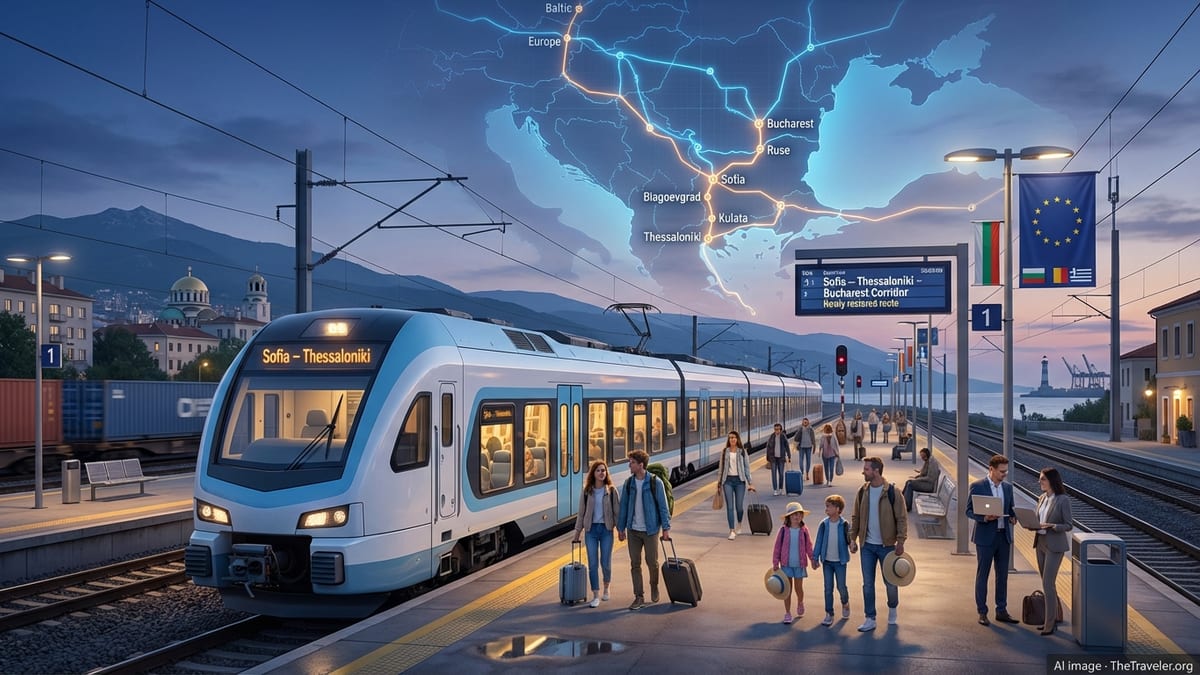
With reinstatement, the Istanbul–Sofia Express reclaims its role as one of the main rail corridors between Türkiye and the European Union. The overnight train links Istanbul’s suburban terminus at Halkalı with Sofia Central Station, crossing the frontier at Kapıkule and Svilengrad and providing connections onward toward Bucharest, Belgrade and other destinations.
Timings, coaches and on-board experience
According to recent timetable information and independent rail travel guides, the Istanbul–Sofia Express is scheduled as a night train, typically departing late evening and arriving the following morning. The pattern allows travelers to leave one city after dinner and wake up on approach to their destination, a format that has proved increasingly attractive as night trains return across Europe.
The service is expected to offer a mix of standard seated accommodation, couchettes and classic sleeping compartments. In recent seasons, reports from passengers describe four-berth couchettes and one or two classes of sleeper cabins, including options that can be booked for single occupancy at a higher supplement. These arrangements allow budget-conscious travelers, interrailers and families to share space, while also catering to those seeking more privacy and comfort.
Travelers can anticipate border controls during the night as the train passes between Bulgaria and Türkiye, with checks usually carried out at or near the frontier stations. While this can briefly interrupt sleep, rider accounts suggest that the overall experience remains one of the most atmospheric and memorable ways to travel between the two capitals, with night-time views of the Thracian plains and early-morning arrivals into Istanbul or Sofia.
Part of a wider revival of cross-border rail
The reinstatement of the Istanbul–Sofia Express comes amid a broader revival of international rail in the region. In June 2026, Romania’s national railway relaunched direct summer trains linking Bucharest with Istanbul, Sofia and Bulgaria’s Black Sea coast, adding seasonal daytime and overnight options that dovetail with the Istanbul–Sofia corridor and increase overall capacity on key tourist flows.
Across Bulgaria, investment has been directed toward upgrading infrastructure and rolling stock, particularly sleeper and couchette cars used on long-distance routes from Sofia to coastal cities such as Varna and Burgas. Sector analysis notes that these programs are designed both to modernize older vehicles and to prepare for greater competition and liberalization in the country’s rail market.
On the Turkish side, the Istanbul–Sofia route is often described in official communications as one of Türkiye’s “iron gateways” to Europe, alongside other international links heading toward Bucharest and beyond. Passenger numbers reported for recent years, including tens of thousands of riders carried on the service up to late 2024, suggest a strong and growing demand for cross-border night trains that combine tourism, migrant travel and business journeys.
What the reinstated service means for travelers
For international visitors, the return of the Istanbul–Sofia Express simplifies overland itineraries between central Europe and Türkiye. Travelers can now combine daytime trains through Serbia, Romania or Hungary with an overnight leg between Sofia and Istanbul, reducing the need for flights on one of the region’s busiest short-haul corridors. Interrail and Eurail users, in particular, gain a direct night option that fits neatly into multi-country passes.
Environmental advocates also point to the symbolic importance of reinstating classic sleeper services. Overnight trains are viewed as a practical alternative to short-haul aviation for journeys of 700 to 1,200 kilometers, offering competitive travel times when hotel nights are factored in and significantly lower emissions per passenger compared with flying.
For residents of Bulgaria and Türkiye, renewed stability on the route offers a reliable link for visiting family, trade and cultural exchange. The train connects two major urban centers with rich Ottoman and European heritage, and it serves smaller communities along the line that benefit from improved international access.
Practical considerations for booking and travel
Publicly available guidance indicates that seats and sleeper reservations for the Istanbul–Sofia Express are typically sold through national railway ticket offices and, increasingly, through digital platforms run by the operators. Turkey’s passenger rail company has been expanding its online and mobile booking tools, allowing customers to secure international tickets without queuing at station counters, while Bulgaria’s railway provides international sales via staffed desks and partner agencies.
Travelers are advised to secure sleeper and couchette reservations well in advance during peak summer months and major holidays, when demand can outstrip supply on this single overnight departure. Recent passenger reports suggest that while last-minute seats may still be available, private or shared sleepers often sell out days ahead in July and August.
Because the train crosses an external border of the European Union, passengers must ensure that passports, visas and any required travel documents are in order, including new Schengen visa rules for some nationalities. Luggage screening and passport checks can add time at the frontier, and riders are encouraged to keep essential items accessible for nighttime inspections.
With its reinstatement, the Istanbul–Sofia Express returns as more than just a timetable entry. It offers a tangible link between Türkiye and the European Union, supports the renewed momentum behind night trains and gives travelers another evocative way to experience the landscapes and cities of southeast Europe by rail.