


More news on this day
From revived European sleepers to semi high speed lines in India and new scenic services in North America, 2026 is shaping up as a pivotal year for rail travelers worldwide.
Get the latest news straight to your inbox!
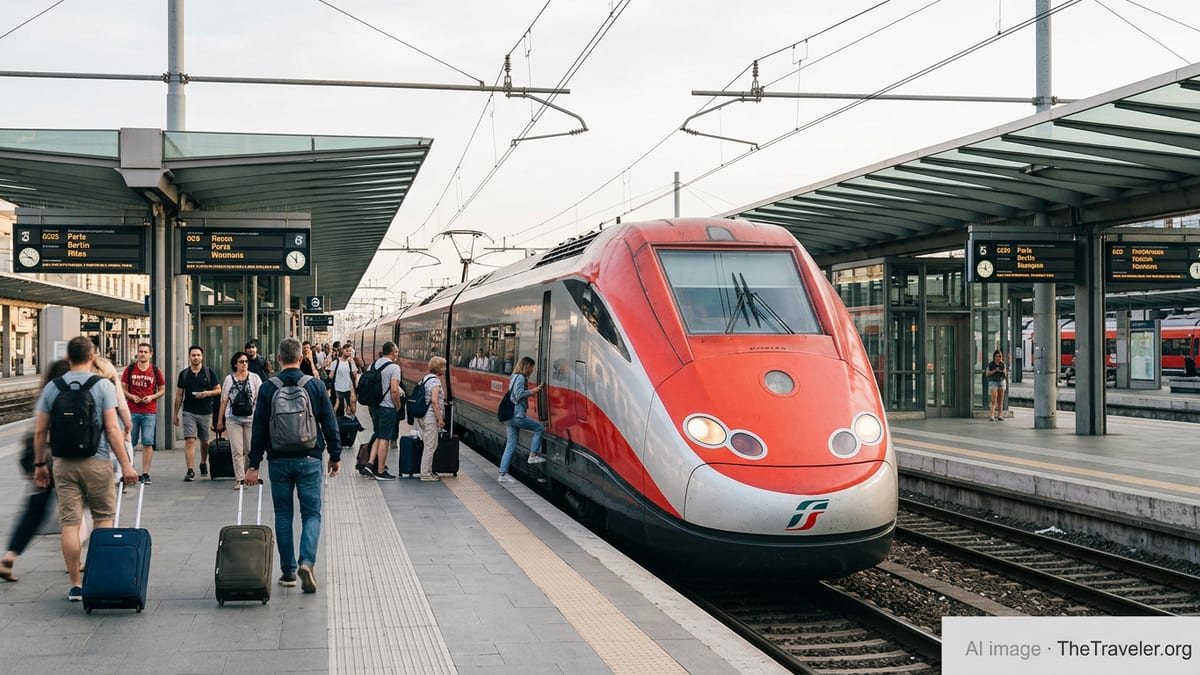
Europe’s Night Train Revival Accelerates
Across Europe, a new wave of night trains is turning rail into a practical alternative to short haul flights. Updated timetable information and industry coverage for 2026 show fresh overnight connections linking major capitals and secondary cities, with operators responding to rising demand for lower carbon travel and more relaxed long distance journeys.
Independent mapping projects tracking Europe’s sleeper network report dozens of regular and planned services for 2026, illustrating how quickly the landscape has shifted in just a few years. Routes that disappeared in the 2010s are being reinstated, while new cross border links are appearing on schedules for the first time, particularly in central and western Europe.
Travel industry reporting highlights the Paris to Berlin night train as one of the headline launches of 2026, with the cooperative European Sleeper due to take over the route in late March. Additional overnight services between Amsterdam, Brussels and northern Italy are slated to follow later in the year, further expanding a north south spine that allows travelers to cross the continent while they sleep.
Rail operators are pairing these new routes with upgraded rolling stock, including modernized couchettes and private compartments. Publicly available pricing data suggests that advance fares on several of the new overnight routes are being pitched to compete directly with budget airlines, particularly outside peak summer dates.
New Daytime Routes Expand Europe’s Rail Map
The 2026 European timetable change is bringing not only night trains, but also new daytime connections designed to tighten rail’s grip on medium distance travel. Route updates published by rail planners indicate additional services on key intercity axes, including new Vienna to Graz and Villach trains operated by private carrier Westbahn, scheduled to begin in March.
These new daytime links reduce journey times within Austria and improve onward connections to neighboring countries. They arrive alongside frequency increases on existing international routes such as Paris to Munich, where combined operations by national railways are expected to significantly raise the number of daily departures by the end of 2026.
Analysts note that the strategy is twofold: filling remaining timetable gaps where rail has struggled to compete with air, and relieving pressure on heavily used corridors that have seen strong passenger growth since 2022. For travelers, the impact will be felt in simpler itineraries, fewer long layovers and more options to travel during daylight hours.
Infrastructure upgrades underpin many of these changes. Investment plans published by European transport ministries for the mid 2020s show continued spending on cross border signalling improvements and passing loops, incremental but vital steps that allow additional passenger trains to share tracks with freight.
India Bets on Semi High Speed Corridors
In Asia, India is using 2026 to accelerate its shift toward faster intercity rail. Government announcements this year approved the country’s first broad gauge semi high speed corridor using Namo Bharat train technology between Sarkhej and Dholera in Gujarat, a 134 kilometer route designed for significantly higher speeds than the existing network can routinely support.
The Sarkhej–Dholera project sits alongside the nationwide rollout of Vande Bharat services, including the new Vande Bharat Sleeper Express category intended for overnight journeys of 1,000 to 1,500 kilometers. Official documentation and press coverage indicate that India’s first Vande Bharat Sleeper, on the Howrah–Kamakhya route, entered service in January 2026, marking a move to replace traditional long distance express trains with faster, more efficient trainsets.
Industry reports from early 2026 point to domestic manufacturers beginning deliveries of key components such as underslung traction transformers for these sleeper trainsets, underscoring the policy focus on locally designed and built equipment. Government briefing papers on rail modernization further highlight additional semi high speed corridors and upgraded safety systems as central features of medium term transport planning.
For travelers, these developments translate into shorter journey times on some of the country’s busiest corridors, along with more modern onboard amenities. However, analysts caution that sustained investment in track, signalling and station infrastructure will be necessary before the new trains can routinely operate at their full design speeds across the network.
North American Rail Focuses on Scenic and Corridor Growth
While high speed projects in the United States remain in various planning stages, 2026 is still bringing tangible changes for rail passengers. Federal budget documents and grant notices outline multi year funding for intercity passenger rail corridors, with the Federal Railroad Administration using new programs to support planning, environmental review and early design work on dozens of prospective routes.
Publicly available summaries of these corridor initiatives show proposals ranging from upgraded state supported services in the Midwest and South to entirely new links in regions that currently lack passenger rail. Advocates view these programs as a foundation for a denser national network over the next decade, even if concrete timetable changes in 2026 are modest compared with Europe or India.
On the leisure side, privately operated scenic trains are expanding their offerings for the 2026 season. One of the most closely watched developments is the transition of the Rockies to the Red Rocks train to a new brand, Canyon Spirit, and its planned extension to Salt Lake City. Company announcements from 2025 describe the rebranding and route extension as a way to tap growing demand for multi day rail journeys through the American Southwest.
These luxury and sightseeing services occupy a small but visible niche within the broader North American rail landscape. Travel industry observers note that, as federal and state backed corridor projects progress slowly through regulatory stages, private scenic operators are seizing an opportunity to introduce new experiential products for domestic and international tourists.
Travelers Weigh Sustainability, Comfort and Speed
Across regions, a common thread links this year’s most significant rail developments: travelers are balancing environmental concerns, comfort and travel time when choosing how to move between cities. Surveys commissioned by rail manufacturers in Europe during 2025, whose findings continue to be cited in 2026 coverage, suggest that a substantial share of respondents intend to shift some journeys from air to rail in the coming five years.
Night trains in Europe and semi high speed services in India speak directly to this shift by offering journeys that either replace short haul flights or meaningfully cut long road travel times. At the same time, North American investments in intercity corridors and the rise of premium scenic trains highlight a growing recognition of rail’s potential for both practical and aspirational travel.
Analysts observing these trends point out that the success of 2026’s new services will depend not only on headline speed, but also on reliability, fare structure and station access. Early indications from booking platforms and operator reports show strong advance interest in several high profile routes, particularly the Paris–Berlin night train, Amsterdam–Milan sleeper plans and India’s first Vande Bharat sleeper services.
For travelers planning trips later in 2026 and beyond, the message is clear: rail options are expanding across multiple continents, often in ways that make it easier to combine sustainability with comfort and flexibility. As additional timetables are finalized and infrastructure projects come online, the global rail map is likely to become even more competitive with the skies.