


More news on this day
Fresh security warnings from the United States about travel to the United Arab Emirates are casting a new layer of uncertainty over Dubai stopovers just as winter long haul season ramps up, prompting travelers to reassess routes, insurance and time spent in the region’s busiest hub.
Get the latest news straight to your inbox!
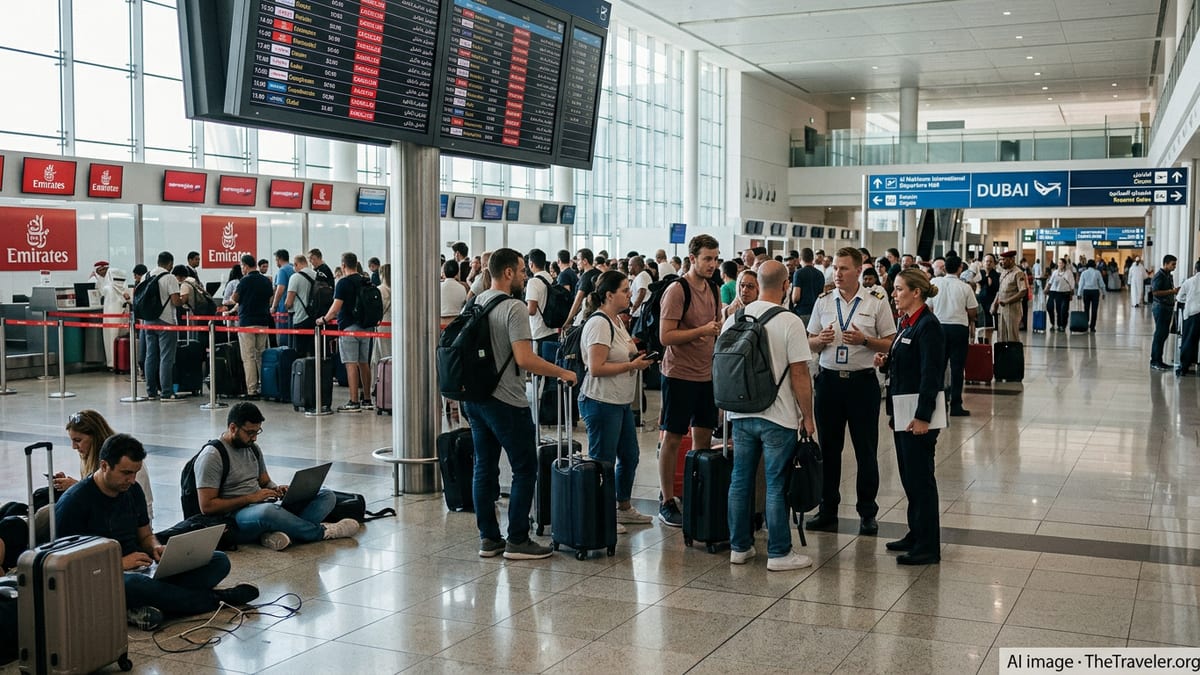
Level 3 Advisory Collides With Peak Connection Season
The U.S. Department of State currently assigns the United Arab Emirates a Level 3 “Reconsider Travel” advisory, most recently updated on October 23, 2026, citing terrorism and armed conflict risks. Publicly available information highlights Iranian missile and drone attacks on the country earlier this year and notes the potential for further regional escalation affecting civilian infrastructure, including airports.
The timing is awkward for airlines and passengers alike. Dubai International Airport is entering its traditional winter surge, when travelers from North America connect onward to Africa, South Asia and Australasia. Industry coverage notes that Dubai, along with regional rival Doha, remains one of the world’s busiest intercontinental connection points, even as some travelers seek routings that avoid the Middle East altogether this season.
Advisories do not prohibit travel, and flights between the United States and Dubai continue to operate. However, the language used around the UAE means U.S. citizens planning even short transits are being urged to weigh risk tolerance more carefully and to stay alert to changing security conditions during their connection window.
Analysts tracking government notices say the latest U.S. update is part of a broader regional pattern. Multiple countries across the Gulf currently sit at Level 3, reflecting concerns about spillover from the Iran war and the possibility of further missile or drone activity that could disrupt airspace or airport operations with little warning.
Missile Threats, Airport Disruption and Transit Exposure
Security assessments referenced by media reports describe the UAE as having only minutes of warning time for certain categories of ballistic missiles or drones launched from nearby territory. While Dubai International has not reported a direct strike on terminal facilities this year, the April and May barrage of Iranian attacks on Emirati targets contributed to widespread flight diversions, holds and cancellations throughout the Gulf.
Airport operator data cited in recent coverage indicate that Dubai International recorded a sharp drop in passenger numbers in the second quarter of 2026 compared with the previous year, as the war and related advisories prompted many travelers to choose routings that bypassed the Middle East. The downturn came despite the airport maintaining its status as a major connecting hub and Emirates Airline restoring much of its long haul schedule out of Dubai by late spring.
Transit passengers are indirectly caught in this environment. Even those who never leave the secure airside area of Dubai International would face the same operational disruptions as local origin and destination travelers if airspace is temporarily closed or flights are rerouted at short notice. Travel media commentaries point out that a Level 3 environment can translate into long layovers, missed onward connections and unexpected hotel nights if conditions deteriorate mid-journey.
Local safety advice from foreign ministries in close allied countries sometimes diverges from U.S. language, with some governments rating the UAE at a lower overall risk level while still warning about the possibility of further attacks on critical infrastructure. That divergence adds to traveler confusion, particularly for those crafting itineraries that include both U.S. and non-U.S. carriers or mixed nationality groups.
Dubai’s Official Messaging Emphasizes Operational Continuity
Dubai’s tourism and economic authorities continue to promote the city as open for business and travel. An October 30, 2026 update from Dubai’s Department of Economy and Tourism encourages visitors and trade partners to rely on airlines and verified UAE government channels for flight status, rebooking options and any changes to entry or transit procedures, and notes that airport hotels and transit lounges remain available.
Local messaging does not directly address the U.S. Level 3 advisory, instead focusing on the city’s ability to manage traffic during regional turbulence. Statements and published material from Dubai and Emirates highlight the rapid restoration of flight schedules earlier this year after waves of cancellations linked to Iranian attacks, framing the experience as evidence of resilience and operational depth at the hub.
Passenger accounts shared in public forums over the last several months describe a mixed picture on the ground. Many report smooth connections, normal security queues and relatively routine experiences transiting Terminal 3, albeit with closer scrutiny for certain destinations and occasional schedule adjustments announced days or weeks before departure. Others describe quieter-than-usual arrival halls during peak tension periods, reflecting both diverted traffic and traveler caution.
Sector analysts say Dubai is trying to balance its image as a safe, efficient hub with the realities of operating so close to an active theater of missile and drone activity. Official airport data and airline communications suggest that while most days pass uneventfully, the risk of sudden disruption remains higher this winter than in pre-war years.
Knock-On Effects for U.S. Travelers, Routes and Insurance
For U.S. travelers, the Level 3 advisory and broader Middle East security alerts are prompting practical questions about routing and protection. Some travel insurance policies either exclude coverage for incidents in countries under stronger advisories or treat government “reconsider travel” language as a trigger for special conditions, affecting medical coverage, trip interruption benefits or evacuation services. Industry explainers advise passengers to review policy fine print closely to confirm whether transiting the UAE, as opposed to staying overnight, is treated differently.
Routing choices are also under review. Published travel features note that some U.S. flyers are shifting winter itineraries to connect through European hubs or via Asia when heading to destinations like India, Sri Lanka or East Africa, in order to avoid Middle Eastern airspace. Others continue to favor Dubai due to shorter overall travel times, competitive fares and extensive onward networks, but opt for shorter layovers and route combinations that invite flexibility if flights must be rebooked.
U.S.-bound flights from Dubai already incorporate enhanced security screening regimes, and traveler reports indicate this can add extra time at check in and before boarding, especially during periods of elevated alert. Connections heading to the United States from Dubai are therefore more exposed to compounded delays if upstream disruptions in the region ripple into already intensive pre-departure checks.
Meanwhile, broader strains on U.S. aviation from winter storms and periodic government shutdown threats at home create an additional layer of uncertainty on the return leg. Recent winter travel coverage describes cascading delays across U.S. hubs when weather, federal operations and regional security concerns intersect, complicating tight connections for those arriving off long haul flights from the Gulf.
How Winter Stopover Plans Are Changing
As the key holiday and school break period approaches, the net effect of the new warnings appears to be a subtle but noticeable shift in how travelers structure Dubai stopovers. Long, multi day stays that once combined shopping, beach time and onward connections are giving way, in many itineraries, to straightforward same day transits designed to minimize time spent in the region without abandoning the route entirely.
Travel agents and tour operators quoted in open industry forums describe more clients asking for backup plans, such as refundable hotel bookings, flexible airline tickets or parallel itineraries that could be activated if the security picture worsens. Airlines that rely on Dubai as a transfer point, particularly those serving secondary U.S. cities, are responding with targeted fare sales and schedule tweaks intended to keep their Gulf routings attractive in spite of headline risk.
At the same time, there is little suggestion in public data that Dubai is about to lose its central place in global aviation. Passenger volumes remain high by international standards, and the airport’s ability to recover quickly from this year’s missile related disruptions has reinforced its role as a primary bridge between North America and destinations to the east. The current winter season is shaping up less as a collapse in demand and more as a test of how much risk travelers are willing to price into an otherwise convenient stopover.
For U.S. citizens weighing their options, the latest advisories add complexity rather than clear-cut answers. The choice between transiting Dubai or choosing a longer, potentially costlier route elsewhere now hinges on personal risk appetite, insurance terms and the value placed on speed and connectivity during what is already one of the most challenging seasons for global air travel.