


One-bag travel for two weeks sounds ambitious until you see it done in real life. Office workers are flying from New York to London with nothing but a 35 liter backpack, students are riding budget airlines around Europe with a single 30 liter bag, and digital nomads are stretching a 40 liter carry-on across entire seasons. The appeal is obvious: skip the check-in line, avoid lost luggage, and move through cities and train stations with ease. The challenge is knowing exactly what to pack, how much clothing you really need, and which bags will actually fit into overhead bins.
Get the latest updates straight to your inbox!
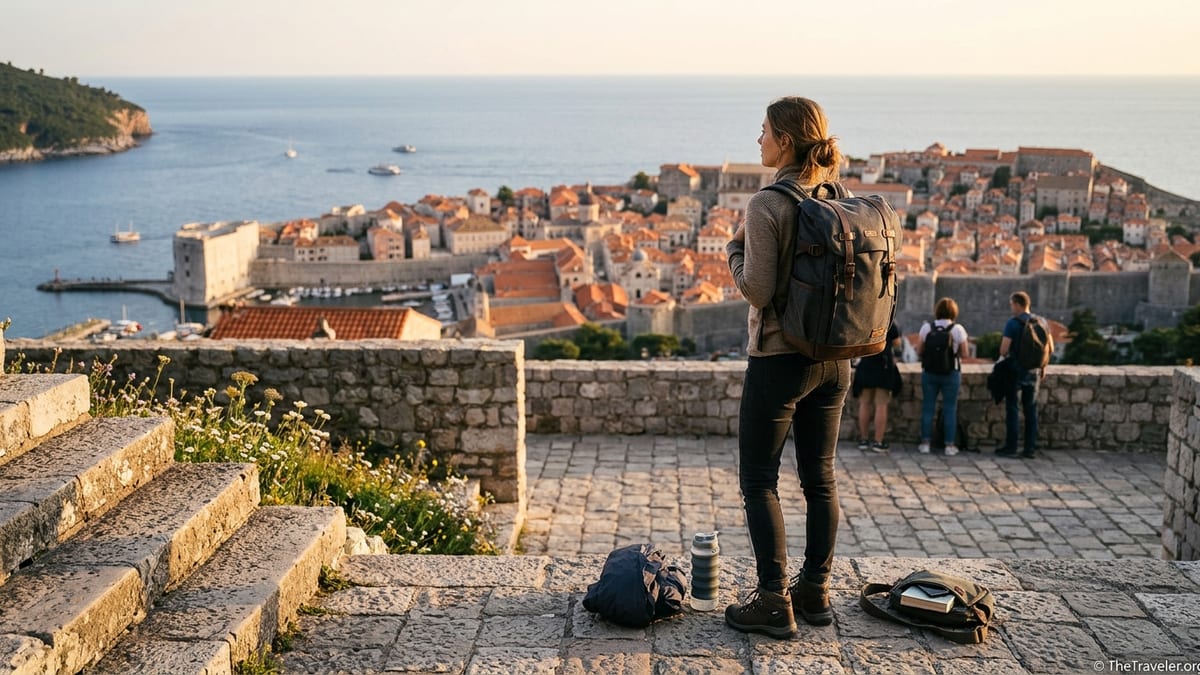
Why One-Bag Travel Is Surging Right Now
Search data shows that interest in one-bag travel has been climbing quickly, with terms like "one bag" and "one bag travel" drawing growing attention from travelers looking to simplify. That interest reflects what many airlines and airports look like in late 2026: fuller flights, tighter overhead bin space, and renewed baggage fees across both full-service and low-cost carriers. A single carry-on that covers two weeks is often the difference between walking straight to security or joining a long check-in queue with everyone else’s checked suitcases.
At the same time, there is now a mature ecosystem of purpose-built travel backpacks in the 20 to 40 liter range. Brands such as Tortuga, Osprey, Aer, Cotopaxi and Peak Design produce bags designed around airline carry-on rules, laptop protection, and urban travel rather than backcountry trekking. For example, Tortuga’s Travel Backpack Pro 40L is built to the common US carry-on limit of 22 by 14 by 9 inches and is marketed explicitly as a maximum-size carry-on. Osprey’s Farpoint 40 lists similar dimensions around 21.7 by 13.8 by 9.1 inches and is sold as meeting domestic carry-on requirements.
Real-world travelers are proving the concept. On online forums dedicated to one-bag travel, you will find detailed reports of people using a 40 liter Osprey Farpoint for three week Interrail trips in Europe, or a 34 liter Tortuga bag for multi-city business travel in Asia. They repeatedly mention the same benefits: no baggage claim waits, much easier movement on public transit, and less decision fatigue because there is simply less stuff to manage.
The growth in demand is also driven by changing work patterns. Remote workers combining business and leisure trips might fly with a 35 liter Aer Travel Pack 3 for a week of meetings in Berlin and then continue straight to Lisbon for vacation without returning home in between. Having a single bag that fits every airline and every segment makes these blended itineraries significantly easier to manage.
Choosing the Right Bag Size Between 20 and 40 Liters
The core decision for a two-week one-bag trip is capacity. For most travelers, that means choosing somewhere between 20 and 40 liters. A 20 to 24 liter backpack is usually similar in size to a large “personal item” and works for travelers who pack very light, regularly do laundry, and stick to warm climates. Examples include small travel daypacks and minimalist bags in the 20 liter range that still have laptop sleeves and a main compartment for rolled clothing.
A 28 to 35 liter bag is often the sweet spot for many two-week trips, especially if you do not need bulky cold-weather gear. Bags in this range include models like the Aer Travel Pack 3 at about 35 liters, or the 34 liter version of the Tortuga Travel Backpack Pro. These packs remain relatively compact, are easier to stow on tight regional jets or budget carriers, and still provide enough room for three or four days of outfits, a pair of compact shoes, and a laptop.
At the upper end, 38 to 40 liter backpacks maximize the common carry-on size box used by major US airlines such as American, Delta, and United, which set limits around 22 by 14 by 9 inches. A 40 liter bag like the Tortuga Travel Backpack Pro 40L or Osprey Farpoint 40 is a realistic choice if you are packing for mixed climates, need bulkier clothing like jeans and sweaters, or want a little more flexibility in what you bring. These designs are specifically engineered to stay within published carry-on dimensions when packed sensibly, although overstuffing can push them beyond the allowed depth.
When deciding among these ranges, think about both your destination and your body. A 5 foot 2 inch traveler walking miles through cities may find a fully loaded 40 liter backpack uncomfortable and prefer a 28 or 30 liter pack. A taller traveler used to hiking may be comfortable with a 40 liter carry-on. Trying bags on in store at retailers such as REI, or ordering from brands that offer free returns, lets you load them roughly to travel weight with towels and clothing to test comfort before committing.
Understanding Airline Carry-On Limits and How They Affect Packing
Before you invest in a bag, it pays to look at actual airline rules for carry-on luggage. As of late 2026, major US carriers such as American, Delta, and United list carry-on limits at around 22 by 14 by 9 inches, or 56 by 36 by 23 centimeters, with no published weight limit on most domestic economy tickets. That generally equates to a hard volume in the region of 40 to 45 liters, which explains why so many “max-size” travel backpacks measure close to those dimensions.
In contrast, popular European low-cost airlines are stricter, particularly around weight and personal item sizing. Guides that compile official data show Ryanair allowing a larger carry-on only to passengers who purchase priority boarding, with the paid cabin bag usually limited to about 55 by 40 by 20 centimeters and roughly 10 kilograms in weight. EasyJet has moved toward a single cabin bag policy for many fares, with commonly listed limits around 56 by 45 by 25 centimeters and, on some routes, a weight guideline around 15 kilograms. Rules are updated regularly, so it is important to confirm on the airline’s own site before you fly.
Within these boundaries, the way your bag is shaped matters as much as the stated capacity in liters. A 40 liter backpack that is tall, narrow, and shallow will fit far more easily into overhead bins and metal sizers than a squat, overly deep bag. This is why travel-focused designs like the Farpoint 40, which sits close to the back and spreads volume vertically, are popular on one-bag forums where users report clearing airline sizers successfully on carriers from Air Canada to European budget airlines.
For a two-week trip, it can be useful to pick a bag that not only meets the strictest airline on your itinerary but also leaves a bit of space so that you are not forced to check your bag when returning with souvenirs. Many travelers choose a 30 to 35 liter backpack for itineraries heavy on low-cost European flights, then adjust their packing list accordingly. On trips centered on North America or long-haul full-service airlines with more generous rules, a 38 to 40 liter carry-on is often safe as long as it stays within the common 22 by 14 by 9 inch guideline.
How Much Clothing You Really Need for Two Weeks
The key mental shift in one-bag travel is accepting that you are not packing fourteen completely different outfits. You are packing for a three to five day clothing rotation and planning to do laundry. In warm weather, many experienced travelers find they can comfortably live out of a 30 to 35 liter bag with three or four tops, two pairs of pants or shorts, and one or two lightweight dresses or shirts that can be dressed up for dinner.
Consider a concrete example. A traveler spending two weeks between Barcelona and Rome in late spring could pack one pair of technical chinos, one pair of lightweight travel jeans, three quick-drying T-shirts, two merino or synthetic polos or blouses, five pairs of underwear, three pairs of socks, and one light sweater. Those items, plus a compact rain jacket and a pair of low-profile sneakers, easily fit into a 30 liter backpack when rolled or folded with packing cubes. With access to a washing machine or sink laundry every four or five days, this rotation covers the full trip.
In cooler climates, the volume challenge is bulk rather than quantity. Suppose you are traveling for two weeks through Berlin and Copenhagen in October. You might bring a merino base layer top and leggings, two long-sleeve shirts or sweaters, one pair of jeans, one pair of heavier chinos, and a packable insulated jacket. Combined with four or five sets of underwear and socks, this can still work in a 35 liter bag if you wear your heaviest items on travel days. Bulky pieces like boots and winter coats are best worn on the plane, freeing precious space in your bag for lighter items.
Special occasions require a little creativity. Instead of packing a separate formal outfit, many one-bag travelers rely on one versatile “smart casual” set: dark jeans or tailored pants, a neutral shirt or blouse, and a compact pair of leather sneakers or flats that can also handle city walking. This avoids dedicating space in a 35 liter carry-on to shoes or outfits that will be worn once or twice at most.
Laundry Strategies That Make One-Bag Travel Work
Laundry is the unsung hero of successful two-week one-bag travel. Without a plan to wash clothes, even the best 40 liter backpack will feel cramped and disorganized. Fortunately, most popular destinations now have abundant self-service laundry options, from coin laundromats in New York or Paris to app-operated machines in Japanese business hotels. In many European cities, central districts typically have small laundromats where a wash and dry cycle costs the equivalent of a modest cafe meal.
On trips where you change locations frequently, hotel and guesthouse facilities become important. Budget chains such as Ibis, Holiday Inn Express, and many hostels list guest laundry rooms among their amenities. In Southeast Asia, inexpensive full-service laundries are common in tourist hubs like Chiang Mai or Bali, where travelers can drop off a bag of clothes in the morning and pick them up washed and folded by evening for a relatively low per-kilogram fee. Planning your accommodation with laundry in mind allows you to pack fewer items overall.
If you prefer maximum independence, sink washing can cover underwear and socks between machine washes. Many one-bag travelers carry a small bottle of concentrated liquid detergent or a solid laundry bar and a travel clothesline. After a day of sightseeing, they wash a few items in the sink or shower, wring them out in a microfiber towel, and hang them overnight. Quick-drying fabrics such as merino wool blends and synthetic travel materials are usually dry by morning in a heated or air conditioned room.
Another pragmatic tactic is synchronizing your laundry with your travel schedule. If you know you will spend three nights in Lisbon after several shorter stops, plan to do a full machine wash on the first evening there. That way, you start the second week of your two-week journey with a refreshed set of clothes without needing to expand your packing list in anticipation of limited washing options.
Realistic Packing Lists for Warm, Cold, and Mixed Climates
To see how one-bag travel works in practice, consider three sample packing lists built around different climates and bag sizes. For a two-week warm-weather trip to places like Mexico City and Oaxaca, a 28 to 30 liter backpack can be sufficient. You might pack three lightweight short-sleeve shirts or tops, two pairs of quick-dry shorts or casual trousers, one packable dress or button-up shirt for evenings, five pairs of underwear, three pairs of socks, and a light rain jacket. Footwear could be limited to one pair of breathable sneakers worn on travel days and a pair of compact sandals tucked into the bag.
For a cold-weather city break circuit in Europe during December, a 35 to 40 liter bag is more realistic. A traveler could carry a merino base layer top and leggings, two long-sleeve shirts, a wool sweater, one pair of jeans, one pair of lined trousers or heavier chinos, and a warm insulated jacket that they wear onto the plane. Adding a hat, gloves, scarf, four pairs of warm socks, and five pairs of underwear will take more space, which is where a maximum-size carry-on like a 40 liter travel backpack becomes valuable.
Mixed-climate trips are the hardest to pack for but are still manageable around 35 liters. Imagine two weeks split between Tokyo in mild spring weather and Okinawa’s beaches. You could pack two merino T-shirts, one long-sleeve shirt, a light sweater, one pair of jeans, one pair of quick-dry travel pants, and one pair of swim shorts or a swimsuit. Add a compact down or synthetic jacket that compresses into its own pocket, and you are prepared for cooler evenings without sacrificing beach space. Footwear might consist of minimalist sneakers and light sandals, with sneakers worn during flights.
Across all three scenarios, the principle remains consistent: choose multi-purpose pieces that layer well and dry quickly, avoid single-use items, and remember that you can always buy an inexpensive extra T-shirt or umbrella on the road if you underestimate a need. That approach keeps your one bag lean and flexible while still feeling prepared for real-world conditions.
Packing Techniques That Maximize a 20 to 40 Liter Bag
How you pack matters almost as much as what you pack. In a 20 to 40 liter backpack, efficient use of space turns an apparently small volume into a surprisingly capable travel setup. Many experienced one-bag travelers rely on packing cubes to compress clothing into rectangular blocks that stack neatly. For example, two medium cubes filled with rolled T-shirts and pants can fit side by side in the main compartment of a 35 liter backpack, with a smaller cube for underwear and socks tucked at one end.
Rolling versus folding becomes less about theory and more about shape. Rolling works well for soft, casual pieces like T-shirts and leggings that can be slotted into edges and gaps, while flatter folding is useful for collared shirts that you want to keep presentable. Some travel backpacks, including models from Peak Design and Tortuga, open clamshell-style like a suitcase, making it easy to lay clothing packs flat and see everything at a glance instead of digging from the top.
Weight distribution is another important consideration when you are carrying everything on your back. Heaviest items such as laptops, chargers, and toiletry kits should sit close to your spine and around the midpoint of your back rather than hanging low. Travel backpacks like the Osprey Farpoint 40 and Tortuga Travel Backpack Pro include padded hip belts and sternum straps that help transfer this weight to your hips, which makes long walks between train stations and accommodation significantly more comfortable.
Finally, keep a small, quick-access area for in-flight and transit essentials. Most travel backpacks provide a top pocket where you can store items such as passports, a phone, hand sanitizer, and a compact power bank. On one-bag trips, many travelers use a slim sling or packable daypack that fits inside the main backpack during flights, then becomes a daily carry bag for cameras and water bottles once they reach their destination. This avoids the need for a second rigid bag that might push you over airline limits.
Toiletries, Tech, and Other Space Hogs
Toiletries and electronics often threaten to overwhelm a carefully curated clothing list. Liquid limits in many regions, including the United States and Europe, still require travelers to carry containers of 100 milliliters or less in a one liter transparent bag for security screening on most flights. This constraint naturally nudges one-bag travelers toward solid or concentrated versions of common items such as shampoo bars, solid conditioner, and toothpaste tablets, which can last for weeks while taking up very little space.
Instead of packing full-size bottles, a two-week traveler can decant products into small refillable containers. A single 50 milliliter bottle of concentrated liquid soap can serve as body wash, hand wash, and even emergency laundry detergent. Combined with a small stick deodorant, travel-size sunscreen purchased airside if needed, and a basic toothbrush and razor, an entire toiletry kit can fit in a palm-sized pouch. This is significantly easier to slot into the corners of a 30 liter bag than a bulky, rigid dopp kit.
On the technology side, many people now carry laptops and tablets by default, but one-bag travel rewards restraint. A lightweight 13 inch laptop and a compact universal charger may be enough for a remote worker who only needs office applications and video calls. Others might choose a tablet with a detachable keyboard to save weight and bulk. Consolidating cables with a single multi-port charging brick, and relying on wireless headphones and a phone as your entertainment hub, frees up both volume and mental bandwidth.
Non-obvious space hogs include paper guidebooks, spare towels, and physical notebooks. City information is increasingly accessible offline on phones, many accommodations provide towels, and slim digital note-taking apps replace thick journals. By stripping these extras back to a single small microfiber towel and a pocket-sized notebook, you reclaim meaningful space in a 20 to 30 liter one-bag setup.
Building Your Own One-Bag System
Ultimately, successful one-bag travel for two weeks is less about buying the perfect backpack and more about building a repeatable system. Start by defining your personal comfort baseline: perhaps that is three days of outfits, a small set of toiletries, one pair of shoes plus the pair you wear, and a laptop with its charger. Lay everything on a bed, remove one or two items that feel redundant, and then see how it fits in a 30 to 35 liter bag. If you consistently struggle for space, you may benefit from a 38 to 40 liter pack; if you always have room left over, you can likely go smaller.
Test runs close to home help refine the system. Pack as if you are flying to Lisbon for two weeks, but take a weekend train trip or drive instead. Carry your fully loaded bag through a city, up stairs, and onto public transport. Notice any items you never touch, such as extra shirts or backup electronics, and remove them from your default list. At the same time, note anything you truly missed, whether that is a warmer layer or a small first aid kit, and make space for it.
Many experienced one-bag travelers maintain a standing packing list in a notes app. When a trip comes up, they adjust a few items for climate and activities but otherwise follow the same structure. A remote worker heading to Singapore and Bali for two weeks might only swap a light sweater for a second pair of shorts and add a more powerful travel adapter, for example. Over time, this stable system means you can pack for a two-week journey into a single 30 to 40 liter carry-on in under half an hour.
The result is not just lighter luggage but a different travel experience. Moving through airports with a single backpack, boarding full trains without worrying about overhead space, and stepping off long-haul flights already ready for city streets all change the rhythm of a trip. With a realistic sense of airline limits, thoughtful clothing quantities, and a tested packing strategy, one-bag travel for two weeks stops being a trend and becomes a practical way to see more of the world with less.