


More news on this day
The revival of direct air links between New Zealand and Papua New Guinea is gathering pace, as Air Niugini’s latest leadership appointment coincides with plans to restart non-stop services between Port Moresby and Auckland after more than two decades.
Get the latest news straight to your inbox!
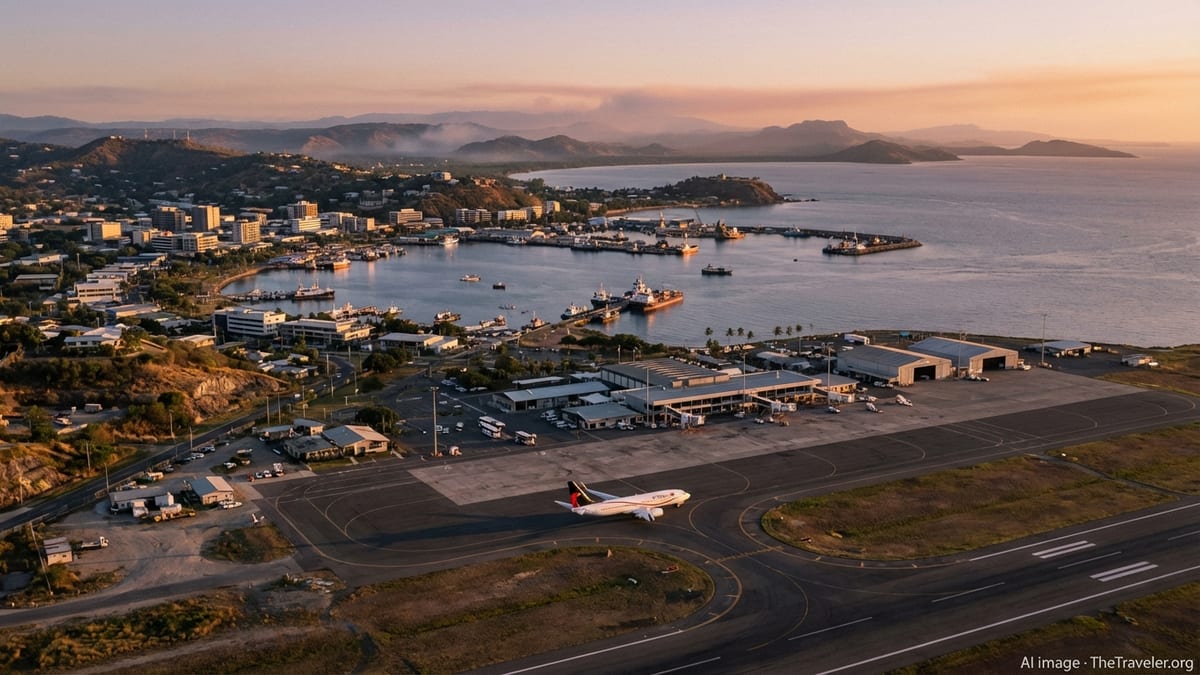
Direct Port Moresby–Auckland Flights Set for November 2026
Publicly available information from Air Niugini and Auckland Airport indicates that the Papua New Guinea flag carrier will resume non-stop flights between Port Moresby and Auckland from 17 November 2026, restoring a city pair that last had direct service in the late 1990s. The three-times-weekly operation is expected to cut travel times for passengers who currently route via Australian or other regional hubs.
Scheduling data shows that the route, operated initially with Boeing 737-800 aircraft, is timetabled at around five hours and forty minutes of flight time each way. The service is planned to ramp onto Air Niugini’s incoming Airbus A220 fleet as new aircraft arrive, tying the restart directly to the airline’s broader fleet renewal and efficiency drive.
The move brings back a connection that once formed part of a tripartite Hong Kong–Port Moresby–Auckland operation shared among Air Niugini, Air New Zealand and Cathay Pacific in the early 1980s before Air Niugini ran its own Auckland flights until 1998. The 2026 restart is being framed in public material as both a symbolic and practical reconnection between the two Pacific economies.
Leadership Change Positions Air Niugini for Regional Growth
The network expansion comes as Air Niugini reshapes its executive ranks. In 2026 the airline announced the appointment of aviation executive Alan Milne as Chief Executive Officer, marking his return to the role after previously leading the carrier from 2018 to 2020. Company statements describe the appointment as part of a “new era” focused on modernising the fleet and lifting on-time performance.
Milne’s background includes senior roles at Qantas and a subsequent spell heading Australia’s regional operator Skytrans, where publicly available records highlight a focus on reliability and thin regional routes. Observers view this experience as directly relevant to Papua New Guinea’s heavily domestic and regional network, where operational resilience and cost control are critical.
The timing of the leadership change aligns with Air Niugini’s largest-ever capital program, including the introduction of Airbus A220s and replacement of older jets. By tying the Port Moresby–Auckland launch to the new aircraft rollout, the carrier is positioning the New Zealand link not simply as a restored route but as a showcase for its refreshed product and renewed punctuality ambitions.
Policy Framework and Market Signals Support Cross-Pacific Reconnect
The revival of direct flights sits against a long-standing, but relatively underused, regulatory backdrop. New Zealand’s Ministry of Transport lists an air services agreement with Papua New Guinea dating back to 1994, later updated through exchanges of letters to adjust designation criteria and technical provisions. Those arrangements provide a framework for designated airlines to operate scheduled international services between the two countries.
For much of the past quarter-century, however, the absence of non-stop services meant traffic between the two markets flowed largely via Australia, often involving multiple carriers and extended connection times. With Port Moresby–Auckland flights now scheduled in airline systems from November 2026, capacity is set to shift onto a direct trunk, potentially altering pricing dynamics and itineraries for business travellers, seasonal workers and leisure passengers.
Route planners highlight that New Zealand is also expanding or updating air services arrangements across the wider Pacific and beyond, which may encourage competition and cooperation on regional links. Within that broader context, the PNG connection stands out as a relatively short, mid-haul sector that can plug directly into both countries’ domestic networks and onward Asian and Pacific routes.
New Leadership at Air New Zealand Adds Another Piece to the Puzzle
On the New Zealand side, the national carrier is also in leadership transition. Air New Zealand has appointed Nikhil Ravishankar as Chief Executive Officer, with company announcements noting that he stepped into the top role in October 2025 after several years as Chief Digital Officer. The change marks a generational shift in the airline’s executive team and a renewed focus on customer technology and network optimisation.
While Air New Zealand is not the operator of the Port Moresby–Auckland route, its leadership and strategy are significant for how New Zealand’s wider aviation landscape evolves. Any future decisions on partnerships, interline arrangements or loyalty-programme ties with Air Niugini would be shaped within this refreshed management era, though no specific cooperation on the PNG route has been outlined in publicly available documents to date.
Analysts note that Air New Zealand’s updated executive structure, together with New Zealand’s existing bilateral air services agreement with Papua New Guinea, provides a stable policy and commercial environment for connections to grow. At the same time, the entry of direct competition on flows that previously routed through Australian hubs could nudge network planners across the Tasman to reassess capacity and scheduling on overlapping corridors.
Tourism, Labour Mobility and Business Travel Poised to Benefit
Auckland Airport’s own communications on the route suggest the new Port Moresby link is being positioned as more than a point-to-point play. Timetables are designed to facilitate onward connections from New Zealand into Air Niugini’s Asian network, including destinations such as Manila, Tokyo, Hong Kong and Singapore. That approach indicates a strategy to tap both New Zealand-origin leisure demand and regional business traffic.
For Papua New Guinea, easier access to New Zealand promises potential gains in high-yield sectors such as mining, energy and infrastructure services, where New Zealand firms have an established presence, as well as in education and seasonal labour programmes. Travel industry commentary points to growing New Zealand interest in less-travelled Pacific destinations, suggesting that niche adventure tourism and cultural itineraries in PNG could see a lift once non-stop flights resume.
The revived route is also likely to be watched by policymakers focused on regional integration and resilience. Shorter, more frequent connections can support cooperation in areas ranging from disaster response logistics to sports exchanges and academic partnerships, while providing an additional option if disruptions affect routes via larger hubs.
With leadership transitions under way at both national airlines and a firm start date now set in schedules, the New Zealand–Papua New Guinea air link revival is moving from long-discussed aspiration to concrete network reality. How quickly passenger volumes respond will help determine whether the corridor remains a niche connection or develops into a mainstay of South Pacific aviation.
Air Niugini – Port Moresby–Auckland service announcement
Auckland Airport – Back on the radar: Air Niugini to relaunch direct AKL services
Air Niugini – Alan Milne CEO appointment
New Zealand Ministry of Transport – Air services agreements overview
NZX – Air New Zealand Chief Executive Officer appointment notice