


More news on this day
Passengers arriving at major UK airports this week have described baggage reclaim areas descending into confusion after an air traffic control IT failure cascaded into widespread flight disruptions, misrouted luggage and hours-long waits at overcrowded carousels.
Get the latest news straight to your inbox!
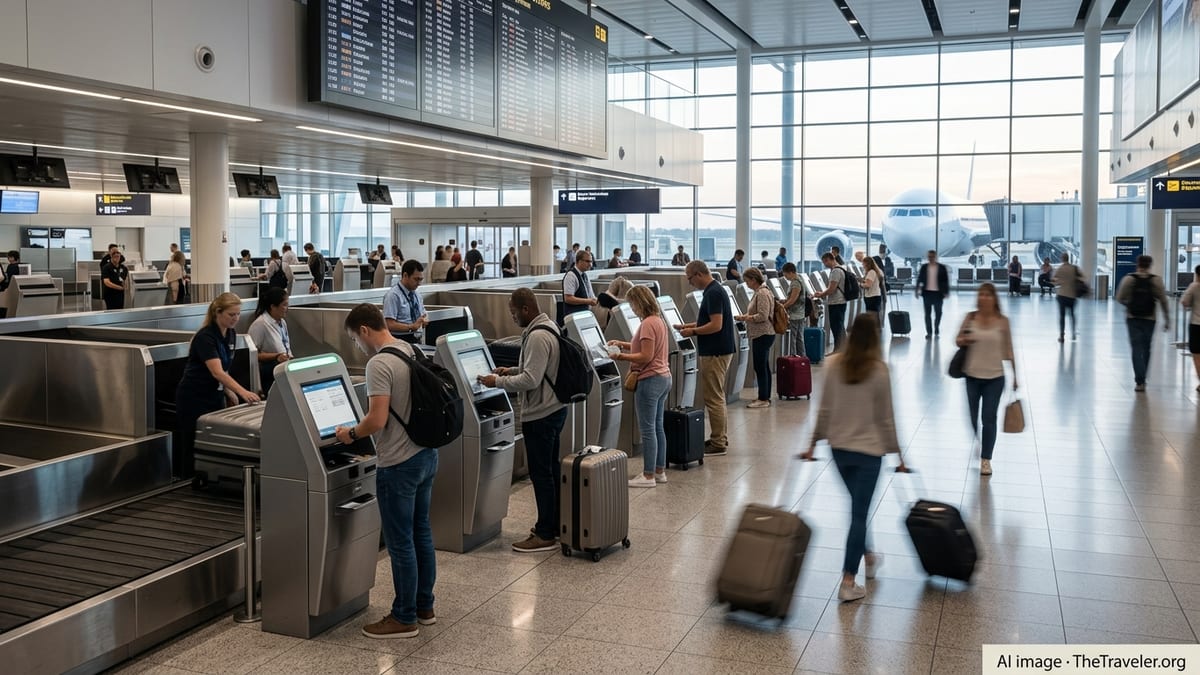
IT failure ripples from control screens to baggage belts
The disruption began on 8 September when a fault in the National Air Traffic Services (NATS) flight processing system triggered delays and cancellations at airports across the UK, from Heathrow and Gatwick to Manchester, Edinburgh and Birmingham. Publicly available information shows that more than 2,000 flights were eventually cancelled as operations struggled to recover.
Initial attention focused on grounded aircraft and stranded passengers, but the knock-on effects in the baggage halls quickly became apparent. With planes and crews out of position and schedules repeatedly redrawn, bags were offloaded in the wrong airports, left in holding areas, or stuck in transfer hubs awaiting new routings.
Coverage in UK and international outlets indicates that some travellers spent the night on terminal floors while tracking their bags via luggage tags and electronic trackers, only to discover that their belongings had remained in London while they were rebooked via regional airports or routed through European hubs.
The episode follows a series of IT and baggage system glitches at UK airports over the past two years, including repeated breakdowns at Heathrow that stranded thousands of bags and forced airlines to dispatch delayed luggage days after passengers had reached their destinations.
‘Pandemonium’ in arrivals as carousels overflow
Reports from Heathrow, Gatwick and Manchester describe baggage reclaim halls filling rapidly as multiple delayed flights arrived in close succession, overwhelming carousels designed to handle steady, predictable flows of passengers. Travellers arriving late at night encountered long queues snaking around stationary belts, with trolleys and suitcases blocking exits.
According to published coverage, airport staff tried to manage the crowding by grouping bags from cancelled or severely delayed flights in cordoned-off areas. In practice, this often meant passengers picking through large piles of luggage to locate their belongings, sometimes after more than 24 hours of travel.
Accounts gathered by UK media describe families with young children waiting several hours at baggage reclaim, unsure whether their suitcases were even on the ground. Some travellers reported being advised to file missing baggage claims and leave the airport without their belongings, adding further uncertainty to disrupted trips.
Images shared on social media and in news reports show rows of uncollected cases lining terminal walls, echoing scenes from previous baggage system failures where large volumes of luggage were left behind during IT outages and only reunited with owners days later.
Airlines juggle cancellations, diversions and lost luggage
Airlines operating at affected airports faced the dual challenge of rebooking passengers and recovering their baggage amid ongoing system disruption. Public information from airline and airport statements indicates that carriers prioritised getting people onto alternative flights, often via unfamiliar routings, while promising that bags would follow.
For many passengers this proved optimistic. In some cases, travellers reached their destinations without any checked luggage, while tracking tools and follow-up messages showed bags held at UK hubs awaiting space on later flights. Earlier technical failures in Heathrow’s baggage system this year left thousands of bags stranded for days at Terminal 5, highlighting the vulnerability of automated handling to IT problems.
Travel industry commentary suggests that the combination of a national air traffic control fault and local baggage system fragilities amplified the impact. When schedules are upended on a large scale, carefully timed baggage transfers between inbound and outbound flights break down, forcing ground handlers to manually intervene at short notice.
Advisories from consumer groups and aviation specialists in recent days have urged passengers caught in the disruption to keep boarding passes and baggage receipts, and to file detailed property irregularity reports before leaving the airport to support compensation or reimbursement claims later.
Passengers question resilience of UK airport IT
The latest incident has reignited discussion about the resilience of the UK’s aviation IT infrastructure. The NATS flight-processing glitch follows earlier national and regional outages affecting border control e-gates and airport check-in systems in recent years, each of which created long queues and operational bottlenecks.
Parliamentary documents and official guidance acknowledge that IT faults at the border and within airport systems can rapidly translate into uncomfortable conditions for passengers, particularly when multiple flights arrive or depart within compressed windows. Previous network outages have prompted calls for more robust contingency planning and clearer communication protocols to prevent scenes of overcrowding.
Analysts quoted across the travel and technology press point to the growing interdependence between air traffic control, airline scheduling, baggage handling and border control systems. When a central node experiences a failure, the effects can cascade through check-in, boarding, arrivals and reclaim, creating visible pressure points in places like baggage halls where passengers directly experience the disruption.
Recent government publications on border operations also emphasise the importance of supporting elderly passengers, families and travellers with reduced mobility during IT-related delays, reflecting concerns raised after previous e-gate failures about long waits and limited assistance in crowded terminals.
What disrupted travellers can realistically expect
For those still separated from their luggage after the latest IT problems, consumer advice shared by travel organisations and regulators sets out some practical expectations. Under existing air passenger protection rules, airlines remain responsible for tracing and returning delayed baggage and may be required to reimburse reasonable costs for essential items purchased while bags are missing.
Passengers are typically encouraged to file a detailed report at the airport and retain copies, then monitor airline online tracing tools using reference numbers provided by ground staff. In recent disruptions, some travellers have tracked their bags using electronic tags long before formal notifications arrived.
Guidance on government and airport websites notes that complaint procedures are available where passengers believe processes were mishandled, although these routes can be lengthy. Industry observers argue that, while compensation frameworks exist, they were not designed with repeated, system-wide IT failures in mind and may struggle to keep pace with the scale of recent disruptions.
For now, travel experts recommend that passengers connecting through UK hubs build additional time into itineraries, carry critical items in hand luggage where permitted, and keep digital copies of all travel documents. As investigations into the air traffic control fault continue, attention is likely to focus on whether lessons from previous outages across the UK aviation network have been fully applied to minimise the chances of baggage reclaim descending into chaos again.