


More news on this day
Rail passengers on the busy Boston–Providence corridor faced cascading delays on September 9, 2026, after two separate incidents disrupted both MBTA commuter trains and Amtrak services during the afternoon and evening rush.
Get the latest news straight to your inbox!
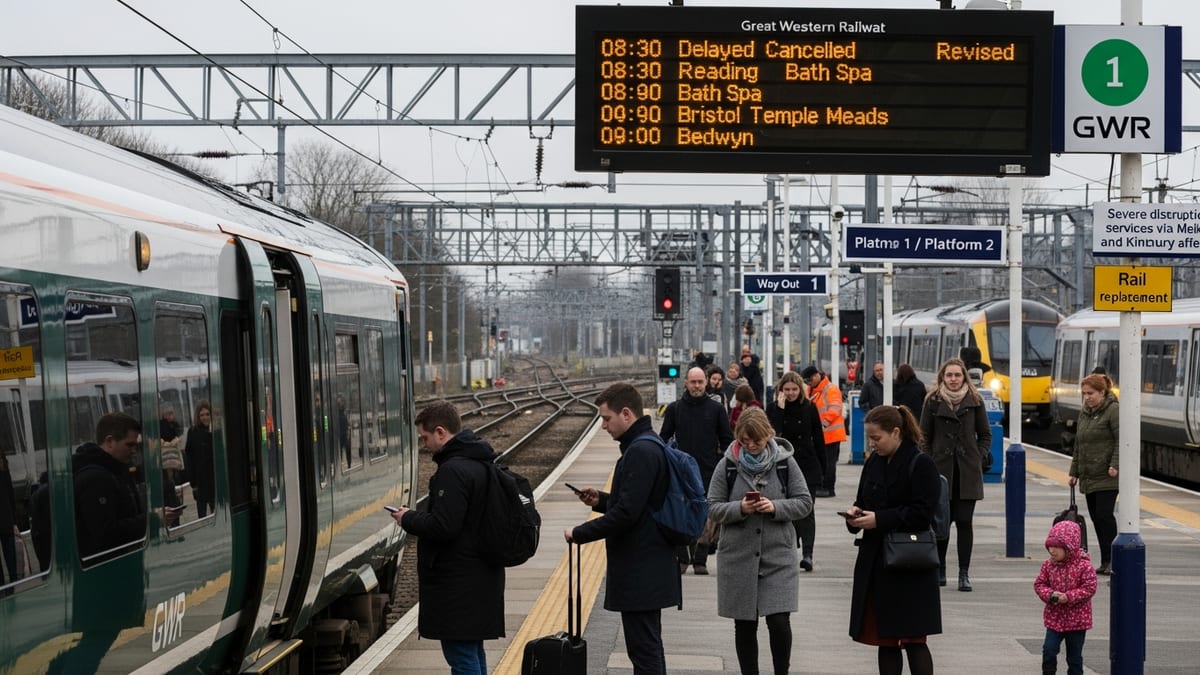
Smoking MBTA Train at Ruggles Forces Termination of Providence Line Service
Publicly available reports indicate that service problems began shortly before 2 p.m. on September 9, when Providence Line Train 840 from Wickford Junction was halted and then terminated at Ruggles Station in Boston. The MBTA commuter rail operator announced that the train, scheduled to arrive at South Station, could go no farther because of fire department activity at the station.
Coverage from local outlets shows images of a commuter rail train at Ruggles with visible smoke near the locomotive area as emergency crews responded on the platform. The incident led to an immediate suspension or alteration of service for several MBTA commuter rail lines that share the busy corridor approaching Boston, including the Providence Line, as dispatchers worked to route trains around the affected track segment.
Subsequent updates described a period of severe delays and crowding as passengers were directed to alternative routes. Orange Line trains already dealing with planned maintenance reductions became a key fallback for riders moving between Ruggles, Back Bay, and South Station, adding pressure to a system that has leaned heavily on commuter rail to supplement subway shutdowns in recent weeks.
Reports indicate that the smoking train was brought under control without serious injuries, but the operational ripple effects lasted well into the afternoon. Trains stacked up approaching Boston, with some inbound runs held outside Ruggles and Back Bay while outbound trips departed late or were cancelled outright to rebalance equipment and crews.
Separate Police Activity Near Sharon Disrupts Amtrak and MBTA Trains
While crews were still working through the backlog from the Ruggles disruption, a second serious incident unfolded farther south on the same Boston–Providence rail route. Passenger accounts and regional news coverage describe significant “police activity” in the Sharon area during the late afternoon, linked to a person being struck by an Amtrak train on the Northeast Corridor main line.
The incident near Sharon led to the suspension of southbound MBTA Providence and Foxboro Line services from Boston’s South Station, according to rider alerts and social media reports. Trains already en route were held at intermediate stations, including Route 128 and Providence, as emergency responders secured the scene and rail traffic controllers halted movements through the affected segment.
Amtrak’s intercity operations were also heavily impacted. Passengers on at least one Northeast Regional train reported delays of more than 90 minutes while waiting for permission to proceed or for a transfer to a different trainset. Some riders described being told to expect a transfer to continue their journey after extended holding periods as dispatchers attempted to restore limited traffic on one track around the incident zone.
The Sharon disruption compounded the earlier problems near Boston, effectively splitting the corridor into isolated segments with limited ability to move trains or equipment. With both commuter and intercity services affected on the same day, travelers between Boston, Providence, and intermediate communities such as Sharon and Attleboro faced a patchwork of partial service, bus substitutions, and trip cancellations.
Knock-On Effects for Commuters Across the Boston–Providence Corridor
The two incidents exposed how quickly routine delays can escalate into system-wide disruption on the Boston–Providence rail spine, which carries a dense mix of MBTA commuter trains and Amtrak’s Northeast Corridor services. Even after fire activity at Ruggles was brought under control, lingering congestion and the later Sharon police response meant that schedules remained unreliable for much of the day.
According to trip planning data and publicly posted timetables, the Boston–Providence segment typically supports frequent commuter rail runs layered with multiple Amtrak Regional and Acela departures. When a critical node like Ruggles or a mainline segment near Sharon is taken offline, there is limited spare capacity to reroute trains, particularly during weekday peaks when the corridor is already near its operational limits.
Passengers described missed connections, crowded platforms, and uncertainty about departure times as alerts shifted from “moderate” to “severe” delays over the course of the afternoon. Some Boston-bound riders from Rhode Island reported opting for intercity bus or rideshare options rather than waiting out indefinite onboard holds or station announcements that repeatedly extended expected departure times.
For travelers south of Boston, the disruptions also highlighted ongoing tensions between planned maintenance diversions and unexpected incidents. With portions of the Orange Line experiencing multi-day shutdowns in September and riders encouraged to use commuter rail as an alternative, the sudden loss of reliable Providence Line service left few good options for those dependent on rail to reach work, school, or medical appointments.
Safety, Reliability and Resilience Under Renewed Scrutiny
The twin disruptions arrive at a time when local leaders and riders are closely watching MBTA and Amtrak performance in the greater Boston region. Recent years have seen a series of service suspensions, infrastructure repairs, and safety reviews across subway and commuter rail operations, as agencies respond to federal oversight findings and undertake long-deferred track and signal work.
While preliminary reports suggest that Wednesday’s incidents were unrelated, the combination of a train emitting smoke at a major transfer station and a separate collision involving a person near Sharon is likely to renew questions about safety practices, incident response protocols, and communication with riders. Investigations typically follow such events to determine contributing factors and whether additional safeguards or training are warranted.
Delay patterns on the Providence Line in particular have drawn attention, with earlier episodes in August linked to downed wires near Back Bay causing morning rush-hour disruptions. Taken together with the September 9 events, riders and advocates may press for more detailed reporting on incident causes and timelines, as well as clearer thresholds for when to suspend versus continue limited service through affected areas.
For Amtrak, any incident on the Northeast Corridor carries wider implications because of the line’s role as the primary passenger rail artery in the northeastern United States. Even localized events in Massachusetts can trigger downstream schedule changes for trains bound for New York, Washington, and beyond, underscoring the importance of resilient infrastructure and effective coordination with regional partners like the MBTA.
What Travelers Should Expect in the Coming Days
Public information suggests that physical damage to rail infrastructure from both the Ruggles and Sharon incidents was limited, which may allow service to normalize more quickly than after major track or wire failures. However, riders on both MBTA and Amtrak trains between Boston and Providence are being advised, through alerts and trip-planning platforms, to monitor schedules closely and allow extra time for connections as operations stabilize.
In the near term, commuters may still encounter residual delays as equipment and crews are repositioned and as agencies complete inspections of the trains and track segments involved. Some runs could operate with reduced capacity if railcars are temporarily removed from service for inspection or repair, leading to more crowded trains even if the printed timetable remains unchanged.
For travelers evaluating alternatives, regional buses and highway routes between Boston and Providence remain options, though congestion on Interstate 95 and related corridors can be significant during peak periods. In Boston, ongoing subway work and periodic Orange Line shutdowns mean that rail riders may continue to rely on a mix of commuter rail, local buses, and shuttles to navigate between key hubs such as Forest Hills, Ruggles, Back Bay, and South Station.
MBTA and Amtrak riders are encouraged by publicly available advisories to sign up for alert services, check real-time maps where available, and consult station information boards before departure. Given the events of September 9, passengers on the Boston–Providence route may benefit from building contingency time into their travel plans, at least in the short term, as the busy corridor recovers from a challenging day for regional rail.
Crews put out fire on commuter rail train at Ruggles – WHDH 7News
Fire activity near Ruggles disrupts multiple Commuter Rail lines – WCVB
Discussion of Sharon police activity and Providence Line delays – r/boston