


More news on this day
Flight cancellations across the United Kingdom have surged after a major failure in the country’s air traffic control system, leaving hundreds of thousands of passengers facing severe disruption and reigniting concerns about the resilience of critical aviation infrastructure.
Get the latest news straight to your inbox!
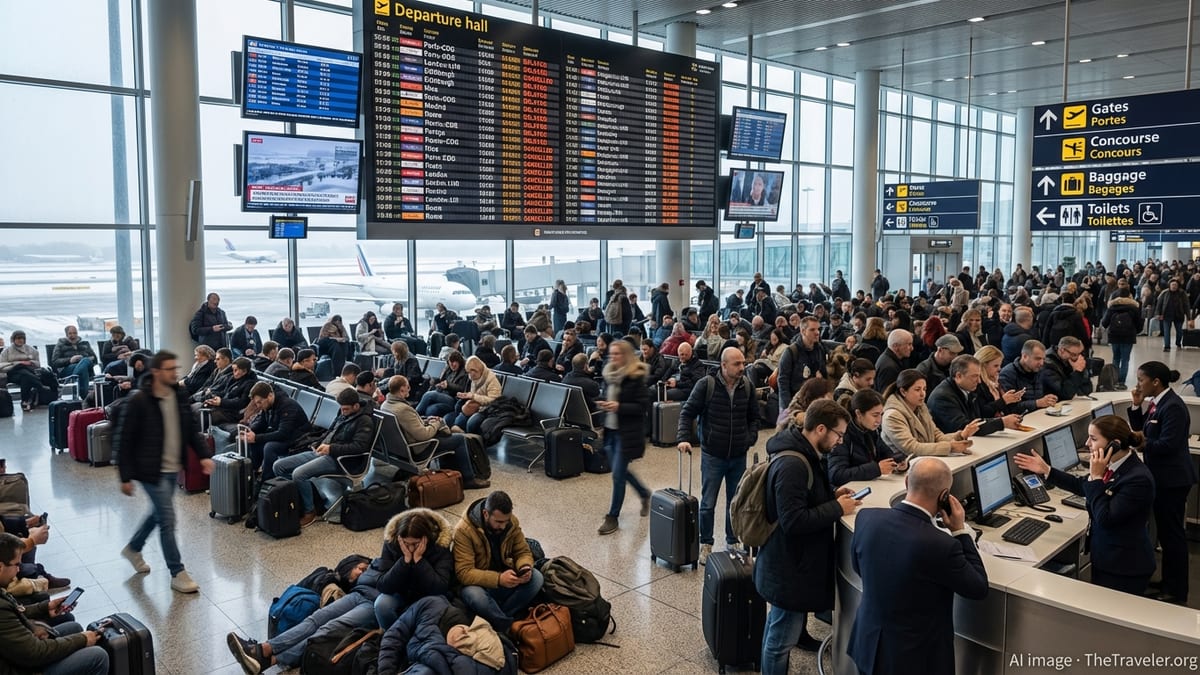
System outage triggers mass disruption across UK airports
Published coverage indicates that a technical fault in National Air Traffic Services’ (NATS) flight processing system on 8 September 2026 led to one of the most disruptive days for UK aviation in recent years. The outage, which reportedly lasted around four hours, forced restrictions on air traffic and prompted airlines to cancel large numbers of services to, from and within the United Kingdom.
Flight-tracking data cited in multiple reports shows that initial cancellation counts quickly climbed into the hundreds, then surpassed 1,000 flights as the day progressed. By the following day, the cumulative total of flights scrapped since the fault began was reported to have exceeded 2,000, as carriers struggled to reposition aircraft and crew and to clear mounting backlogs.
Major hubs including London Heathrow, London Gatwick and Manchester experienced the sharpest impacts, with early-morning data suggesting hundreds of cancellations at Heathrow alone. However, the disruption extended well beyond the UK, as the system failure affected overflights and knock-on schedules across Europe and on long-haul routes.
NATS has publicly attributed the problem to an issue within its flight processing system, which handles and validates flight plan data. The organisation has ruled out a cyberattack and is now working under a government-imposed one-week timeframe to deliver an initial explanation of the root cause and how a repeat can be prevented.
Passenger fallout: stranded travelers and rolling knock-on delays
The immediate consequence for travelers has been extensive disruption, with reports describing passengers stranded on aircraft, in terminals and at overseas airports as flights were delayed or cancelled at short notice. Long queues formed at airline service desks as customers sought rebooking options and overnight accommodation.
Publicly available accounts from passengers show that some travelers experienced delays of many hours on board grounded aircraft before being asked to disembark when flights were cancelled. Others found that only one leg of a multi-sector itinerary was cancelled, complicating onward travel and leaving them to navigate rebooking systems that were themselves overwhelmed by demand.
Social media posts and forum discussions referenced in news coverage highlight difficulties in reaching airline customer service channels, with some passengers reporting dropped calls, non-functioning online tools and conflicting messages about new flight arrangements. These problems compounded frustration among travelers who had already been caught by earlier UK air traffic control failures in recent years.
The disruption has also affected travellers outside Europe. Reports from long-haul passengers, including those connecting via UK hubs from North America, the Middle East and Asia-Pacific, indicate missed onward connections, forced overnight stays and uncertainty over compensation and reimbursement for additional expenses.
Financial impact on airlines and broader aviation sector
Alongside the passenger fallout, the financial impact on airlines and the wider aviation sector is expected to be significant. Early estimates in published coverage suggest that industry-wide losses could run into tens of millions of pounds once the cost of cancelled flights, crew and aircraft displacement, passenger care and compensation are fully assessed.
Individual carriers have already begun to outline preliminary figures. One major low-cost airline has indicated that the outage on 8 September alone resulted in the cancellation of hundreds of its services, affecting tens of thousands of passengers and generating direct losses estimated in the low millions of pounds. Those figures do not include potential longer-term effects such as reduced customer confidence or shifts in booking patterns.
Airports have also faced operational and financial strain. With aircraft and crews out of position, schedules remained disrupted into 9 and 10 September, meaning that airport operators had to manage crowded terminals, atypical peaks in passenger flow and additional staffing for support and crowd management. Retail and hospitality revenues may have seen a temporary uplift from stranded passengers, but this is widely viewed as offset by reputational risks and operational complexity.
Insurers and reinsurers are expected to play a role in absorbing some of the shock, depending on policy wordings and whether the system failure is classified under specific operational disruption clauses. Analysts quoted in recent coverage suggest that repeated air traffic control incidents could eventually influence risk assessments and premiums for parts of the aviation ecosystem.
Regulatory response and passenger rights
In the wake of the failure, the UK Civil Aviation Authority (CAA) has issued statements reminding airlines of their obligations to care for and, where applicable, compensate passengers affected by delays and cancellations. According to the CAA’s published guidance, carriers remain responsible for offering meals, refreshments, accommodation where necessary and re-routing options, even where the underlying cause lies with air traffic control rather than the airline itself.
The CAA has acknowledged the “significant difficulties” experienced by consumers and has indicated that passengers whose flights were cancelled or heavily delayed may be entitled to refunds or alternative travel at the earliest opportunity. However, eligibility for fixed-sum compensation under UK and retained EU regulations may depend on whether the NATS system failure is deemed an “extraordinary circumstance,” something that is expected to be closely examined in the coming weeks.
Consumer advocacy organisations cited in media reports are urging passengers to retain all documentation, including booking confirmations, boarding passes and receipts for incidental expenses such as meals and accommodation. They argue that this evidence will be essential for anyone lodging claims with airlines or pursuing disputes through alternative dispute resolution schemes or, in some cases, small claims courts.
Regulators and lawmakers have also turned their attention to NATS itself. The government has instructed the company to provide an initial report within seven days, while calls have been made in Parliament and by airline trade bodies for an independent review into the resilience of the UK’s air traffic management systems and the oversight framework governing them.
Calls for reform after third major failure in three years
This week’s disruption comes after a series of high-profile air traffic control incidents involving NATS over the past three years. A major failure of the flight plan processing system in August 2023 caused widespread delays and cancellations, while a separate radar-related problem in 2025 led to further disruption. Published commentary from aviation specialists suggests that the latest outage strengthens arguments that the UK’s air traffic control infrastructure requires accelerated renewal and more robust contingency planning.
Airline industry groups have been particularly vocal, with Airlines UK and individual carriers publicly calling for a review of NATS’ performance, investment levels and accountability mechanisms. Some executives quoted in coverage describe a pattern of repeated failures that leave airlines and passengers bearing the operational and financial consequences of faults within an essential part of national infrastructure.
Aviation analysts point out that modern air traffic control systems are highly complex, and that rare but severe faults can never be entirely eliminated. Nonetheless, repeated high-impact disruptions are prompting questions about whether redundancy, backup systems and stress testing are sufficiently robust for current traffic volumes and future growth forecasts.
As investigations proceed, passengers planning to travel via UK airports in the coming days are being advised in public guidance to check flight status regularly, allow extra time at airports and remain prepared for potential last-minute changes. While operations are gradually returning closer to normal levels, residual delays, aircraft shortages and crew rostering challenges mean the effects of the 8 September system failure are expected to ripple through schedules for several days.