


More news on this day
Visitors to Newcastle upon Tyne and Sunderland are finding a rapidly changing urban landscape, as fresh mapping, transport upgrades and public-space projects alter how the neighbouring North East cities are explored on foot and by rail.
Get the latest news straight to your inbox!
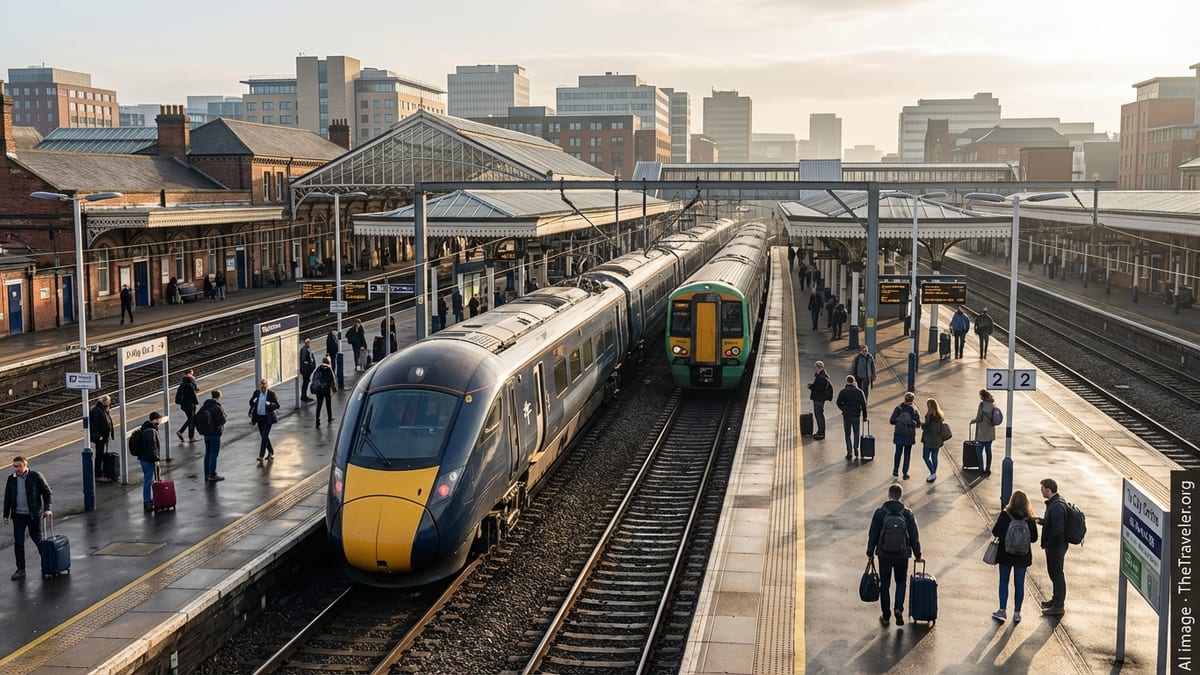
City-centre transformations reshape how maps are used
Newcastle’s city centre is undergoing a series of regeneration schemes that are beginning to filter through into how the city is represented on visitor maps. Publicly available information from Newcastle City Council highlights major works along Northumberland Street, often described as the region’s busiest shopping street, with a programme of improvements now expected to be largely complete by the end of 2025 and fully finished in early 2026. As designs are finalised, cartographers and digital mapping services are gradually updating pedestrian routes, public-space layouts and access points.
Beyond the main retail spine, new plans around Eldon Square and nearby streets are designed to create more flexible public areas for events and food-led venues. These layouts affect the wayfinding focus on many city maps, which increasingly highlight courtyards, covered lanes and new entrances rather than simply plotting building footprints. For visitors, this means that older printed maps may not fully match the on-the-ground experience in the coming seasons.
On the western edge of central Newcastle, the long-discussed Forth Yards site on the River Tyne is also moving forward, with new imagery and planning documents outlining a proposed mixed-use district and thousands of new homes. As this 52‑acre area shifts from railway sidings and vacant land to a planned waterfront quarter, future maps of the city are expected to show additional riverside paths and connections that do not yet appear on many current tourist plans.
The continuing restoration of the Tyne Bridge, a key visual anchor on almost every Newcastle map, is another factor shaping cartographic updates. Diversions and adjusted traffic movements on routes leading to the bridge are progressively incorporated into driving and cycling maps, even as the familiar outline of the crossing remains a central symbol for both Newcastle and neighbouring Gateshead.
Metro network maps tie Newcastle and Sunderland together
For many visitors, the most practical way to understand the geography of Newcastle and Sunderland is through the Tyne and Wear Metro diagram. The light-rail system links Newcastle’s compact centre with coastal districts, the airport and Sunderland, and its stylised map is widely reproduced in print and digital formats. Recent rolling-stock investment and infrastructure works have not altered the core map geometry, but they have renewed interest in how clearly the network connects the two cities and nearby towns.
Metro route diagrams emphasise interchanges such as Monument, Central Station, Gateshead, Park Lane and Sunderland, giving newcomers a visual framework that often becomes their default city map. Travel apps and journey planners increasingly overlay this network on street maps, allowing users to switch between the schematic Metro view and more detailed cartography showing walking routes from stations to attractions, stadiums and waterfront areas.
Third-party mapping tools now supplement the official Metro diagram with features such as live disruption layers and push updates to station layouts. This approach allows visitors arriving at Newcastle International Airport or by mainline rail to access current information on journey times, interchange points and zone boundaries without needing to consult static wall maps alone.
In Sunderland, where some Metro stations share space with rail services and bus interchanges, unified diagrams highlight multimodal hubs rather than treating each mode separately. These integrated maps are increasingly important for day-trippers who base themselves in Newcastle but rely on rail or Metro links to reach the seafront at Roker and Seaburn or to attend events at the Stadium of Light.
Digital tools and apps reframe the twin-city map
Digital mapping platforms are playing a larger role in how travellers navigate between Newcastle and Sunderland, blending traditional city plans with real-time data. Navigation apps overlay bus corridors, Metro lines and walking shortcuts, while some specialist products focus specifically on the Tyne and Wear Metro with downloadable offline diagrams. These tools allow users to switch quickly from a regional perspective, spanning the Tyne estuary and the River Wear, to detailed views of individual streets.
Because the region continues to see changes to road classifications, transport corridors and public-realm schemes, app-based maps can adjust more rapidly than printed city-centre plans. Travel-focused apps make use of new datasets on key route networks and priority corridors, which helps drivers and cyclists understand which streets are intended as through routes and which are being calmed for local access and walking.
Cartography enthusiasts have also begun to experiment with redesigned Metro and city maps, sharing alternative diagrams that free themselves from strict geographical accuracy to highlight connections, walking distances and tourist landmarks. While these unofficial creations are not used for formal navigation, they reflect a growing interest in how best to portray a conurbation that stretches from Newcastle’s Quayside through Gateshead to Sunderland and the coast.
For many visitors, the combination of an illustrated schematic network map and a conventional street plan is becoming the preferred way to understand the two cities. This dual approach lets travellers visualise the broader shape of the urban area while still relying on precise street-level detail for last‑mile navigation.
Wayfinding, signage and printed maps on the ground
Alongside digital tools, both Newcastle and Sunderland continue to invest in on-street wayfinding systems that provide reassurance to visitors who prefer physical maps. In Newcastle, city-centre works incorporate new paving patterns, widened footways and potential locations for information totems, giving map designers additional fixed points to highlight. These structures often feature simplified plans that prioritise walking times and landmark buildings over full street grids.
Sunderland has been revisiting the presentation of its core streets, waterfront and university quarter, which is reflected in updated local mapping and signage. New city-centre pedestrian routes, improved links between the rail station and the riverside, and greater emphasis on cultural venues encourage mapmakers to give more prominence to the River Wear and surrounding public spaces than older diagrams might have done.
Paper maps, particularly those distributed by tourism bodies and accommodation providers, still play a role for short-stay visitors. Many now combine the centres of Newcastle and Gateshead on one side and Sunderland and the coast on the other, highlighting the ease of moving between the two by rail or Metro. Insets often show simplified diagrams of the regional network, helping travellers to understand how day trips can be planned without relying on a car.
As regeneration projects complete and additional streetscape changes are confirmed, printed guides are expected to go through further rounds of revision. Travellers arriving in late 2025 and 2026 may therefore notice differences between older brochures and the latest on-street mapping systems, particularly around pedestrian-priority streets and new public squares.
Practical mapping tips for future visitors
For upcoming trips, travel information suggests that visitors should consider combining three mapping layers when planning time in Newcastle and Sunderland. A modern street map helps with exploring compact centres on foot, especially in areas where road layouts are being adjusted in favour of pedestrians and public transport. The Tyne and Wear Metro diagram provides a simple regional picture that is particularly helpful for understanding how the two cities and surrounding coastal districts are linked.
A third layer, made up of live journey-planning tools and local bus or rail maps, can fill in remaining gaps, especially for journeys beyond the Metro network or to developing districts on the edges of the urban core. This combination of static and dynamic views reflects the reality of a region where the physical city is evolving more quickly than traditional guidebook publishing cycles.
Travellers are also likely to benefit from checking the date of any printed city plan they use, given the scale of current and recent works in central Newcastle and the incremental changes around Sunderland’s station and riverside. Public information indicates that maps produced from late 2025 onwards will more accurately depict completed public spaces and simplified traffic movements.
As Newcastle upon Tyne and Sunderland continue to update networks, streets and public areas, the shared city map that links the two is steadily being redrawn, offering visitors a clearer and more connected view of one of England’s most compact twin-city regions.