


Nice Côte d’Azur Airport is compact compared with Paris or London, but its two main terminals can still be confusing, especially if you are landing on one and departing from the other. Airlines move between terminals as the airport expands, tram lines have been extended, and signage mixes French and English. This guide breaks down exactly how Terminal 1 and Terminal 2 work today, which one you actually need, and how to move smoothly between them with real-world examples that match how travelers really use the airport.
Get the latest updates straight to your inbox!
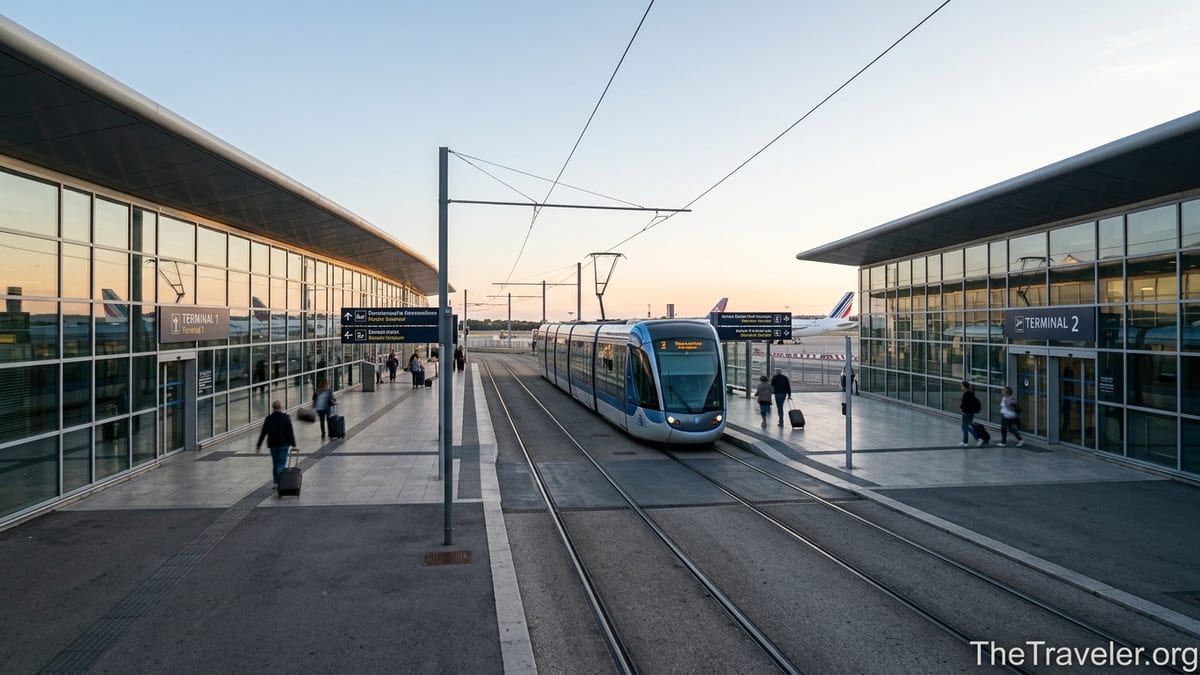
Terminal 1 vs Terminal 2: The Big Picture
Nice Côte d’Azur Airport has two main passenger terminals in use for most travelers: Terminal 1 and Terminal 2. Both handle departures and arrivals, and both are linked by a short tram ride and an internal shuttle. The airport is relatively small in footprint, so you will never be more than a few minutes from the other terminal, but knowing which one your airline uses will save you time and stress.
Terminal 1 is the older of the two and feels more compact. Many European flights, especially those operated by low-cost or point-to-point carriers, have traditionally used this building. It is closest to the Nice Saint-Augustin railway station and the Grand Arénas transport hub, which makes it convenient if you are connecting directly to regional trains along the Riviera, for example to Antibes or Cannes.
Terminal 2 is larger, newer and now the airport’s main hub. It has been extended and modernized in recent years, so most long-haul and many full-service European airlines operate here. If you are flying to major hubs such as Paris Charles de Gaulle, Frankfurt or London Heathrow on a legacy carrier, you will quite likely be using Terminal 2, especially in peak summer when more widebody aircraft operate.
In practice, travelers often arrive into Terminal 2 on an intercontinental or major European service, then depart later from Terminal 1 on a low-cost airline to another Mediterranean destination. Because the tram between terminals is free for this short hop, it is entirely realistic to land at Terminal 2, collect bags, ride the tram to Terminal 1 and check in again within 30 to 40 minutes if you are travelling with hand luggage and the airport is not at peak crowding.
Which Airlines Use Terminal 1 and Terminal 2
Airline allocations can change from one season to the next, so you should always check your booking or boarding pass. That said, there are recognizable patterns that help you guess the right terminal before you even arrive at the airport. Many low-cost or regional European carriers operate from Terminal 1, while a high proportion of long-haul and network carriers use Terminal 2.
As an example, passengers flying from London to Nice on a budget airline for a weekend city break are often directed to Terminal 1. That means arriving at the airport, heading straight to the Terminal 1 check-in hall on the departures level, and passing through a relatively compact security area before entering a Schengen or non-Schengen gate zone depending on your route. In the same week, a traveler flying Nice to Dubai on a major Gulf carrier is typically handled in Terminal 2, taking advantage of its wider gates and additional shopping and lounge options.
Terminal 2 is also the primary base for many European flagship airlines feeding passengers into their global hubs. For instance, a morning flight from Nice to Paris Charles de Gaulle, then onward to North America, is often routed through Terminal 2, keeping international and domestic connections under one roof wherever possible. Similarly, frequent business travelers commuting between Nice and cities such as Frankfurt, Zurich or Amsterdam usually depart from Terminal 2, which is designed to cope with higher passenger volumes at peak times.
In contrast, leisure-heavy services to secondary cities and seasonal sun destinations are more likely to depart from Terminal 1, especially at weekends from late spring through early autumn. A family heading from Nice to a smaller Scandinavian city on a summer charter, or a group of friends flying to a secondary UK airport on a low-cost airline, will often find their check-in desks and boarding gates in Terminal 1. This divide between Terminal 1 and Terminal 2 is not absolute, but thinking in terms of “mainline network carriers and long-haul in T2, many point-to-point and leisure carriers in T1” will generally steer you in the right direction.
Check-in Areas and Departures Experience
Both terminals follow a similar pattern: arrivals on the lower level, departures above, with the main check-in halls just inside the departures entrances. At Terminal 1, the departures level is relatively compact, so check-in zones are easy to overlook if you walk quickly past the sliding doors. Once inside, airline check-in islands are grouped, with self-service kiosks for some carriers and staffed counters for others, making it straightforward to move between them if your airline opens more desks during busy periods.
Terminal 1’s smaller size has an advantage during quieter hours. A traveler on an early morning intra-Schengen flight, such as Nice to Rome or Barcelona, may walk from the tram stop to a staffed check-in desk and then to security within 10 to 15 minutes, particularly outside of school holidays. This can be especially appealing for business travelers or anyone staying at a nearby airport hotel who wants to minimize walking and queuing time.
Terminal 2’s departures hall is much larger and more modern, with long rows of desks and automatic bag-drop machines used by several airlines. Because this terminal handles a greater share of long-haul and connecting traffic, queues at check-in can build rapidly, especially on peak summer Saturdays when multiple flights to hubs and holiday destinations overlap. In this scenario, arriving the full two to three hours before departure that your airline recommends is much more than a formality: it greatly reduces the risk of facing 30-minute lines just to drop a bag.
Security screening for departures is located just beyond the check-in areas in both terminals. At peak times, queues may stretch back into the main hall, particularly in Terminal 2. Business travelers and frequent flyers on participating airlines can often purchase or receive access to a dedicated fast-track lane, which becomes valuable on busy mornings when families with strollers and holidaymakers with large cabin bags naturally slow the standard lanes. Once past security, Terminal 2 in particular opens up into an expanded departures concourse with more food outlets, duty-free shopping and larger gate areas than Terminal 1.
Arrivals, Baggage Claim and Ground Transport
Arrivals in both Terminal 1 and Terminal 2 follow a familiar sequence: passport control for non-Schengen arrivals, baggage reclaim, customs, then a landside arrivals hall with exits leading to taxis, trams, buses and car rentals. The process is usually quick compared with larger European hubs, but waits at passport control can still build when several non-Schengen flights land close together, especially in the late morning and early afternoon.
In Terminal 1, the baggage claim area feels compact, with a modest number of carousels and clear signage pointing toward the exits. Once you pass through customs, you step almost immediately into the arrivals hall where you will find car rental desks, information points and doors leading to the tram and bus stops. Many travelers heading onward to Antibes, Cannes or Monaco walk a few minutes to Nice Saint-Augustin railway station from Terminal 1 using marked pedestrian paths and footbridges, then board a regional train along the coast.
Terminal 2’s arrivals area is larger, serving higher passenger volumes and more long-haul flights. After baggage claim and customs, you enter a broader arrivals hall where you will find more extensive car rental facilities, pre-booked transfer meeting points and clearer separation between different ground transport options. For instance, signs direct you towards the tram platforms that serve central Nice and the port, as well as dedicated areas for coaches serving nearby resorts. This makes Terminal 2 a common entry point for package holiday guests whose transfers are organized by tour operators waiting just outside the doors.
In terms of real-world timing, many passengers report stepping off a mid-morning European flight, clearing immigration, collecting a standard checked suitcase and walking onto a tram toward the city within 30 to 45 minutes in Terminal 2 under normal conditions. In the quieter winter season, that journey can be even shorter. However, keep in mind that peak summer weekends, late-evening banked arrivals or any disruption in the wider European network can lengthen waits for baggage and passport control in both terminals.
Tram Stops, Free Segment and Other Ways to Move Between Terminals
One of the biggest advantages of Nice Airport is its integration with the city’s modern tram network. A dedicated tram route connects Terminal 1 and Terminal 2 in just a few minutes and continues to the nearby Grand Arénas district and the Nice Saint-Augustin railway station. For most travelers, this tram is the easiest and fastest way to move between terminals, and the short airport segment between the two terminal stops is commonly treated as a free link when used only for that hop.
In practice, this means that if you land at Terminal 2 but your onward flight or rental car pick-up is at Terminal 1, you simply follow the signs to the tram stop located a short walk outside Terminal 2’s arrivals area. You then board the next tram heading toward Terminal 1, ride for roughly two to three minutes and step off at the stop closest to the Terminal 1 building and bus bays. Travelers routinely report doing this with full luggage trolleys, strollers and cabin bags, as the trams are low-floor and designed with wide doors.
If you need to go beyond the airport, the same tram line continues from the terminals toward central Nice. For example, a visitor staying near the main shopping street around Jean Médecin can board at Terminal 2, ride inland and then continue underground to reach the city center station. From there, it is a short walk to many hotels and to Nice-Ville railway station. You would need a valid ticket once you travel past the dedicated airport section, but many visitors find the tram cheaper and more predictable than taxis during busy summer afternoons.
Alongside the tram, the airport operates an internal shuttle that links Terminals 1 and 2 with more distant car parks. Although this shuttle is primarily advertised for use by those who have parked in the large external lots, it also provides an alternative way to move between terminals if the tram is temporarily disrupted or if you are travelling very late at night or early in the morning when service can be less frequent. Walking between terminals is technically possible but not recommended for most travelers, as roads, parking areas and fenced-off zones make the route indirect and less comfortable with luggage.
Security, Passport Control and Transiting Between Flights
For most passengers, Nice functions as an origin or final destination rather than a transfer hub, but same-day connections do occur, especially during the summer season. It is important to understand that there is no single unified secure airside corridor joining Terminal 1 and Terminal 2. If your flights use different terminals and are on separate tickets, you should expect to exit into the public area, ride the tram or shuttle and then re-clear security at the other terminal.
Within each terminal, security checkpoints are located directly after the check-in areas. At less busy times of the year, queues can be relatively short and processing feels efficient, especially in Terminal 1, which handles lower overall volumes. However, Nice is a popular gateway to the French Riviera, so lines grow sharply during late spring and summer weekends. Travelers flying on Saturday mornings to Northern Europe, the UK or Scandinavian cities report that arriving less than two hours before departure can feel tight, particularly in Terminal 2 where multiple holiday flights often overlap.
Passport control is required for non-Schengen flights and is present in both terminals. For instance, a passenger flying from Nice to a North African city or the United Kingdom must pass through exit immigration after security and again through entry controls on the way back. At peak times, these checkpoints may create additional bottlenecks, so leaving a margin of safety in your timings is wise. In Terminal 2, where many long-haul and non-Schengen services are grouped, it is not unusual for passport control to add 10 to 20 minutes to your journey from security to gate.
If you are booked on a single through-ticket with a major airline or alliance partner, the airline will usually have designed the connection time at Nice with these steps in mind. For example, you might arrive in Terminal 2 from a Schengen city and then continue from the same terminal to a non-Schengen long-haul destination after a single security or passport-control sequence. If your connection involves changing terminals on separate low-cost tickets, however, planning at least three hours between flights is prudent to absorb any delays at check-in, security or passport control and to allow for the tram transfer.
Practical Examples: Choosing the Right Terminal for Your Trip
Because airline allocations shift over time, the most reliable way to know your terminal is to check the information line on your booking confirmation or boarding pass. Still, travelers often try to form quick rules of thumb when planning their journeys. A couple flying from New York to Nice on a full-service airline, staying for a week in the city, and then flying on to a Mediterranean island on a budget airline might reasonably expect to arrive and depart long-haul through Terminal 2 and then use Terminal 1 for the shorter, low-cost onward hop.
A different example is a business traveler making a same-day round trip from Nice to a European hub such as Frankfurt or Zurich. In many cases, these flights are consolidated in Terminal 2, pairing efficient check-in with dedicated lounges and more extensive post-security facilities. This traveler might arrive at the airport by tram, step off at the Terminal 2 stop, check in with a carry-on only, clear security and be in a lounge or café within 30 to 40 minutes, even at busy times, thanks to priority lanes and frequent departures.
Families on holiday often prioritize simplicity over strict optimization. A family staying in Antibes, for example, might choose accommodation along the railway line and then use the regional train to Nice Saint-Augustin on departure day. From there, they walk five or so minutes to Terminal 1, check in for their low-cost flight home and, if it happens to depart from Terminal 2 due to a seasonal change, ride the free tram across with boarding passes already on their phones. This approach keeps the logistics manageable while still adapting to whichever terminal the airline is using that season.
For cruise passengers connecting between Nice Airport and the Port of Nice or further ports along the coast, the tram’s link from the terminals to the city center and onward to the eastern part of town is particularly useful. A traveler could land at Terminal 2 in the early afternoon, take the tram directly to the city, walk a few minutes or transfer to a local bus to reach their ship, then return a week later and repeat the process in reverse. Whether they ultimately depart from Terminal 1 or Terminal 2 is then largely a matter of checking the flight details rather than redesigning the entire ground-transport plan.
The Takeaway
Nice Côte d’Azur Airport’s two terminals share many similarities, but they play subtly different roles. Terminal 1 is smaller and often used by low-cost and leisure-focused airlines, making it attractive for quick check-in and shorter walks. Terminal 2 is larger, more modern and usually hosts long-haul and major network carriers, providing more shops, services and lounge options but also larger crowds at peak times.
Whichever terminal you use, the airport’s free tram segment between Terminal 1 and Terminal 2 keeps transfers straightforward. This makes mixed-itinerary trips, such as arriving on a long-haul service into Terminal 2 and departing later on a low-cost flight from Terminal 1, entirely manageable. When planning your journey, allow generous time for security and passport control during summer weekends, especially in Terminal 2, and lean on the tram as your default way of moving between terminals and into the city.
If you remember just three things, let them be these: always confirm your terminal on your ticket before you travel, assume Terminal 2 for most long-haul and flagship European carriers, and use the tram for quick, free movement between terminals. With those basics in mind, Nice Airport becomes an easy gateway to the French Riviera rather than a stress point at either end of your trip.
FAQ
Q1. How do I know whether I need Terminal 1 or Terminal 2 at Nice Airport?
Always check your booking or boarding pass, which should show the terminal. As a rule of thumb, many long-haul and major network carriers use Terminal 2, while a significant number of low-cost and leisure-focused European flights are handled in Terminal 1.
Q2. Is the tram between Terminal 1 and Terminal 2 free?
The short airport segment of the tram used simply to move between Terminal 1 and Terminal 2 is generally treated as a free link, and many travelers ride it without purchasing a ticket for this hop. You need a valid ticket once you continue beyond the airport stops toward the city.
Q3. How long does it take to travel between terminals at Nice Airport?
Under normal conditions, the tram ride between terminals takes only a few minutes. Factoring in walking from baggage claim or check-in to the platforms, most travelers can move from one terminal to the other in around 10 to 20 minutes.
Q4. Can I walk between Terminal 1 and Terminal 2?
Walking is technically possible but not recommended for most travelers, as roads, parking areas and restricted zones make the route indirect and less comfortable, especially with luggage. The tram or the internal shuttle is a far more convenient choice.
Q5. Which terminal is better if I want more shops and food options?
Terminal 2 is larger and has a wider selection of cafés, restaurants and duty-free shopping beyond security, particularly for long-haul and non-Schengen gates. Terminal 1 offers essential services but on a smaller scale.
Q6. How early should I arrive at Nice Airport before my flight?
For most short-haul European flights, arriving around two hours before departure is usually sufficient, especially outside peak summer weekends. For long-haul services or busy Saturday departures from Terminal 2 in high season, allowing closer to three hours is prudent.
Q7. Do both terminals have car rental desks?
Yes, both Terminals 1 and 2 provide access to car rental services, although the main facilities and consolidated pick-up areas are more extensive around Terminal 2. Clear signage in arrivals will direct you to the relevant counters and shuttle points.
Q8. Are there lounges in both terminals?
Yes, there are lounges in both terminals, but Terminal 2 typically has more options, including airline-operated and third-party lounges used by long-haul and network carriers. Access rules vary by airline, cabin class and frequent-flyer status.
Q9. What is the easiest way to reach central Nice from either terminal?
The tram is usually the simplest and most cost-effective option. From Terminal 1 or Terminal 2, you can board a tram toward the city, ride to central stops such as Jean Médecin and then walk or connect to other public transport, depending on where your hotel is located.
Q10. What if my arriving and departing flights use different terminals?
If your flights are on separate tickets or involve different airlines, simply follow signs to arrivals, collect your luggage if needed, and then take the tram or shuttle to the other terminal. Allow at least two to three hours between flights to cover baggage claim, terminal transfer, check-in, security and any passport control.