


More news on this day
Thick wildfire smoke from fires burning in Canada and the Upper Midwest is settling over Northern Michigan this week, cutting visibility, triggering air quality alerts and raising the risk of flight delays and cancellations at key regional airports during the heart of the summer travel season.
Get the latest news straight to your inbox!
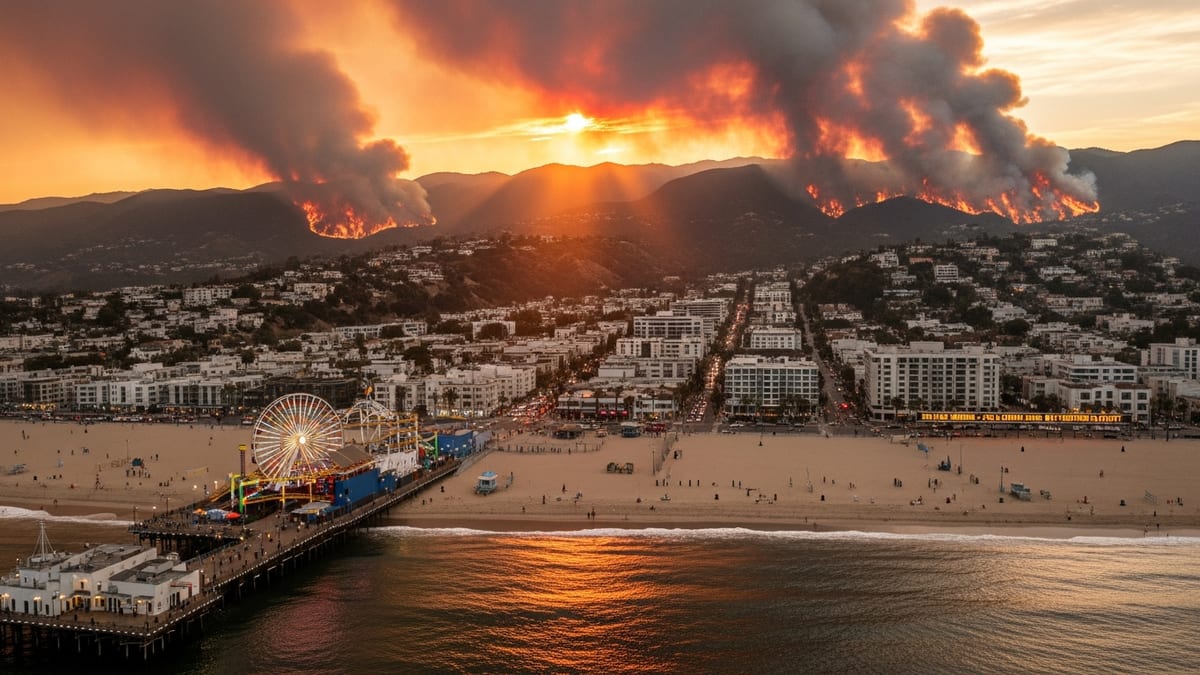
Air quality alerts expand as smoke thickens
Publicly available information from state agencies and the National Weather Service shows that air quality alerts now cover much of Northern Michigan, from the eastern Upper Peninsula to popular vacation destinations around Traverse City and the tip of the Lower Peninsula. The alerts cite elevated levels of fine particulate matter linked to wildfire smoke, with air quality in some locations reaching ranges considered unhealthy or worse for many residents.
Forecast discussions indicate that dense smoke plumes have lowered visibility across the region at times to well under a mile, particularly in the morning and evening hours. Satellite imagery and regional air monitoring data show bands of smoke drifting south from fires in Canada and lingering over the Great Lakes, trapping haze close to the surface as winds weaken.
State environmental bulletins note that the smoky conditions are expected to persist at least through Friday, with only gradual improvement depending on shifting wind patterns and the evolution of the distant fires. That timeline overlaps some of the busiest days of the midsummer travel period, when flights into northern resort communities typically see heavier passenger loads.
Although air quality alerts primarily focus on health guidance for people on the ground, the same smoke that affects breathing can also limit how far pilots and air traffic controllers can see, a factor that can ripple quickly through flight operations.
Regional airports monitor visibility and approach minimums
Airports in Northern Michigan, including commercial fields at Traverse City, Pellston, Alpena, and airports serving the Upper Peninsula, rely on clear approach paths and sufficient visibility for safe arrivals and departures. Aviation references explain that when visibility drops below certain published minimums for instrument approaches, flights may be delayed, held in the air, diverted to alternate airports, or canceled outright.
According to flight tracking dashboards and recent public updates from airlines, some travelers bound for northern destinations have already experienced rolling delays linked to low visibility and deteriorating conditions along approach routes. In at least one recent case shared publicly by passengers, a flight into Marquette was canceled after smoke reduced visibility to a fraction of a mile, making a safe landing impractical.
Operational guidance from federal aviation authorities describes how dense smoke can act much like fog in the eyes of pilots and controllers, forcing slower arrival and departure rates at affected airports. When that happens at multiple locations across a region, air traffic managers may impose ground stops or flow restrictions that slow the entire system, even at airports where the sky appears merely hazy to people on the ground.
Because many Northern Michigan airports have limited daily service and rely on smaller regional jets, a single missed approach or weather diversion can cascade, affecting several later flights as crews and aircraft fall out of position.
Travelers face growing risk of delays, diversions, and cancellations
Airline operations planners treat wildfire smoke as a form of low visibility weather, and industry analyses show that such conditions can increase the likelihood of delays and cancellations, especially at smaller hubs. When visibility at a destination hovers near required minimums, flights may depart late to wait for improvement, hold in the air while controllers assess conditions, or divert to larger airports with better equipment and alternate runways.
In Northern Michigan, where summer visitors often rely on a single daily flight from a connecting hub such as Detroit or Chicago, a diversion or cancellation can strand passengers overnight or force unexpected drives of several hours to reach coastal towns and island ferry terminals. Public posts from travelers in recent days describe disrupted itineraries, with some choosing to rebook to later dates or alternate airports farther south where smoke is thinner.
Airlines are generally cautious about operating at the edge of visibility limits, particularly when smoke is forecast to fluctuate with shifting winds over the course of a day. This can lead carriers to cancel flights preemptively when confidence in improving conditions is low, prioritizing predictability and safety over the risk of last minute turnbacks.
For travelers, that means the thick haze on the horizon is not only a health concern, but also a practical threat to time-sensitive connections, resort check-ins, and tightly planned weekend trips to lakeside communities.
Health, tourism and aviation impacts intersect
The same smoke event that is clouding runways is also having broader effects on Northern Michigan’s tourism economy. Regional news coverage documents canceled outdoor concerts, youth programs, and waterfront events in communities such as Manistee and mid Michigan, where organizers cited hazardous or very unhealthy air quality readings. Reduced visibility on lakes and coastal roads can complicate boating, ferry operations, and long-distance driving, adding another layer of travel uncertainty.
Public information from Michigan’s environment department notes that sensitive groups, including children, older adults, and people with heart or lung conditions, are being urged to limit time outdoors and keep windows closed when smoke is heaviest. That advice may prompt some would-be visitors to postpone trips or shorten stays, particularly when combined with the prospect of unreliable flight schedules.
At the same time, tourism officials often emphasize that conditions can vary significantly over small distances, with some inland or upwind locations experiencing clearer skies while nearby areas report heavy haze. This patchwork pattern can make it difficult for travelers to gauge risk, leading many to rely on real time air quality maps, airline notifications, and social media updates from local residents before deciding whether to fly.
For aviation and tourism operators, the overlapping impacts of health advisories, limited visibility, and shifting demand add complexity to what is typically peak season for revenue, underscoring how distant wildfires can disrupt communities far from the flames.
What passengers flying into Northern Michigan can do now
Aviation experts recommend that passengers booked on flights into Northern Michigan over the next several days take extra steps to prepare for potential smoke related disruptions. These steps include monitoring their flight status frequently through airline apps, signing up for text alerts, and allowing longer connection times in major hubs where weather and traffic restrictions can compound delays.
Travel planning guidance also encourages passengers to consider alternate arrival airports within driving distance, such as larger downstate cities, in case smoke lingers stubbornly over smaller regional fields. Some travelers choose flexible or refundable fares during extended smoke episodes, giving them the option to shift dates or routes without significant penalties if forecasts worsen.
Medical and public health advisories suggest that people with respiratory conditions carry necessary medications in their hand luggage and consult their health care providers about extended exposure to poor air quality while traveling. Even inside airport terminals, ventilation systems can struggle to filter very fine wildfire particulates, so masks and other precautions may still be beneficial for sensitive individuals.
With air quality alerts in effect and visibility at times dropping sharply, publicly available information shows that Northern Michigan remains firmly under the influence of this latest smoke episode. For now, travelers heading north are being advised to remain flexible, stay informed, and build extra time into their plans as airlines and airports navigate one of the more complex weather challenges of the modern summer travel season.