


More news on this day
Travellers heading to parts of Europe this autumn will continue to encounter a patchwork of border procedures, after nine Schengen countries secured permission to delay full implementation of the European Union’s new Entry/Exit System (EES) biometric checks.
Get the latest news straight to your inbox!
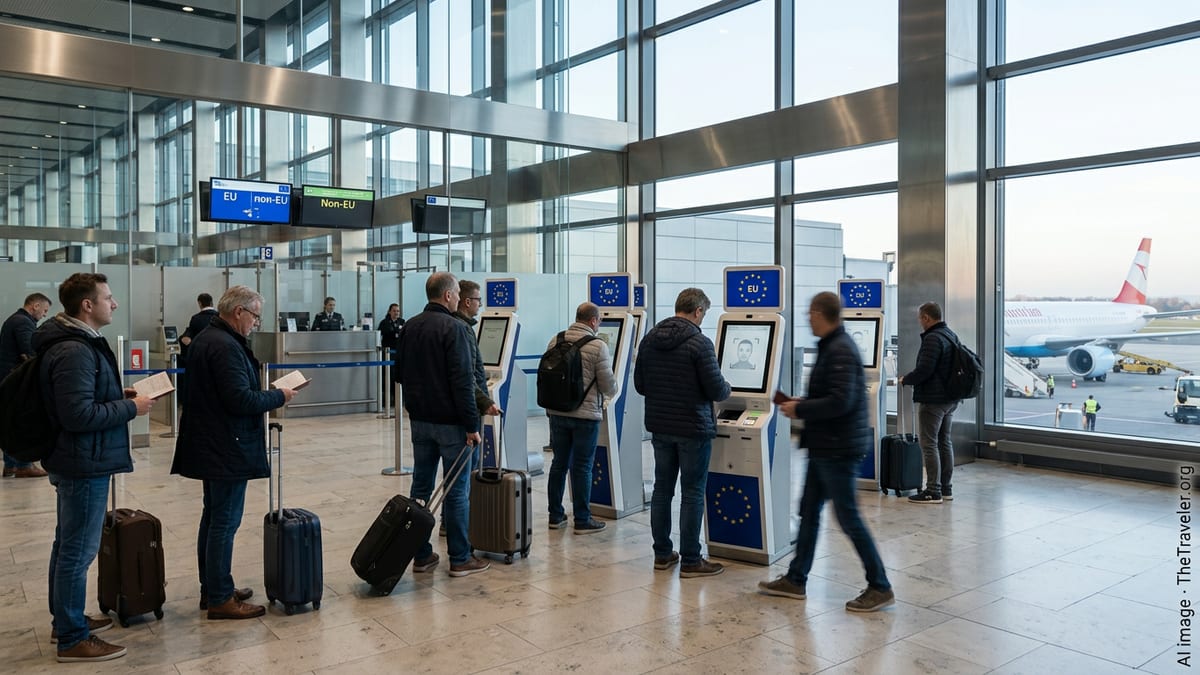
Which Countries Are Delaying EES and Why It Matters
According to recent European coverage, the countries making use of the latest delay are France, Belgium, the Netherlands, Germany, Greece, Malta, Portugal, Italy and Switzerland. These states have been allowed to maintain limited use of biometric registration at many border crossings, even though EES formally became operational across the Schengen area earlier this year. In practice, that means non EU travellers can experience very different procedures depending on where they enter the bloc.
Reports from outlets such as the Guardian and Greek newspaper Kathimerini indicate that governments are seeking more time to stabilise infrastructure and software after months of congestion and technical glitches linked to the system. EES relies on the capture of fingerprints and facial images from non EU nationals on their first entry, a process that has proven significantly slower than traditional passport stamping at some busy airports and land crossings.
Publicly available information shows that regulators have been under pressure to avoid a repeat of the severe queues that affected major gateways during peak summer travel, as well as high profile events such as the 2024 Olympics. By allowing a further postponement of full checks in nine states, European institutions appear to be balancing the push for tighter external border control with the need to keep passenger flows moving.
For travellers, the most immediate consequence is uncertainty. Some airports in the same country may fully apply biometric procedures, while others rely more heavily on manual checks, leading to inconsistent experiences for visitors on multi stop itineraries.
How the EES System Works at Europe’s Borders
The Entry/Exit System is designed to register the time and place of entry and exit for non EU, non EFTA nationals crossing the external borders of the Schengen area. Instead of passport stamps, the system stores biometric data and travel history electronically, allowing authorities to track overstays more accurately and strengthen security screening. It is operated by the EU agency eu LISA and began its phased rollout in April 2026.
Under the rules, travellers who need to be registered provide fingerprints and a facial image during their first EES encounter. Subsequent crossings should then be faster, as border agents can verify identity against the stored data. However, reports from airports and seaports over recent months describe long processing times, software errors and repeated requests for data that was supposedly already captured.
European Commission regulations set out strict conditions for when biometric registration can be eased in exceptional circumstances, such as extreme congestion. A temporary power to relax these requirements expired in early September, but specialised travel industry reporting indicates that the nine countries now delaying full checks have obtained a form of ongoing flexibility, allowing them to limit biometric capture at selected border points without a new deadline.
At border crossings where EES is not fully operated, checks continue under the Schengen Borders Code framework that applied before the system came into force. This legal fallback is shaping much of the current mixed approach, as states try to maintain continuity while they work through technical and staffing challenges.
Impact on Travellers: Queues, Airports and Overland Routes
For holidaymakers and business travellers, the uneven rollout means that planning extra time at borders remains advisable, particularly at busy hubs in France, Italy, Portugal, Greece and Germany. Travel press reports from this summer described multi hour queues at several Mediterranean airports as passengers waited to complete their first EES registration, with delays spilling into baggage halls and connecting flight schedules.
Land and sea crossings present their own complications. The Port of Dover, where French border officers conduct checks on UK soil, has become a focal point of concern in British and European media. While the port has invested in infrastructure for EES, published coverage suggests the system there is still not operating at full capacity, prompting fears of renewed disruption for coach and car traffic during peak holiday periods.
Elsewhere, travellers entering the Schengen area by car or coach from non EU neighbours, including at borders in the Western Balkans, have reported widely varying experiences, with some crossings using full biometric capture and others reverting to manual document inspection. This variability is likely to continue as long as the nine countries maintain their delayed timetable.
Airlines and tourism bodies have repeatedly warned that inconsistent application of EES risks undermining passenger confidence. Industry statements reported in European media have called for clearer communication of where and how the system is applied, so that travellers can better anticipate queues and connection risks.
Regulatory Background and the Road Ahead
The political framework for EES is closely linked to the wider EU Pact on Migration and Asylum and the drive to modernise border management. Regulations adopted in recent years require member states to prepare detailed national rollout plans, including target dates, capacity thresholds and technical integration with the central eu LISA platform. These plans are meant to ensure that the system enters into operation in a coordinated way across all external border points.
However, the ongoing delays in nine countries underline how difficult that coordination has been in practice. Legislative documents and Commission opinions published over the past year repeatedly flag the risk that inadequate staffing, outdated infrastructure or incomplete integration could cause severe bottlenecks at airports and ports. The latest flexibility for France and its peers suggests that Brussels is still willing to accommodate national concerns where passenger disruption is acute.
The next key milestone for travellers will be the introduction of ETIAS, the separate electronic travel authorisation that is scheduled to follow EES. Travel industry analysis notes that ETIAS is not yet in force, but authorities expect it to become an additional requirement for visa exempt visitors, including many from North America and the United Kingdom, in the coming year. The success or failure of the current EES adjustments is likely to shape how smoothly that transition unfolds.
For now, the delay granted to nine EU and Schengen states effectively extends a transition period that was supposed to end in early September. As long as border officials can limit biometric registration at selected crossings, travellers can expect a blend of old and new procedures across Europe’s frontiers.