


More news on this day
A rush hour collision between two London bound passenger trains near Bedford has left one train driver dead and dozens of passengers injured, with nine people reported to be in critical condition following a major emergency response on Friday evening.
Get the latest news straight to your inbox!
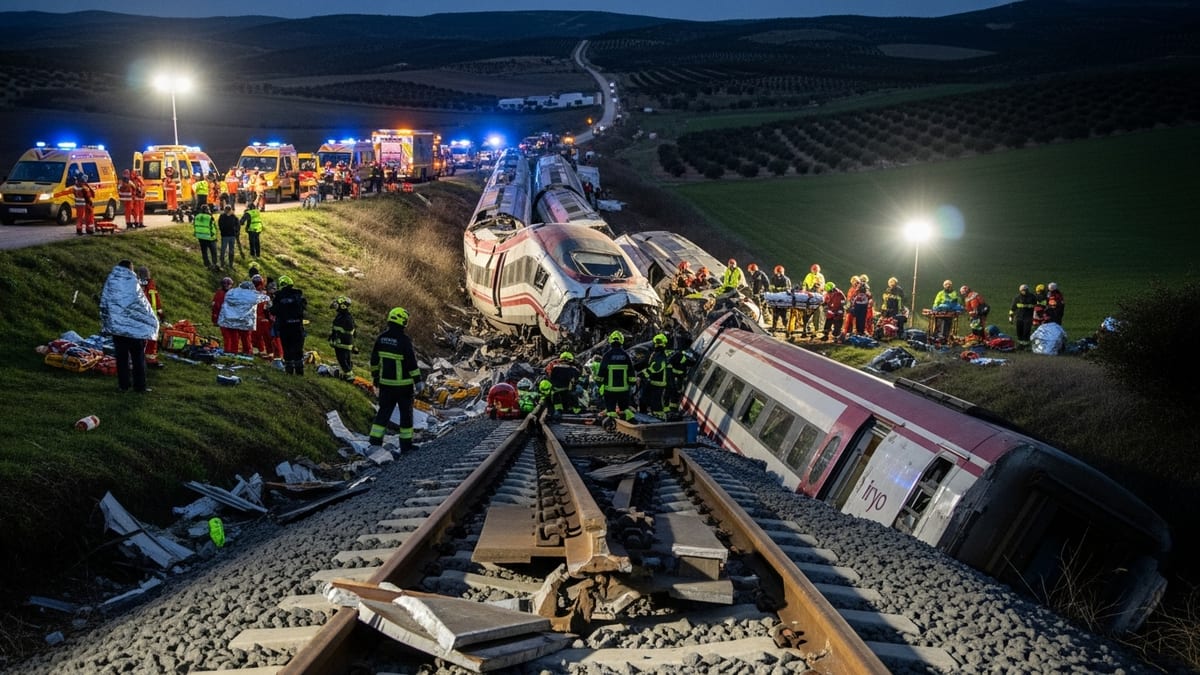
Fatal collision on busy commuter route
The crash occurred on the evening of 19 June 2026 on the Midland Main Line just south of Bedford, a key corridor linking London St Pancras with towns and cities across central and eastern England. Publicly available information indicates that two southbound East Midlands Railway services, one from Nottingham and another from Corby, collided while travelling toward the capital during the evening peak.
Reports describe a rear end collision in which a following train struck the back of a stationary or slow moving service on the same line. Images from the scene show significant damage to the leading vehicles of the rear train and severe deformation to parts of the front train, with debris on and around the tracks.
Rail operators quickly suspended services on sections of the route and declared the area an active incident site. Trains between London, Bedford and Leicester were subject to major disruption, with long distance services either cancelled or diverted and local operators advising passengers to avoid non essential travel.
Casualty figures and hospitalisations
According to figures widely cited in published coverage, one person, understood to be the driver of one of the trains, died in the crash. East of England Ambulance Service updates and subsequent reports indicate that around 89 to 100 people were injured to varying degrees.
Within that total, at least 28 people were taken to hospital for further treatment. Of those, nine passengers were reported to be in critical condition, while others suffered what emergency services described as very serious or serious injuries, including fractures and suspected internal trauma. Dozens more were treated for minor injuries such as cuts, bruises and shock, many believed to have been caused when passengers were thrown against seats and fittings at the moment of impact.
Images and written accounts from the scene describe a complex multi agency medical response, with paramedics establishing triage areas on or alongside the railway. Casualties were transferred by ambulance to hospitals across the region after initial treatment beside the tracks.
Major disruption for rail travellers
The crash took place on one of the principal north south rail arteries into London, creating immediate knock on effects for travellers well beyond Bedfordshire. National rail information channels warned of widespread cancellations and delays on East Midlands Railway services between London, Bedford, Luton, Leicester and further north.
Thameslink commuter services using the same corridor were also significantly disrupted, with trains suspended on key stretches of line as the route between Bedford and London was closed to allow rescue and investigation work. Passengers already on trains were held for extended periods while the network was made safe, and some services were diverted via alternative routes.
Operators advised ticket holders to postpone journeys where possible and made arrangements for ticket acceptance on other lines. Replacement bus services were deployed on some sections, although road congestion around the incident zone added further delays for travellers attempting to continue their trips by bus or car.
Emergency response and early investigation focus
Publicly available information shows that a major incident was declared shortly after the collision, triggering a large scale response from regional ambulance, fire and police services alongside specialist rail teams. Search and rescue operations focused first on locating and evacuating the most seriously injured passengers from the heavily damaged carriages at the front of the trains.
Once all passengers and crew had been accounted for, attention began to shift toward securing the site and preserving evidence. The Rail Accident Investigation Branch initiated an inquiry, with specialists expected to examine data recorders, signalling logs and maintenance records, as well as conducting detailed inspections of the rolling stock and track infrastructure.
Early reporting suggests that one of the trains may have been stopped or moving slowly on the line before being struck from behind by the second service. Investigators are likely to explore whether any technical failure, signalling issue, communication breakdown or human error contributed to the circumstances that allowed two trains to occupy the same section of track.
Safety questions on a key UK rail corridor
The Bedford crash has prompted renewed debate about railway safety on one of the United Kingdom’s busiest intercity and commuter routes. Although serious rail accidents remain relatively rare compared with the volume of daily journeys, the scale of the casualties and the images from the damaged trains have raised questions among passengers and commentators about protection systems on crowded main lines.
Travel industry observers note that the Midland Main Line has undergone significant investment and rolling stock changes in recent years, alongside broader modernisation of signalling and infrastructure. The findings of the formal investigation are expected to shape any further measures aimed at reducing the risk of rear end collisions, including potential changes to operating procedures, driver training or technical safeguards.
For now, travellers using the corridor between London and the East Midlands face continuing disruption as damaged trains are recovered, track repairs are carried out and investigators complete their work at the site near Bedford. Rail passengers are being advised through publicly available channels to check live service information before setting out, as timetables remain subject to short notice alteration in the aftermath of the crash.