

More news on this day
Nine people remain in critical condition after a rush-hour collision between two passenger trains near Bedford, north of London, that killed one of the drivers and injured scores of commuters, according to published reports from the United Kingdom.
Get the latest news straight to your inbox!
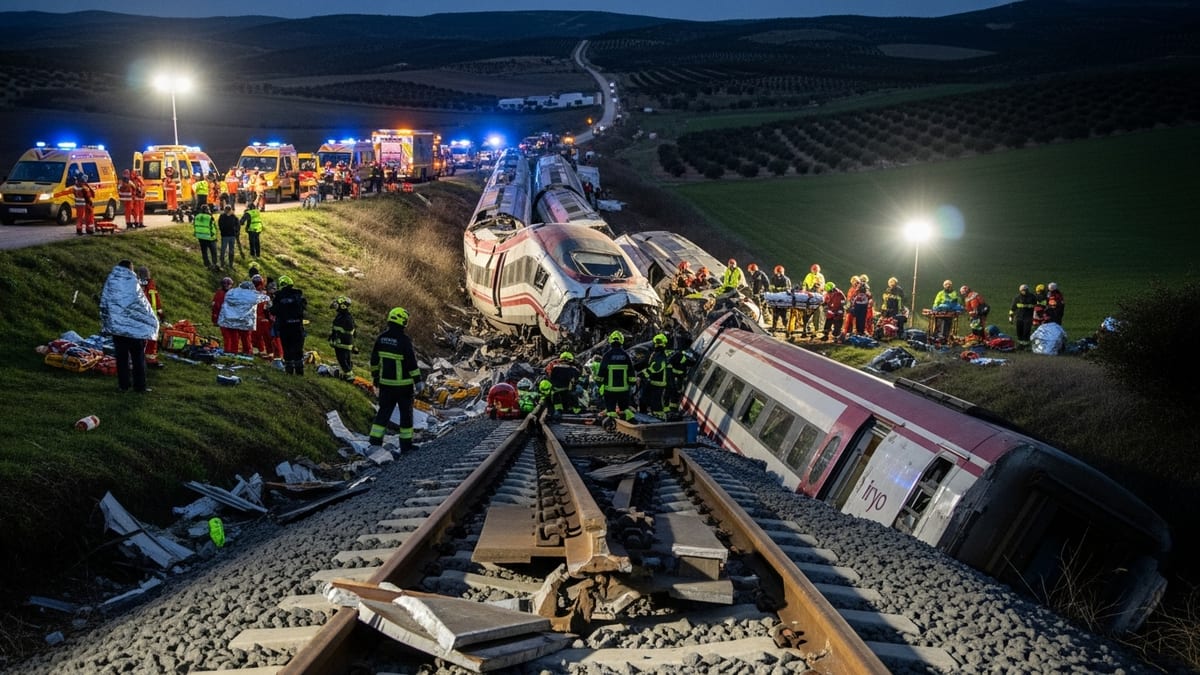
Rush-hour collision on busy commuter route
The crash occurred on Friday afternoon, June 19, on a major north–south rail corridor linking the Midlands with London. Reports indicate that a southbound commuter service traveling toward London St Pancras slammed into the rear of another passenger train near Bedford, sending carriages lurching forward and throwing passengers from their seats.
Emergency services responded in large numbers, with aerial images and social media footage showing lines of ambulances, fire appliances and specialist rescue units positioned along a road parallel to the tracks. Publicly available information indicates that more than 80 people required medical attention, with around 28 still in hospital on Saturday.
Among the injured, nine individuals have been described in local and international coverage as being in critical condition. The driver of the following train died at the scene, making the incident one of the most serious rail accidents in Britain in recent years.
Images from the scene show significant damage to at least one train cab and concertina-style buckling of carriages, but both trains remained largely upright, which analysts suggest may have prevented an even higher death toll.
Investigation focuses on cause and signaling
Specialist rail investigators and police are examining how two trains operating on the same line and heading in the same direction came to collide. Early descriptions in British media state that one London-bound service from Corby struck the rear of another train that had departed from Nottingham, both operated on a heavily used commuter stretch just south of Bedford.
Attention is likely to center on signaling systems, train protection technology and the precise sequence of movements in the minutes before impact. Investigators are expected to review trackside data, on-train recording systems and control-room logs to determine whether human error, equipment malfunction or a combination of factors played a decisive role.
Rail safety specialists note that Britain’s mainline network is equipped with layered safeguards designed to prevent trains from occupying the same section of track, including automatic warning and protection systems. The severity of Friday’s crash has raised questions in public discussion over whether any technical or procedural gaps may have allowed one train to approach the rear of another at excessive speed.
Published coverage also highlights that the investigation will look at braking performance, visibility, and any temporary speed restrictions or engineering work in the area at the time, as well as the condition of the line and signaling equipment.
Casualties, hospital response and community impact
Hospitals across central England have been treating a large influx of passengers with a wide range of injuries, from fractures and head trauma to cuts and bruises. Reports from the scene describe carriages in which only a handful of people escaped without obvious injury, with some travelers unable to move or stand in the immediate aftermath.
Regional health services activated major incident protocols to manage the volume of patients arriving by ambulance and air ambulance from the crash site. According to publicly available updates, nine people remained in critical condition on Saturday, with others described as seriously but not life-threateningly injured.
The death of the driver has been widely noted in local reaction, with rail workers’ representatives expressing condolences and drawing attention to the pressures placed on frontline operating staff. Community messages shared on social platforms reference the long-standing role of the railway as a major local employer and lifeline for commuters into the capital.
Residents of nearby streets reported hearing a loud impact and sirens as emergency vehicles converged on the scene. Some local coverage indicates that people living close to the line offered assistance to dazed or lightly injured passengers as they were led away from the tracks.
Disruption for passengers and rail operators
The crash brought immediate and severe disruption to one of the country’s busiest intercity and commuter routes. Services between the East Midlands and London were suspended or heavily reduced, with trains either canceled outright or diverted via alternative lines where capacity allowed.
Passengers traveling on Friday evening and into Saturday morning faced extended delays, last-minute changes and crowding on unaffected services. Rail operators issued warnings that disruption could persist while damaged trains are removed, infrastructure is inspected and repairs carried out.
According to national media reports, engineers and recovery teams have been working at the site to stabilize the carriages and clear debris from the track. Inspections of rails, sleepers, overhead line equipment and signaling cabinets are expected to continue over the coming days to ensure that the route can safely reopen.
Travel organizations and rail-user groups have advised passengers to check journey planners and prepare for longer travel times on services into and out of London St Pancras until full timetables can be restored.
Rare but sobering setback for UK rail safety record
The Bedford crash has drawn attention to the overall safety record of Britain’s railways, which has been considered strong by international standards. Serious multi-train collisions have become relatively rare in recent decades, with the network recording long stretches without passenger fatalities in train-to-train crashes.
Nonetheless, recent incidents, including a fatal collision in Wales in 2024, have underlined that high-density, high-frequency rail systems remain vulnerable to rare but catastrophic failures. Commentators in the UK press suggest that the Bedford collision will intensify debate around investment in modern train protection systems, continuous speed supervision and infrastructure renewal.
Rail unions and passenger advocates are expected to scrutinize the findings of the formal inquiry once published, focusing on whether any cost-cutting, staffing levels or maintenance practices may have contributed to risk. Industry analysts note that lessons from major accidents often lead to changes in standards, technology and training that shape rail operations for years afterward.
For regular users of the busy Midlands-to-London corridor, Friday’s events have been a stark reminder of the forces involved when high-speed trains collide. Even as investigations continue and services gradually resume, the crash near Bedford is likely to remain a defining moment in contemporary discussions about rail safety and resilience in the United Kingdom.