


More news on this day
A collision involving two passenger trains on a key north–south rail corridor in England has left 28 people in hospital, including nine reported to be in critical condition, intensifying concerns about rail safety and causing major disruption for travelers.
Get the latest news straight to your inbox!
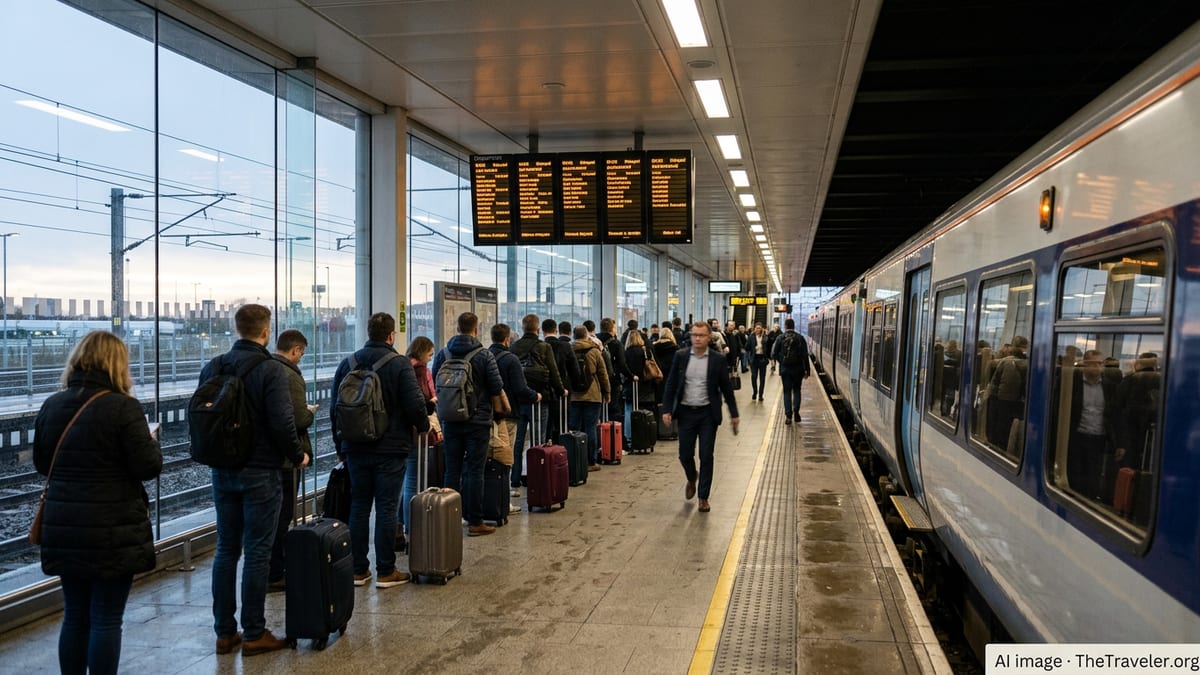
Collision Near Bedford Shakes Busy Rail Corridor
According to published coverage in British and international media, the incident occurred on the section of line south of Bedford, a busy stretch linking the East Midlands and northern England with London. Two passenger services traveling toward the capital were involved in the crash, which happened late in the day as trains were still carrying commuters and leisure travelers.
Initial reports indicate that one train operating on an East Midlands route between Corby and London was struck in the rear by another London-bound service. Images from the scene show several carriages damaged, with debris scattered along the track and multiple emergency vehicles positioned beside the line.
The collision prompted an immediate halt to rail traffic through the area, affecting thousands of passengers. Services on one of the main arteries into London were cancelled or diverted, with some travelers forced to complete journeys by road or to abandon trips altogether.
Rail operators have stated through public information channels that services will remain disrupted while investigators examine the site and engineers assess damage to infrastructure and rolling stock.
Casualties Mount As Hospitals Treat Dozens
Publicly available information from regional health services and news outlets indicates that a total of 28 people were taken to hospital following the collision. Nine of those are described as being in critical condition, with others treated for a range of injuries from fractures and head trauma to cuts and bruises.
Local hospitals activated major incident procedures to manage the influx of patients, reallocating staff and resources to emergency and trauma units. Medical teams worked into the night to stabilize the most seriously injured travelers and to assess others for possible internal injuries and shock.
Reports indicate that many of those taken to hospital were seated in the front carriages of the leading train, where the force of the impact was greatest. Some passengers were believed to have been thrown against interior fittings or struck by luggage, underscoring how even relatively low-speed impacts can cause significant harm in a crowded carriage.
Several dozen other passengers received on-site treatment from paramedics at the scene for minor injuries or distress before being escorted away from the damaged trains. Rail staff assisted rescue workers in accounting for travelers and helping them reach road transport and onward connections.
Travel Disruption Spreads Across Region
While the human toll remains the primary concern, the collision has also triggered extensive disruption on a corridor heavily used by business travelers, tourists, and daily commuters. Rail operators reported widespread cancellations and delays on services linking London with cities such as Nottingham and Corby, as well as connecting routes further north.
Journey planners advised passengers to postpone nonessential travel and warned of reduced capacity on alternative lines, where additional trains and longer formations were being deployed where possible. Some operators arranged replacement buses between affected stations, but journey times were significantly extended.
For travelers already en route across the United Kingdom, the incident highlighted how a serious disruption on one main line can ripple across the wider network. Delays spread to connecting services, affecting evening departures from London and complicating travel plans for those heading to airports, major events, or weekend getaways.
According to information shared by transport analysts in media reports, it may take at least several days for services to return to normal, depending on the speed of the technical inspection, track repairs, and removal of the damaged rolling stock.
Safety Systems Under Renewed Scrutiny
The collision has reignited debate about rail safety on busy mixed-traffic routes in the United Kingdom. Commentators in published coverage have questioned whether existing signaling protections and train protection systems operated as intended, and whether any lapse in procedure or equipment failure may have contributed to the crash.
In recent years, British rail infrastructure managers and train companies have invested in modern signaling and automatic train protection, aimed at preventing trains from entering occupied sections of track. The circumstances of this collision are likely to be examined in detail by specialists, including the sequence of signals, train speeds, and communications between control centers and drivers.
Analysts note that while the UK rail network records relatively few high-casualty incidents compared with road transport, even a single collision involving passenger trains can have far-reaching consequences. Beyond the immediate injuries and disruption, findings from formal investigations often lead to changes in operating rules, technical upgrades, and new training protocols.
Travel industry observers say the event may also prompt renewed public discussion about capacity pressures on the rail system, particularly in corridors where intense traffic and tight timetables leave little margin for error when incidents occur.
Implications For Travelers In The Coming Days
For travelers planning rail journeys through central and eastern England in the days following the crash, publicly available journey information indicates that schedules remain fluid. Timetables are being updated at short notice as lines reopen in stages and speed restrictions are applied around the damaged section of track.
Passenger advocates appearing in media coverage advise allowing extra time for journeys, checking service updates before departure, and considering alternative routes where practicable. Some long-distance travelers are shifting temporarily to coach or domestic air services, while others are adjusting departure times to avoid peak periods on reduced-capacity routes.
Travel planners emphasize that rail remains one of the safest modes of transportation in the region, but acknowledge that serious incidents such as this collision can unsettle public confidence. Clear communication of investigation findings and visible safety improvements are seen as important steps toward reassuring passengers who rely on these services for both daily commuting and leisure trips.
As investigators continue their work near Bedford, the focus for many travelers and industry stakeholders now turns to understanding how a collision of this severity occurred on a modern, heavily monitored line and what measures will be taken to prevent a similar event in future.