


More news on this day
Travelers on the South Shore Line between Chicago and northern Indiana are heading into summer with no clear timeline for when full rail service will return, as bus substitutions remain in place following a late June freight train derailment that damaged overhead power infrastructure near East Chicago.
Get the latest news straight to your inbox!
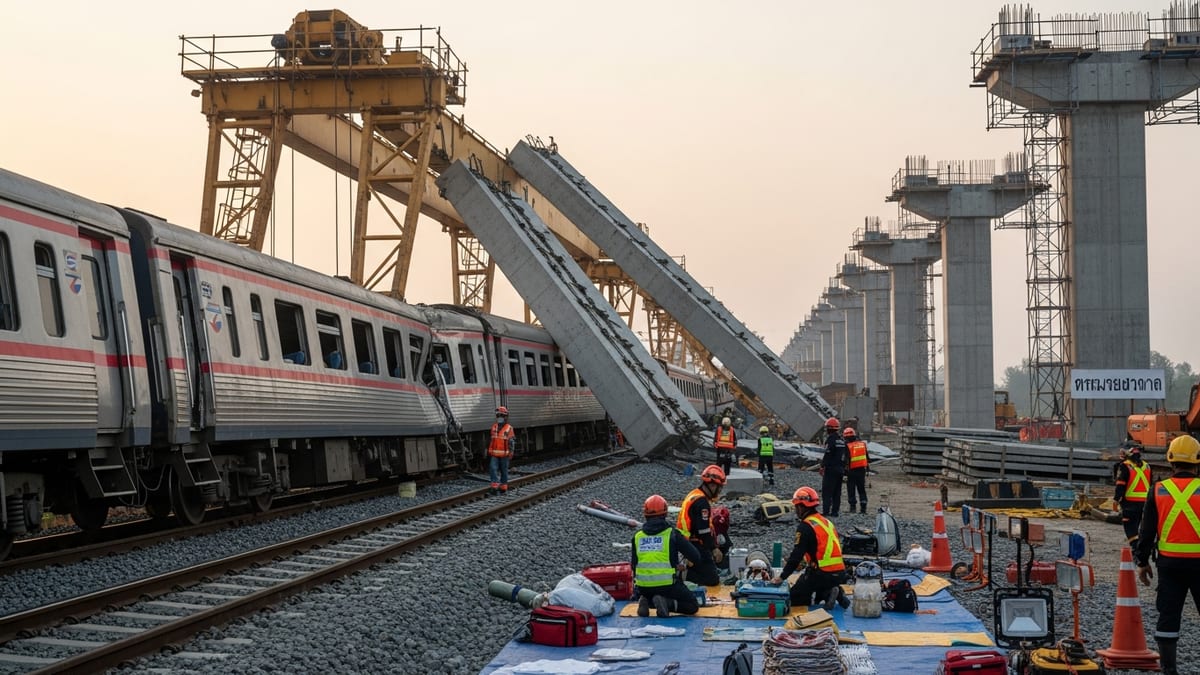
Derailment Near East Chicago Triggers Prolonged Disruption
Published coverage indicates that an empty freight coal train derailed on the evening of June 24, 2026, on tracks shared with or adjacent to the South Shore Line near the East Chicago and Gary Metro stations. Several railcars left the rails on a bridge over the Grand Calumet River, damaging the overhead catenary system that powers the electrically operated commuter trains.
The incident led to a complete shutdown of South Shore Line service on June 25 while crews secured the scene and began assessing the extent of damage to power lines, supports and associated signaling equipment. Early reports from regional outlets emphasized that passenger coaches were not involved, but the proximity of the derailment to the electric infrastructure used by commuter trains forced operators to de-energize the system.
In the immediate aftermath, passengers traveling between South Bend, northwest Indiana communities and downtown Chicago faced unplanned cancellations, delayed train sets and crowded alternatives. Images and descriptions carried by local broadcasters and public radio stations highlighted tipped freight cars, dangling wires and a complex work site that would require specialized repair rather than a quick overnight fix.
By the final weekend of June, limited rail operations had resumed on a holiday and weekend schedule on parts of the route, but the key segment affected by the power loss remained dependent on road vehicles, cementing an interim solution that is still evolving.
Bus Bridge Between Miller and Hegewisch Becomes the New Normal
According to updated notices summarized in regional television and radio coverage, the South Shore Line is currently operating trains on a modified schedule with a continuing bus bridge between Miller and Hegewisch stations. Buses are being used to ferry passengers across the gap where the catenary and related systems were most heavily affected by the derailment and subsequent power shutdown.
The bus substitution requires riders to disembark from trains, transfer to highway coaches and then reboard rail services on the other side of the damaged corridor. This multi-step journey lengthens trip times, introduces uncertainty around connections and compresses capacity at transfer points, especially during peak commuting hours when demand is highest.
Reports indicate that the operator has been adjusting the bus plan as crews make incremental progress on repairs. Recent television segments describe a reduction in the extent of busing, with more trains running on either side of the outage zone, but confirm that a full return to rail through service is not yet possible. In practice, that leaves a core section of the line reliant on road-based transport at least into early July.
While temporary bus bridges are a common tool in the rail industry, the persistence of this one has prompted riders to recalibrate their expectations. Regular commuters who had become accustomed to newly improved timetables after major capital upgrades now find themselves navigating an older pattern of unpredictability, with extra time added to both morning and evening journeys.
No Public Timeline for Ending Busing Operations
Despite mounting pressure from travelers looking ahead to summer tourism, festivals and beach season along the Indiana lakeshore, publicly available information as of July 1 does not include a firm target date for ending the bus bridge. Local news reports consistently state that crews are working to repair the damage but that there is no announced timeline for restoring full electric service through the East Chicago area.
The absence of a clear schedule reflects the complexity of the recovery task. Overhead power systems on an electrified commuter corridor involve not only the visible wires but also substations, cantilever structures, insulators and signaling interfaces. Damage in a constrained location, such as a bridge over a river or highway, can require specialized access, safety approvals and staging that extend far beyond replacing a single span of wire.
Coverage from regional outlets notes that the agency responsible for the South Shore Line has been providing incremental updates rather than long-range promises, focusing on day-to-day service alerts and urging riders to check revised timetables before traveling. Observers point out that this cautious communication likely stems from a desire to avoid prematurely committing to a date that might slip if inspections uncover additional structural or electrical issues.
For travelers, that means planning under conditions of uncertainty. Commuters heading to jobs in downtown Chicago, students moving between campuses, and leisure travelers bound for beaches, casinos or Chicago attractions must currently assume that at least one leg of their journey will involve a bus ride and potential delays.
Commuter Workarounds and Alternative Routes
Publicly available reports show that the South Shore Line has coordinated with other regional rail providers to cushion the impact. Coverage from northern Indiana media notes that Metra Electric in Chicago is honoring South Shore tickets for certain trips, offering riders an alternative path into the city center without relying solely on the disrupted corridor.
For some travelers, that arrangement helps restore a more predictable commute by shifting part of the journey onto a network less affected by freight operations and catenary damage near East Chicago. However, it can also require additional transfers, changes in departure stations and careful attention to differing schedules between the two systems.
Other riders are turning to private vehicles, informal carpools or employer-arranged transportation. Local news outlets describe busier parking lots at some park and ride locations and increased congestion on regional highways that parallel portions of the South Shore Line. Those shifts carry knock-on effects for travel times, fuel costs and environmental impacts, particularly if the disruption extends deeper into the summer season.
Travel advisors and regional tourism sources now suggest that visitors build generous buffers into their itineraries, especially when connecting to flights at Chicago airports or South Bend International. Allowing extra time for transfers at Miller, Hegewisch and other intermediate stops is emerging as a practical necessity rather than a cautious luxury.
Broader Questions for an Upgraded Rail Corridor
The derailment and resulting bus bridge arrive at a sensitive moment for the South Shore Line. The route has recently featured prominently in coverage of major modernization projects, including double tracking initiatives and new branch corridors serving fast-growing communities in northwest Indiana. Those upgrades were designed in part to improve reliability, shorten journey times and make the train a more attractive alternative to congested highways.
This latest disruption illustrates how vulnerable even an upgraded commuter line can be to incidents on or near shared freight infrastructure. Analysts and advocacy groups quoted in regional reports have long argued that closer coordination between freight and passenger operators, along with investment in resiliency measures, is essential to limit the scope and duration of such events.
For travelers, the episode serves as a reminder that rail networks are interconnected systems. A freight derailment that spares passenger coaches can still cripple commuter service if it severs power or blocks a key junction. The extended reliance on a bus bridge between Miller and Hegewisch underscores how recovery on a complex electrified corridor can be measured in weeks rather than days.
Until a definitive restoration date is announced, the South Shore Line’s ongoing busing program will remain a central feature of travel planning in the Chicago to South Bend corridor. Riders looking to minimize disruptions are being encouraged by public service announcements and media summaries to check schedules frequently, allow extra time for their journeys and remain prepared for evolving routing as repair crews continue their work.