


More news on this day
A powerful rebound in corporate travel is colliding with a parallel tourism surge in 2026, tightening hotel markets from Bogotá to major business hubs worldwide and setting the stage for another year of higher room rates and limited availability.
Get the latest news straight to your inbox!
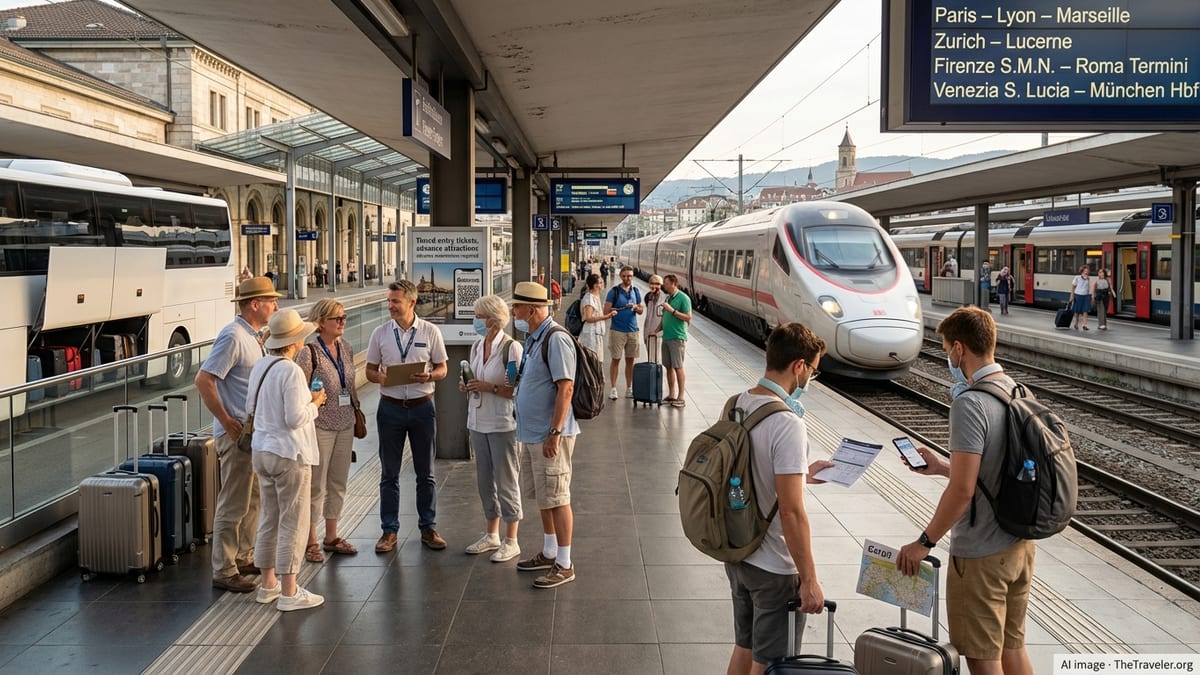
Corporate Travel Spending Surges Into 2026
Industry forecasts for 2026 point to a sustained global rebound in business travel after several years of disrupted demand. Updated projections from sector analysts show worldwide corporate travel spending returning to, and in some regions surpassing, pre‑pandemic levels, supported by robust economic activity, rescheduled meetings and events, and a backlog of international projects.
Data compiled from the latest Global Business Travel Association outlooks indicate that business travel spending is on track for continued growth through 2026, with annual gains estimated in the mid‑single to high‑single digits in many large markets. This expansion is occurring even as companies maintain tighter policies on nonessential trips, suggesting that the travel taking place is more concentrated around high‑value sales, technical, and leadership visits.
Pricing forecasts from CWT, American Express Global Business Travel, and other travel management and consulting firms point to a further rise in corporate travel costs through the end of 2026. A recent global forecast produced by GBTA and ALTOUR highlights how elevated fuel prices, labor shortages, and capacity constraints in both air and hotel sectors are likely to keep business travel prices higher, even if economic growth moderates.
Within that global picture, Latin America stands out as a region where hotel pricing is expected to climb faster than the worldwide average. Several forecasts cited by industry coverage project Latin American hotel average daily rates to increase by around 5 to 6 percent in 2026, with some scenarios pointing to even stronger growth where demand significantly outpaces new construction.
Bogotá Emerges as a Hotspot for Rooms Under Pressure
Bogotá has become one of the clearest examples of this collision between booming business travel and resurgent leisure tourism. The Colombian capital has seen a wave of new foreign investment projects in 2026, particularly in software, IT services, and corporate services, according to publicly available information from the city’s investment promotion authorities. These projects bring executives, project teams, and extended‑stay staff who rely heavily on the city’s hotel inventory.
At the same time, Bogotá’s tourism sector is expanding rapidly. Official data published in mid‑2026 show that tourism employment in the city grew by around 10 percent, with jobs in accommodation and travel agencies almost doubling compared with earlier periods. These indicators point to sharp increases in visitor flows that cut across both corporate and leisure segments, further tightening occupancy in key districts such as Chapinero, the financial corridor along Calle 72, and the historic center.
Analysts following the Colombian hospitality market note that while Bogotá has added new hotel capacity in recent years, the pace of openings has not fully kept up with the speed of demand recovery. With both multinational corporations and regional firms expanding operations in the capital, weekday occupancy for upper‑midscale and upscale properties has climbed, especially around major office clusters and convention facilities.
Industry commentary based on American Express GBT’s recent Hotel Monitor research suggests that Bogotá is likely to record further hotel rate growth in 2026, even if the projected percentage increase is smaller than in some other Latin American cities. The critical pressure point is the growing difficulty of securing preferred corporate rates and short‑notice availability during peak conference weeks and major events, a trend frequently flagged by travel managers serving large accounts in Colombia.
Latin America Leads Global Hotel Rate Growth
The pressures visible in Bogotá are part of a broader regional pattern. Recent compilations of CWT and GBTA data, summarized in business‑travel statistics reports, indicate that Latin America is expected to post some of the fastest hotel rate increases worldwide in 2025 and 2026. Forecasts cited in these reports point to average daily rate growth in the mid‑single digits region‑wide, with some markets projected to outpace 7 percent annual increases.
Business Travel News and other trade publications, drawing on American Express GBT forecasts, have highlighted a “strong 2026” for Latin American hotels as both international visitor arrivals and regional corporate activity accelerate. Cities such as Buenos Aires and Rio de Janeiro are expected to see some of the largest year‑over‑year rate jumps, while Bogotá and Santiago are projected to experience more moderate but still positive growth.
The World Travel & Tourism Council’s latest economic impact research for Central and South America adds another layer to the story. Travel and tourism GDP in the region is forecast to grow by about 4.1 percent in 2026, outpacing the global average. In several South American markets, international visitor spending is projected to rise at double‑digit rates, reinforcing demand for hotel rooms already heavily used by corporate travelers.
With both tourism and business travel expanding at once, the region’s hotel pipeline is under scrutiny. While new projects continue to move forward, high financing costs, construction delays, and regulatory hurdles in some countries mean that many properties will not open in time to ease the tightest conditions forecast for late 2026 and 2027. Until then, cities like Bogotá are expected to remain firmly in a seller’s market.
Corporate Buyers Face Rising Costs and Complexities
For corporate travel buyers, the hotel squeeze in Bogotá and across Latin America is translating into higher budgets and more complex negotiation cycles. Pricing forecasts released over the past year show that companies are bracing for continued growth in average daily rates for their contracted hotel programs in 2026, particularly in markets where technology, energy, and professional services activity is strong.
Publicly available summaries of GBTA and CWT pricing scenarios suggest that, under a baseline economic outlook, global hotel prices may continue to edge up through 2026, with Latin America showing some of the steepest increases. In more conservative, recession‑linked scenarios, modest price declines are possible in a few regions, but analysts generally expect Latin American rates to remain resilient due to structural supply constraints and rising international demand.
Corporate travel managers are responding by adjusting booking policies, encouraging earlier reservations for high‑demand cities like Bogotá, and diversifying their hotel portfolios to include more midscale and extended‑stay options. Industry commentary indicates that some firms are also renegotiating allocation clauses to secure guaranteed room blocks during key project milestones or events, a practice that can limit flexibility but provides a measure of certainty in tight markets.
The overall result is a more challenging landscape for securing cost‑effective accommodation, particularly during peak seasons and around major conferences. Travelers to Bogotá and similar business‑tourism hubs are increasingly being advised to plan further ahead and remain flexible on neighborhoods and property types, as the global corporate travel boom keeps squeezing room supply through the remainder of 2026.