


More news on this day
Georgia’s tourism industry is preparing to turn the spotlight on artificial intelligence and fast-changing visitor behavior as the 2026 Georgia Governor’s Tourism Conference heads to Jekyll Island with a program designed to boost the state’s competitiveness in a more data-driven travel landscape.
Get the latest news straight to your inbox!
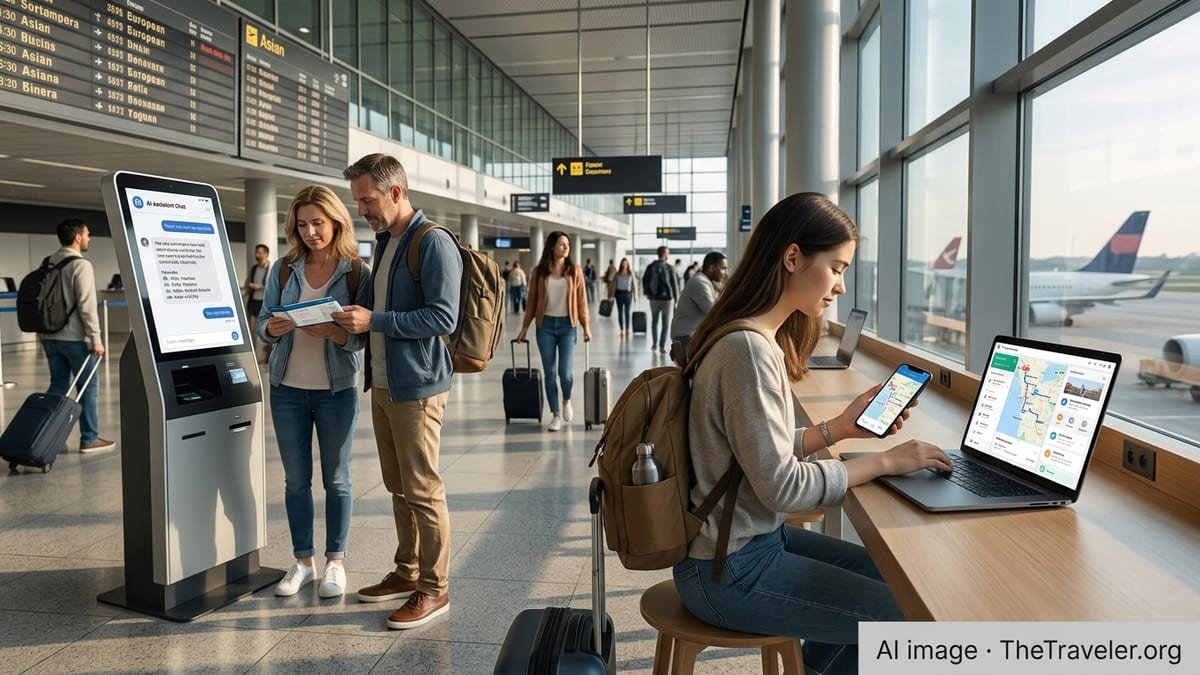
Conference Heads to Jekyll Island at Record-Breaking Moment
According to publicly available information from the Georgia Department of Economic Development, the 2026 Georgia Governor’s Tourism Conference is scheduled for September 28 to 30 on Jekyll Island, one of the state’s signature coastal destinations. The annual gathering is presented by Explore Georgia, the state’s tourism office, and is considered the premier education and networking event for Georgia’s visitor economy.
Recent figures released by the Governor’s Office show that Georgia’s tourism sector has set records for visitor volume and spending for multiple consecutive years, underscoring the importance of strategic topics selected for the conference program. Reports indicate that tourism generated tens of billions of dollars in spending and supported hundreds of thousands of jobs statewide in 2024, reinforcing its role as one of Georgia’s largest economic drivers.
Conference organizers have positioned the 2026 event as both a celebration of that momentum and a planning session for the next phase of growth. By bringing industry leaders to Jekyll Island, the program is expected to highlight coastal tourism assets while also addressing how rural, urban, and niche destinations can benefit from emerging tools and trends.
The choice of venue also reflects Jekyll Island’s ongoing evolution as a meetings and leisure destination, with upgraded accommodations and facilities that are increasingly used to showcase Georgia’s coastal environment to planners and travel professionals.
AI Visibility Moves From Buzzword to Practical Tool
Agenda materials for recent editions of the Georgia Governor’s Tourism Conference show a steady rise in technology-focused content, including a 2024 session on AI-powered hospitality that explored how destination marketers and hoteliers can apply artificial intelligence to day-to-day operations. Industry observers expect the 2026 program to advance that conversation from introductory concepts to more practical, measurable applications.
AI visibility, a term now commonly used across marketing and analytics circles, refers to how well a destination, attraction, or business can be discovered, understood, and trusted across digital channels shaped by algorithms. For Georgia’s tourism partners, that includes search engines, social platforms, online travel agencies, and user-review sites that increasingly rely on machine learning to rank and recommend content.
Conference sessions are anticipated to examine how tourism organizations can improve their performance in these AI-influenced environments. Topics likely to gain attention include optimizing content for generative search tools, using predictive analytics for campaign planning, and applying sentiment analysis to better understand traveler feedback at scale.
Examples from past Georgia tourism events suggest that case studies and data-backed presentations will play a key role. Presenters have previously highlighted how AI can identify high-value visitor segments, predict seasonal demand, and surface under-the-radar experiences that align with emerging traveler interests, providing a roadmap for destinations seeking more targeted outreach.
Shifting Traveler Behavior and Emerging Demand Patterns
The 2026 conference is also expected to delve into how visitor preferences are changing, and how those shifts intersect with new technology. Industry research shared at prior state and regional tourism gatherings in Georgia has documented sustained demand for outdoor recreation, coastal escapes, and road trips, even as urban cultural experiences rebound and business travel slowly recovers.
AI-enabled tools now give destinations more precise insight into those evolving patterns, compiling data from mobile devices, bookings, social media, and reviews to illustrate how travelers move through the state. Presentations focused on emerging trends are likely to look at where visitors are coming from, which communities are gaining traction, and how long people are staying in different regions.
Short-term rentals, small-town getaways, and niche experiences such as agritourism and film tourism remain areas of interest across Georgia. According to published coverage of past conferences, attendees have shown strong demand for practical guidance on how to package these offerings, set realistic growth targets, and manage community impacts.
By placing travel trends and AI visibility side by side, the 2026 agenda is poised to encourage tourism professionals to move beyond broad generalizations about visitor behavior and rely more heavily on data-backed insights. That approach may prove especially important for destinations looking to stand out in competitive regional markets across the Southeast.
Community Impact, Workforce and Sustainability on the Agenda
Alongside technology and demand trends, the Georgia Governor’s Tourism Conference has traditionally devoted time to topics such as workforce development, destination stewardship, and community engagement. Publicly available agendas and briefing materials suggest that these themes will continue to feature prominently in 2026, particularly as communities navigate rapid growth and changing resident expectations.
Workforce challenges remain a recurring concern, with hospitality businesses across Georgia reporting difficulties in recruiting and retaining employees in key roles. AI and automation tools are sometimes positioned as partial solutions, for example through streamlined customer service or smarter scheduling, but tourism leaders also emphasize the continued importance of human-centered hospitality and local knowledge.
Destination resilience and sustainability are expected to draw attention as coastal and mountain communities adapt to environmental pressures and infrastructure needs. Sessions in recent years have explored how tourism funding models, public-private partnerships, and long-term planning can support both visitor experiences and quality of life for residents.
Observers anticipate that the 2026 conference will encourage participants to consider how AI-driven forecasting and scenario modeling might inform decisions about infrastructure investment, resource management, and crisis preparedness, especially in areas vulnerable to extreme weather or seasonal congestion.
Positioning Georgia in a Competitive Travel Technology Landscape
As AI reshapes global travel marketing, the 2026 Georgia Governor’s Tourism Conference arrives at a moment when states are working to differentiate themselves through data sophistication as well as destination stories. Georgia’s recent tourism performance suggests that the state enters this phase from a position of strength, with strong visitation figures and growing recognition in national rankings.
By spotlighting AI visibility and emerging travel trends in a concentrated three-day program, conference organizers appear to be signaling that technical capabilities are now integral to destination strategy. For many local tourism offices, chambers of commerce, and small businesses, the event may function as an accelerated training ground in concepts that would otherwise take years to assimilate.
According to industry commentary around similar conferences nationwide, participants increasingly look for sessions that combine strategic vision with hands-on instruction. In Georgia, that could translate into workshops on building AI-ready content, managing data privacy considerations, and collaborating across regions to share best practices and tools.
With Jekyll Island as its backdrop and a growing set of technology-focused sessions, the 2026 gathering is set to reflect how deeply digital transformation has penetrated the business of welcoming visitors. The discussions that unfold there are likely to shape how Georgia destinations present themselves to travelers whose choices are influenced by algorithms, reviews, and recommendations as much as by traditional advertising.