


More news on this day
Cleanup and inspection work are continuing in Bensalem, Pennsylvania, after a CSX freight train derailed near the Neshaminy Falls area, with published reports indicating no hazardous leaks or injuries despite overturned railcars and earlier shelter-in-place guidance for nearby residents.
Get the latest news straight to your inbox!
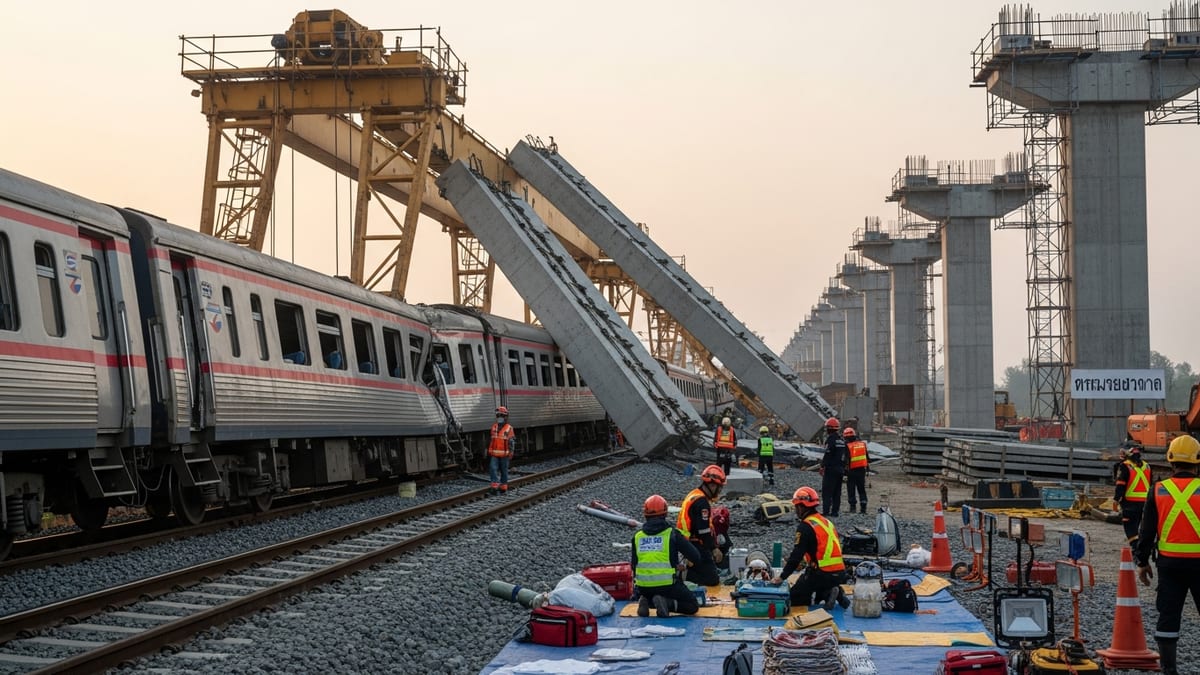
Derailment Near Neshaminy Falls Prompts Brief Shelter-in-Place
Reports indicate that the CSX freight train left the tracks in the vicinity of East Bristol Road and Grove Avenue near the Neshaminy Falls station in Bensalem Township on the afternoon of June 30. Coverage from local outlets describes at least a dozen railcars derailing, some of them ending up on their sides along the rail corridor.
Initial updates noted that the incident prompted an emergency response involving local fire, police, and hazardous materials teams, as well as county-level support. A temporary shelter-in-place advisory was issued for nearby neighborhoods while responders assessed any potential risk from the train’s mixed freight consist.
According to publicly available information, the affected rail line runs through a heavily traveled suburban corridor north of Philadelphia, used for both freight operations and regional passenger services on adjacent tracks. The derailment drew attention across the region, as images of stacked and crumpled railcars circulated through news coverage and social media.
Despite the dramatic visuals, early assessments focused on confirming whether any hazardous cargo had been compromised and whether surrounding homes or roadways faced immediate danger.
No Hazardous Leaks Detected as Crews Stabilize the Site
Local news reports state that specialized hazmat teams conducted on-site inspections of derailed cars that were believed to be carrying potentially hazardous materials. Based on those assessments, publicly available updates indicate that no leaks were detected and that containers holding regulated substances remained intact.
Coverage further notes that several overturned railcars contained non-hazardous freight, and no widespread product spill into nearby neighborhoods or waterways was identified. The absence of significant leakage allowed responders to scale back protective measures after the initial phase of the incident.
Information shared through media briefings and written statements emphasizes that air quality monitoring and visual inspections did not reveal conditions requiring extended shelter-in-place orders. This finding helped reassure nearby residents who had been asked to limit outdoor activity while the nature of the derailment was being confirmed.
The lack of hazardous leakage differentiates this event from more severe freight rail incidents in recent years that have affected communities along key transportation corridors. In Bensalem, current reporting suggests the environmental impact is confined largely to physical debris and localized rail infrastructure damage.
Travel Disruptions for Commuters and Drivers
Although no dangerous leaks were reported, the derailment created notable travel disruptions across the immediate area. Publicly available information shows that East Bristol Road and other nearby routes were closed or restricted as emergency vehicles and heavy equipment converged on the rail line.
Commuters using nearby roadways experienced delays and detours as traffic was rerouted around the site. Local coverage also indicates that access to some residential streets was temporarily limited while crews positioned cranes, loaders, and support trucks close to the derailed cars.
Passenger rail services using adjacent tracks were closely monitored, with operational adjustments as needed while inspections and debris removal progressed. Published reports suggest that transit agencies coordinated with freight operators to ensure that passenger trains could resume or continue service safely as clearance work advanced.
For travelers in and around Bucks County, the incident served as a reminder that rail disruptions can ripple into the broader transportation network, affecting car commutes, local bus routes, and regional rail schedules, even when hazardous cargo is not released.
Ongoing Cleanup and Environmental Monitoring
As of the latest updates, cleanup operations remain active at the Bensalem derailment site. Publicly available information indicates that contractors are working with railroad personnel to rerail or dismantle damaged cars, remove debris, and repair sections of track bed and rail that were distorted in the crash.
Environmental specialists are reported to be assessing surrounding soil and drainage areas as a precaution, a standard practice after freight derailments involving mixed cargo. Even in cases where no hazardous leaks are initially detected, follow-up sampling and monitoring typically continue while heavy equipment is on site.
Once damaged cars are removed, the focus is expected to shift toward full track restoration and inspection to ensure that freight and any nearby passenger services can operate safely along the corridor. According to published coverage, rail operators generally aim to balance a rapid reopening of the line with extensive testing of signals, rail joints, and ballast stability.
Residents and travelers can expect intermittent noise and activity around the right-of-way as cleanup continues, though the lifting of earlier shelter-in-place guidance suggests a reduced level of immediate risk compared with the first hours after the derailment.
Freight Rail Safety in Busy Travel Corridors
The Bensalem derailment adds to a series of recent freight rail incidents across the United States that did not result in hazardous leaks but still disrupted local travel and raised questions about rail safety in densely populated areas. Public records and industry data show that even non-hazardous derailments can require extended closures of road crossings and rail lines.
Published analyses of similar CSX incidents note that derailments in suburban and urban corridors often demand complex coordination between freight railroads, passenger rail systems, and municipal agencies. Clearing wreckage, protecting nearby water bodies, and maintaining safe access for emergency vehicles can all affect how quickly a route is restored.
Travel and tourism stakeholders in affected regions typically monitor such events closely, particularly when rail lines serve both local commuters and visitors arriving by train. While aviation and highway networks remain dominant for long-distance travel, reliable rail operations form a key piece of regional mobility, especially in the Northeast corridor.
In Bensalem, available information suggests that the absence of hazardous leaks has helped limit the long-term implications for nearby communities and travelers. As cleanup and repairs progress, attention is likely to turn toward the findings of subsequent investigations and any recommendations that may emerge for infrastructure upgrades, inspection regimes, or operational practices along this busy freight route.