


More news on this day
A freight train derailed near Rosenfeld on Sunday, leaving a line of damaged railcars beside the tracks but resulting in no reported injuries, according to early regional coverage and preliminary information from rail operators.
Get the latest news straight to your inbox!
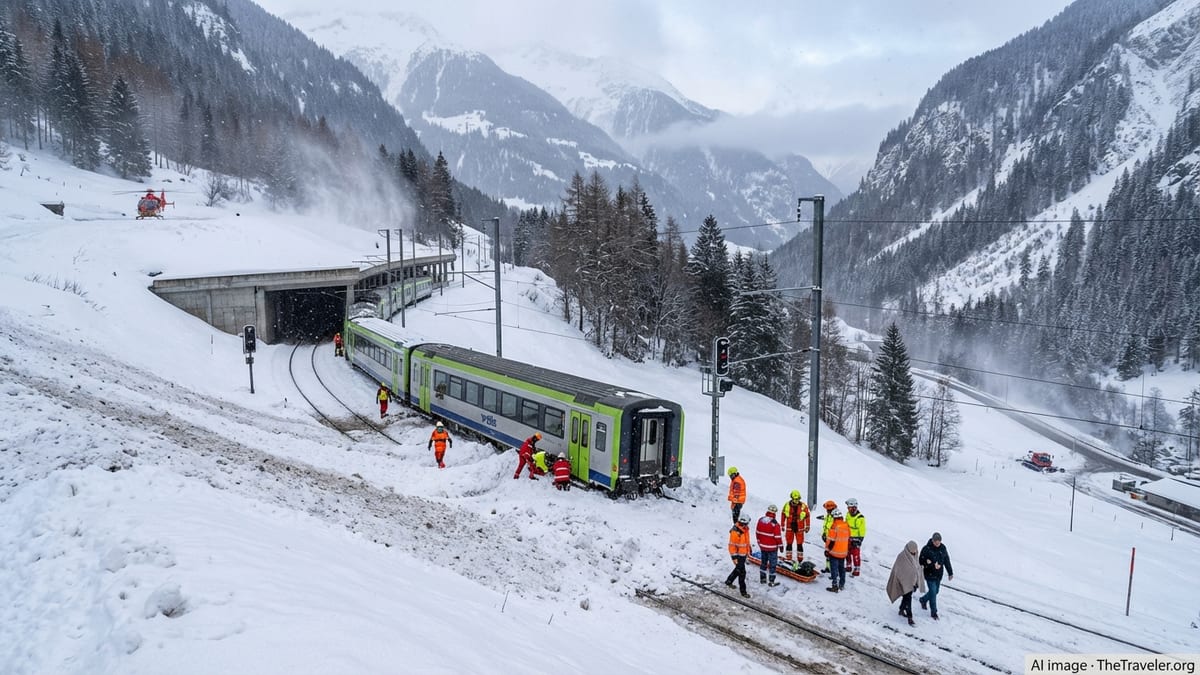
Freight consist leaves tracks outside rural community
Initial reports indicate the derailment occurred on a section of track near the rural community of Rosenfeld, where a freight consist left the rails and came to rest partly along the right of way. Images circulating through local and regional outlets show several cars tipped at angles or lying on their sides, with debris scattered close to the rail bed.
Publicly available information suggests the incident happened during routine freight operations, with the train moving through the area on a standard route. Early descriptions from rail-focused coverage point to multiple cars leaving the tracks over a relatively short distance, creating a compact but complex wreck scene.
Rail incident databases and similar recent derailments elsewhere show that freight trains in rural corridors often carry mixed cargo, though there has been no confirmed breakdown of the train’s load in this case. At this stage, there are no indications from published coverage that the consist was hauling high-risk hazardous materials through the Rosenfeld area.
The location, in largely agricultural countryside, appears to have limited the immediate impact on surrounding properties and reduced the risk of secondary road traffic collisions or nearby building damage.
No injuries and no immediate public safety threat reported
Regional news coverage states that there have been no injuries reported among train crew or members of the public following the Rosenfeld derailment. Similar recent freight incidents documented in North America have also concluded without casualties when trains have derailed in open areas away from dense population centers, and the Rosenfeld case appears to follow that pattern.
According to publicly available summaries of the event, there have been no confirmed fuel fires or large-scale leaks connected to the derailment site. Environmental assessments are typically carried out in the hours and days after such incidents, but early reporting has not described visible plumes of smoke, active fire, or chemical odors in nearby communities.
Rail safety records show that low-speed or partial derailments can sometimes result in substantial infrastructure damage without causing injuries. The ongoing absence of medical reports in connection with the Rosenfeld event suggests that the train’s speed, the configuration of the cars, and the rural setting all helped limit the human impact.
Nearby residents, farms, and businesses appear to have avoided direct physical damage, though access routes and daily routines have likely been affected by detours, noise and lights from heavy equipment, and the presence of rail and cleanup crews.
Cleanup and track repairs affect regional rail movement
Published coverage of comparable derailments in the region indicates that recovery operations typically begin within hours, once the site is secured and utility checks are complete. Heavy cranes, specialized rail equipment, and excavation machinery are usually brought in to re-rail cars where possible, dismantle those that cannot be salvaged on site, and clear debris from the right of way.
Rail traffic through the Rosenfeld area is expected to see delays and rerouting while crews work to restore service. Based on timelines from other recent freight derailments, partial reopening can sometimes occur within a day on undamaged tracks, while full repairs to the affected line, ballast, and signaling infrastructure can take longer, depending on the extent of the damage.
Freight customers whose shipments move through the corridor may experience slower transit times or temporary changes in routing. Agricultural producers and local industries in similar rural regions often rely on consistent rail service for bulk commodities, and disruptions can prompt short-term shifts to trucking or storage adjustments while the line is being repaired.
Road traffic near the derailment is also likely to be influenced by lane reductions or closures as equipment and crews access the site. Motorists in the wider Rosenfeld area may encounter temporary detours and intermittent stoppages until the main phase of the cleanup is complete.
Ongoing investigation into cause of the derailment
Investigative work typically proceeds in parallel with cleanup, and the Rosenfeld incident is expected to follow that pattern. According to publicly available summaries of rail safety procedures, investigators generally examine a range of factors, including track conditions, recent maintenance activity, train speed and handling, and potential mechanical issues with railcars or locomotives.
Recent derailments in other North American jurisdictions have sometimes been linked to issues such as track defects, weather-related damage, or problems with wheels and axles. While no official cause has been identified in the Rosenfeld case, the investigative process often includes inspections of the rail, ties, and ballast where the first signs of wheel departure from the track are found.
Data from locomotive event recorders and wayside detection systems, where installed, can provide additional insight into the moments leading up to the derailment. Publicly available information indicates that such data are routinely reviewed to determine whether the train was operating within prescribed speed limits and whether any alarms were triggered shortly before the incident.
Once a probable cause is identified and documented, rail operators typically incorporate the findings into their broader risk management and maintenance programs. In previous cases, this has resulted in targeted track renewals, revised inspection intervals, or operational changes on specific routes.
Rail safety context and implications for travelers
Despite the visual impact of derailment scenes, long-term rail statistics consistently show that serious injuries and fatalities are relatively rare in freight incidents, particularly in rural areas. The absence of injuries in the Rosenfeld derailment aligns with recent patterns in which infrastructure and equipment bear the brunt of the damage.
For travelers, the most immediate effect of the Rosenfeld event is likely to be schedule disruption instead of direct safety risk. Passenger services that share corridors or junctions with freight routes can experience delays, bus substitutions, or temporary timetable changes while freight lines are repaired or inspected more intensively.
Tourism-focused rail excursions and regional passenger trains in other parts of the continent have experienced short-term cancellations or rerouted journeys following nearby freight derailments, even when those incidents involved no passenger equipment. The Rosenfeld case serves as another reminder that shared rail networks mean disruptions in one segment can ripple across a wider travel region.
Publicly accessible rail safety data and recent investigative summaries underline that continued investment in track maintenance, detection technology, and operating procedures remains central to reducing both the likelihood and the consequences of derailments. As the situation near Rosenfeld develops, further updates on the cause, the status of repairs, and any ongoing travel impacts are expected to emerge through regional news outlets and transport bulletins.