


More news on this day
Recent reports of drones or unidentified small aircraft near major airports in the United States and Europe are once again disrupting operations, forcing temporary halts to takeoffs and landings and reviving concerns over how a single small device can ripple across global air travel.
Get the latest news straight to your inbox!
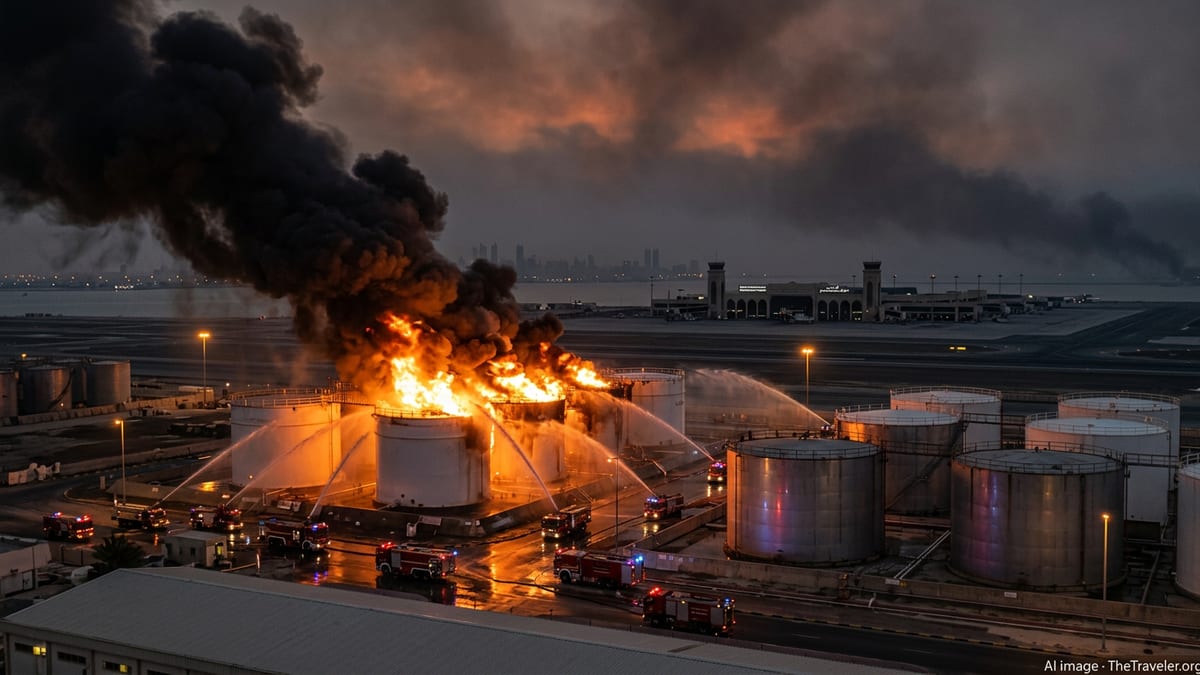
New Drone Alerts Disrupt Busy Hubs
In the latest incident to draw attention, flights at Munich Airport were briefly halted after pilots reported what appeared to be a drone in the vicinity of the airfield, according to published coverage in late May. Air traffic was suspended for around an hour while aviation safety protocols were applied, leading to delays and a backlog of departures and arrivals at one of Europe’s key connecting hubs.
While the Munich disruption was relatively short, it illustrated how quickly suspected drone activity can trigger a chain reaction. Even an hour-long suspension can push aircraft into holding patterns, force diversions to alternate airports, and create missed connections that take much of the day to unwind for passengers and airlines.
Similar reports continue to surface in other regions. Publicly available summaries of recent airspace incidents, including a near encounter between a drone and a United Airlines flight on approach to Newark Liberty International Airport earlier this month, highlight that unauthorized aircraft remain an active concern around high-density airspace.
In that Newark case, described in coverage from an immigrant community news outlet, the commercial jet landed safely, but the episode prompted a new investigation and renewed calls in the aviation community for more effective tracking and enforcement tools to keep small unmanned aircraft away from runways.
Data Shows a Persistent Pattern Near Airports
Although many of the most disruptive events make headlines only when airports shut down, recent government reports indicate that drone sightings near airports are far from rare. A United States Government Accountability Office review released this year notes that security agencies and aviation authorities have logged several thousand drone sightings in proximity to U.S. airports over the past few years, with more than 2,000 cases cataloged by transportation security officials alone.
Other public filings build on that picture. A regulatory document circulated for public inspection this spring references testimony that more than 3,000 drone-related events have been recorded near American airports since 2021, including a number of cases in which flight crews reported taking evasive action. While most incidents do not result in physical contact or visible damage, they still consume resources, from inspections and radar analysis to safety stand-downs.
Internationally, official and watchdog reporting describes comparable patterns. A recent oversight report to the U.S. Congress recounts how small unmanned aircraft of unknown origin led to temporary suspensions of air traffic at airports in Belgium and Sweden, underscoring that European hubs are facing many of the same challenges as their North American counterparts.
These compilations suggest that the highly visible shutdowns represent only a fraction of the overall risk picture. For every airport closure that reaches travelers’ social feeds, many more sightings are logged in internal systems, investigated and filed away, but still adding to a growing body of evidence that low-cost unmanned aircraft have become a routine factor in aviation risk management.
From Isolated Scares to Systemwide Vulnerability
The cascading impact of a drone sighting reflects how tightly calibrated modern aviation systems have become. A single interruption at a major hub can strand passengers across continents as aircraft and crew rotations unravel. The 2018 disruption at London’s Gatwick Airport, often cited in contemporary analyses, illustrated this dynamic vividly when multiple days of intermittent drone reports resulted in hundreds of cancellations and tens of thousands of delayed travelers.
More recent events show that vulnerability persists. In addition to the brief shutdown in Munich, airport and airspace closures linked to drone activity have been part of broader security tensions this year, including reports of airspace restrictions and temporary airport suspensions in the Middle East and along parts of the U.S. border region. In those cases, unmanned aircraft are often intertwined with national security concerns, making it even more difficult for civil aviation planners to anticipate when operations will be affected.
For airlines and airports, these events are particularly challenging because they are both rare on a per-flight basis and highly disruptive when they occur. Unlike weather, which is seasonal and broadly predictable, or mechanical issues that can be mitigated through maintenance planning, unauthorized drones appear with little warning and often vanish before they can be positively identified.
This unpredictability has encouraged a more systemic view of the threat, treating drone disruptions not as anomalies but as a recurring operational hazard that must be managed alongside thunderstorms, staffing shortages, and infrastructure failures.
Regulators Expand Restricted Zones and Penalties
Aviation and security regulators are gradually adapting legal frameworks in response to the rising number of incidents. In the United States, recently published Federal Register materials describe efforts to tighten drone operating rules near critical infrastructure, including major airports, and to standardize new categories of restricted airspace where unmanned flights are prohibited or heavily constrained.
Fact sheets and rulemaking documents released in recent months outline proposals for so-called unmanned aircraft flight restrictions that would define no-fly areas around sensitive facilities and delineate the penalties for violations. These texts reference past airport shutdowns and the financial and operational disruption they caused, citing tens of thousands of affected passengers in major incidents as justification for stronger protective measures.
Other jurisdictions are moving in parallel. In Singapore, for example, the Civil Aviation Authority has announced temporary restricted areas over parts of the city-state tied to national events, with explicit warnings that unauthorized unmanned aircraft operations within these zones may result in prosecution. Similar approaches are being adopted around large public gatherings, military installations, and wildfire operations, where low-flying crewed aircraft are often in use.
The drive to codify these restrictions reflects a growing consensus in policy circles that voluntary compliance and education campaigns, while important, are not sufficient on their own to keep runways and approach paths clear of small, privately operated aircraft.
Technology Race to Detect and Deter Unmanned Aircraft
Parallel to regulatory efforts, airports and governments are investing in technology that can spot and, in some cases, disable rogue drones before they interfere with flight operations. Public procurement records and trade press coverage point to a mix of radar, radio-frequency detection, optical tracking and geofencing tools being tested in live environments, particularly at large international hubs.
Some systems are designed to work with existing surveillance infrastructure, flagging anomalous objects that do not appear in traditional air traffic control feeds. Others focus on identifying the command signals that guide consumer drones, potentially allowing security teams to locate operators near airport boundaries.
Intervention technology, such as jamming equipment, net-firing systems, and directed-energy devices, is more controversial, especially in dense urban environments where interference with communications or unintended damage on the ground is a concern. Recent reporting on U.S. border airspace closures, where experimental counter-drone systems were reportedly used against suspected cartel aircraft, illustrates how these tools can raise complex legal and diplomatic questions when deployed near civil infrastructure.
Despite these challenges, the technology race is likely to continue as passenger volumes grow and drones become even more widespread for photography, delivery, inspection, and recreation. For travelers, the practical effect may be subtle: more visible signage about drone rules near airports, occasional advisories about airspace restrictions, and, at times, unexpected delays traced not to storms or staffing, but to a device small enough to fit in a backpack.