


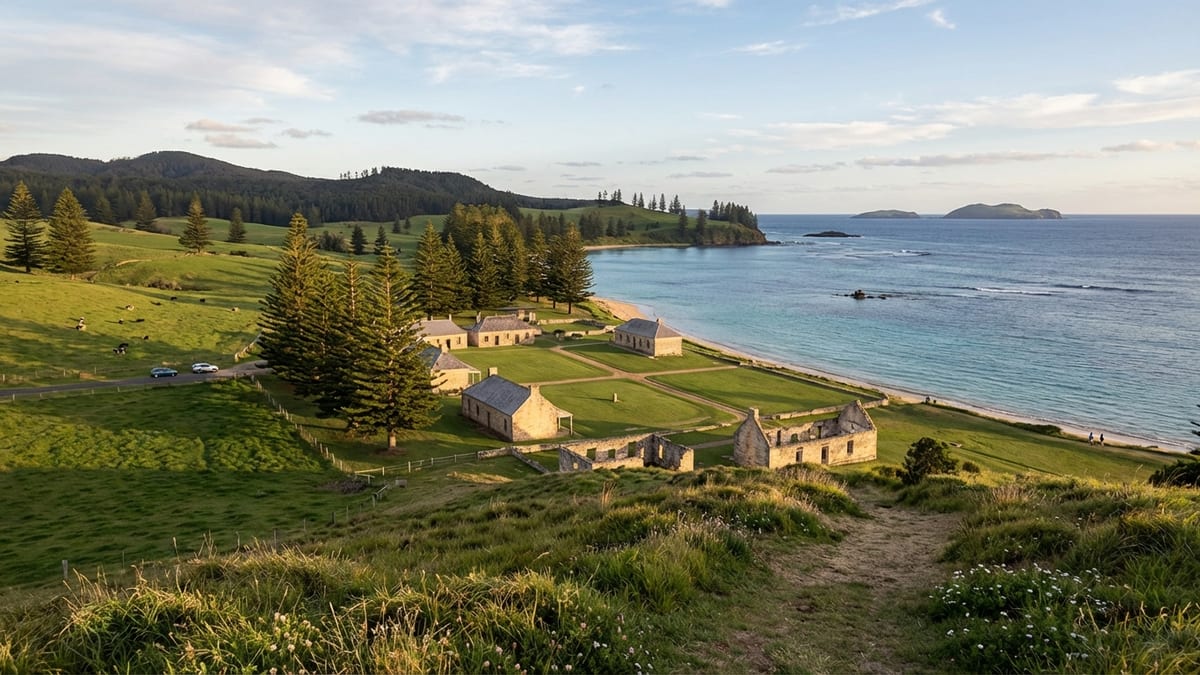
Norfolk Island is one of the South Pacific’s most intriguing small destinations, blending a layered convict history with pristine subtropical landscapes, strong community traditions and a surprisingly contemporary food and arts scene.
Perched roughly between Australia, New Zealand and New Caledonia, this tiny external territory of Australia offers travelers a slower pace, dramatic coastal scenery and a sense of remoteness that feels far from the mainland yet remains relatively easy to reach. This guide explores the island’s story, what makes its nature so distinctive, and how to plan a smooth and rewarding visit in 2026 and beyond.
Understanding Norfolk Island: Where You Are Going
Norfolk Island sits in the south-west Pacific Ocean, around 1,600 to 1,700 kilometers east of Sydney and about 1,100 kilometers north-west of Auckland. It is small in scale, just eight by five kilometers, yet the landscape packs in rugged sea cliffs, rolling green pastures, tall stands of Norfolk Island pines and a working rural patchwork that hints at the island’s agricultural roots. The main settlement, Burnt Pine, functions as the commercial and social hub, while the World Heritage listed Kingston and Arthur’s Vale Historic Area stretches along the south coast.
Administratively, Norfolk Island is an external territory of Australia. Over the past decade, governance and services have shifted increasingly into the Australian federal system, but the island retains its own distinct identity and culture. Residents commonly use a local creole known as Norfuk alongside English, and family names linked to the Pitcairn Island descendants of the Bounty mutineers remain prominent. Visitors quickly sense that Norfolk Island’s story is woven as much from these living cultural threads as from its convict-era ruins.
The island’s compact size is part of its appeal for travelers. You can cross it by car in under 20 minutes, yet each corner feels different: misty forested ridges, sheep-dotted paddocks, golden beaches and wave-battered rock stacks. That scale makes Norfolk ideal for a week-long holiday where you can balance activity and relaxation without spending hours in transit.
A Short History: From Polynesian Settlement to Penal Colony and Pitcairn Descendants
Norfolk Island’s human story begins long before Europeans arrived. Archaeological evidence indicates that East Polynesian seafarers settled here centuries ago, cultivating crops and leaving behind stone tools, burial sites and remnants of occupation. By the time Captain James Cook sighted and named the island in 1774, this early Polynesian community had disappeared, although the reasons for their departure remain uncertain.
In 1788, Norfolk became a British outpost linked to the fledgling penal colony at Sydney. Fertile soil, tall straight pines and flax plants made it strategically important, and the island was established as a settlement for convicts and marines. This first penal phase lasted until 1814. A second, much harsher penal settlement operated from 1825 to 1855, when Norfolk gained a reputation within the British Empire as one of the most brutal convict stations. Today, museums and preserved buildings in Kingston bring that era to life through artifacts, personal stories and extensive archival research.
The island’s next chapter began in 1856, when Pitcairn Islanders, descendants of the Bounty mutineers and their Polynesian partners, were resettled to Norfolk as their original home outgrew its resources. Their surnames, customs and Norfuk language still shape daily life. Events such as Bounty Day in June commemorate the arrival of these families, with community parades, wreath-laying at the cemetery and traditional foods served at picnics. For visitors, engaging with this continuing heritage is one of the most distinctive aspects of a stay on Norfolk Island.
Nature and Wildlife: A Subtropical Sanctuary
Norfolk Island’s natural environment is both fragile and resilient. Extensive clearing for agriculture and timber in the early colonial years drastically reduced native forest cover, yet significant pockets of subtropical rainforest survive and are now protected within Norfolk Island National Park and smaller reserves. These forests shelter an exceptional concentration of endemic plants, including the iconic Norfolk Island pine, which now adorns coastlines across the world but is naturally native only to this region.
The national park encompasses the island’s two highest peaks, Mount Pitt and Mount Bates, along with coastal cliffs, deep gullies and the offshore Phillip Island. More than 9 kilometers of walking tracks weave through palm-filled valleys and beneath towering tree ferns. Birdlife is a highlight: the island is an important breeding site for seabirds such as white terns and noddies, and key habitat for endemic species including the Norfolk Island green parrot and the Norfolk morepork owl. Equally notable is recent conservation work around invertebrates, including the high-profile reintroduction of the once-declared-extinct Campbell’s keeled glass-snail, which has turned Norfolk into a case study in small-island species recovery.
Marine environments around Norfolk Island feature clear waters, offshore islets and coral-rich reefs that appeal to snorkelers and divers. While it is not a mass-market resort destination, local operators can arrange snorkeling trips to areas known for colorful fish, soft corals and dramatic rock formations. On land, coastal reserves such as Anson Bay and Emily Bay provide accessible windows onto the island’s wilder side, and at certain times of year you may see migratory seabirds nesting on the cliffs or dolphins offshore. Respecting access rules and sticking to marked tracks is essential to protect these vulnerable ecosystems.
Top Sights and Experiences on the Island
Kingston and Arthur’s Vale Historic Area is Norfolk Island’s historical heart and a centerpiece of most itineraries. This UNESCO listed cultural landscape contains former convict barracks, officers’ quarters, the old military barracks, the Commissariat Store and various ruins set against a backdrop of sweeping lawns and tall pines. Walking the grid of streets and seafront is a powerful way to understand the penal colony era. Several buildings now operate as museums, presenting exhibits on convict life, archaeological finds, maritime history and the Pitcairn settlers, while the atmospheric cemetery records family lineages and shipwreck stories across its headstones.
For panoramic views, Mount Pitt in Norfolk Island National Park is a must. A sealed road climbs close to the summit, and from the viewing area you can enjoy near-360-degree vistas across the entire island and out to Phillip and Nepean islands. On clear days, this is the best place to grasp Norfolk’s scale and topography. Keen walkers can connect from Mount Pitt to Mount Bates via the Summit Track, a relatively short but rewarding walk along a forested ridge, or explore other trails such as Red Road Track or Palm Glen, which thread through lush gullies and stands of native palm.
Norfolk’s beaches showcase a different side of the island. Emily Bay, protected by an offshore reef and framed by golden sand, is the most popular swimming spot and is especially appealing for families thanks to its calm conditions. Nearby Slaughter Bay offers snorkeling among remnants of shipwrecks and rich marine life. On the west coast, Anson Bay rewards visitors with a striking amphitheater of volcanic cliffs and an often-empty stretch of sand reached by a gently descending track. Other scenic lookouts, including Puppies Point, Selwyn Reserve and Flagstaff Hill, provide prime positions for sunset photography, whale watching in season and sweeping views of the coast.
Walking, Outdoor Activities and Island Life
Walking and hiking are among the best ways to experience Norfolk Island’s landscape at a slower, more contemplative pace. Trails in the national park range from short boardwalks suitable for most fitness levels to steeper tracks demanding more effort but rewarding hikers with sweeping coastal views. In the botanic garden, sealed paths and short circuits offer accessible introductions to local flora, making them a good choice for visitors with limited mobility or for hot afternoons when you prefer shaded forest over exposed ridgelines.
Beyond the park, a network of informal coastal and rural walks helps reveal the island’s lived-in character. The Anson Bay access trail blends outstanding views with a tangible sense of remoteness, while the Hundred Acres reserve leads walkers through paddocks and forest to lookouts above Rocky Point. The Flagstaff Hill steps from Kingston Pier provide a vigorous workout and a photogenic lookout over the historic township. Some walking routes can be linked together into longer loops, and the visitor information center in Burnt Pine can supply maps and up-to-date advice on trail conditions.
Water-based activities add variety to an itinerary. Depending on conditions, local operators offer snorkeling and glass-bottom boat tours that highlight coral gardens, colorful reef fish and submerged rock formations. More adventurous visitors can explore surfing breaks or offshore fishing with experienced skippers familiar with the island’s changeable weather and swell. On land, golf at the Kingston course, set beside historic ruins and the ocean, is a memorable experience even for casual players. Community events, markets and club nights at local leagues or bowling clubs offer another dimension to island life, giving visitors a chance to meet residents in relaxed settings.
Practical Travel Details: Getting There, Entry and Getting Around
Norfolk Island is reached primarily by air, with regular flights from Sydney and Brisbane, and periodic services from Auckland. From Sydney, travel time is usually about two and a half hours; from Brisbane, around two hours. Although flights depart from international terminals, travel from mainland Australia is generally treated as domestic in regulatory terms, which can simplify formalities for Australian citizens. Schedules can vary seasonally, so it is wise to check current flights and allow sufficient transit time if connecting through Sydney or Brisbane.
Entry requirements depend on your nationality and point of departure. Australian citizens traveling from the mainland typically do not need a passport but must carry official photo identification, such as a driver licence, for airline and border formalities. Carrying a passport is often recommended even for Australians, as it can streamline some procedures and is useful in case of travel disruptions. New Zealand citizens require a valid passport, and other international visitors must meet the same visa conditions that apply to entry into Australia. That generally means securing an appropriate visa in advance if you are arriving directly to Norfolk, including by cruise vessel, and ensuring the document remains valid for the duration of your stay.
On the island, there is no public bus network, and taxis are limited. Hiring a car is strongly recommended for most visitors, both to access walking trailheads and to explore beaches, coastal lookouts and rural landscapes on your own schedule. Local road rules follow Australian standards, but there are a few distinctive quirks: livestock, especially cows, often graze near or on roads and legally have right of way, so speeds are kept low and drivers must be prepared to stop. Many car rentals include a courtesy mobile phone and island map, and some accommodations bundle car hire into their rates.
Practical services are generally concentrated around Burnt Pine, where you will find grocery stores, cafes, shops, the post office and the visitor information center. Australian dollars are the local currency, with a single bank branch and ATM on the island. Major credit cards are widely accepted, but carrying some cash is sensible for markets and smaller vendors. Medical facilities are limited compared with the mainland, so travel insurance that includes medical evacuation cover is strongly advised, even for Australian residents, in case a serious injury or illness requires transfer to a larger hospital off-island.
When to Go, Where to Stay and What to Expect Day to Day
Norfolk Island enjoys a mild, maritime subtropical climate that makes it a viable year-round destination. Summer months typically bring daytime temperatures in the high teens to high twenties Celsius, while winter averages sit mostly between 12 and 19 degrees. Humidity is moderate and sea breezes are common. Rainfall is spread through the year, with passing showers often followed by clear spells. These conditions favor outdoor activity, but you should always pack a light rain jacket and layered clothing, as temperatures can drop quickly in the evening or at higher elevations such as Mount Pitt.
The island operates on Norfolk Time, which is one hour ahead of Australian east-coast jurisdictions that observe daylight saving during the southern summer. That small shift can be helpful for planning calls home or meeting tour departure times. Daylight hours are generous in summer, providing plenty of time for walks and ocean swims, while winter brings softer light, fewer visitors and a more contemplative mood that some travelers prefer.
Accommodation on Norfolk Island spans self-contained cottages, apartments, guesthouses, motels and a small number of full-service lodges. Many properties are family-run and emphasize personal service, home-style comforts and local knowledge. It is wise to book ahead for peak periods such as major public holidays, school breaks in Australia and New Zealand, and key island events like Bounty Day commemorations. Because the island is compact, even accommodations outside Burnt Pine remain within easy driving distance of restaurants, supermarkets and attractions.
Day-to-day life on Norfolk blends rural rhythms with modern conveniences. Most businesses close earlier than in big cities, and Sunday retains a quieter feel, although cafes, clubs and some shops still operate. Dining options include casual cafes, bakery-style outlets, restaurants focusing on local produce and seasonal pop-up events. Seafood, beef, fresh vegetables and island-grown fruits feature strongly on menus. Visitors should be prepared for a slightly slower pace of service and a strong emphasis on community, where shop staff and guides often know one another and share news freely.
Connectivity, Costs and Responsible Travel
Staying connected on Norfolk Island requires a small adjustment if you are used to seamless roaming. There is a local 3G and 4G mobile network, but major Australian providers do not currently offer automatic roaming on the island. Instead, visitors can purchase a short-term tourist mobile plan from the local council or the visitor information center in Burnt Pine, which usually includes a local SIM, data allowance and call credit. Many accommodations provide Wi-Fi, sometimes via satellite services such as Starlink, and free public Wi-Fi is available at specified community hubs including the library and some clubs and cafes.
Costs on Norfolk reflect its remote location and reliance on shipped goods, but many travelers find them comparable to regional Australia rather than significantly higher. Food prices in supermarkets can be slightly elevated for imported items, while locally grown produce is often reasonably priced and of high quality. Eating out ranges from fairly priced takeaways and club meals to more expensive restaurant dinners, especially when featuring premium local ingredients. Activities such as guided history tours, boat trips and cultural performances add to overall budgets but are often considered good value given the small-group nature of most experiences.
Responsible travel is especially important on a small island where ecosystems are finite and community dynamics are close-knit. Visitors can support sustainability by sticking to marked walking tracks, following biosecurity instructions on arrival, disposing of waste carefully and minimizing single-use plastics. Respect for local customs goes a long way: driving slowly near livestock, being considerate around cemeteries and heritage sites, and asking permission before photographing people on private property. Many operators and residents are directly involved in conservation projects, from weed control in the national park to seabird monitoring, and they welcome visitors who show interest in the island’s long-term environmental health.
The Takeaway
Norfolk Island offers a distinctive blend of human history, wild landscapes and contemporary island culture that stands apart from more commercialized South Pacific destinations. Its compact size encourages slow travel, where mornings might begin with a quiet forest walk and conclude with sunset at a west-coast lookout, and where conversations with local guides or shopkeepers become as memorable as the views themselves. For travelers willing to look beyond headline resorts and embrace a slightly off-grid style of holiday, Norfolk delivers depth, character and a strong sense of place.
Planning ahead on practical matters such as flights, entry requirements, car hire and travel insurance helps ensure that once on the island, you can focus on what matters most: standing amid the ruins of a notorious penal colony and imagining the lives once lived there, watching white terns wheel above basalt cliffs, tasting fresh island produce, and learning from a community whose roots stretch back to both Polynesian voyagers and the Pitcairn settlers. In an era when many trips blur together, Norfolk Island remains unmistakably itself, a small speck of land with a big story to tell.
FAQ
Q1. Do I need a passport or visa to visit Norfolk Island?
Australian citizens traveling from the mainland usually do not need a passport, but must carry official photo identification such as a driver licence, and many authorities recommend bringing a passport anyway. New Zealand citizens require a valid passport, and visitors from other countries need to meet the same visa requirements that apply to entering Australia, arranging any necessary visa before travel.
Q2. How do I get to Norfolk Island and how long is the flight?
Most visitors arrive by air on scheduled services from Sydney or Brisbane, with flight times typically around two and a half hours from Sydney and two hours from Brisbane. There are also seasonal or periodic flights from Auckland. Schedules can vary through the year, so travelers should check current timetables and allow generous connection times when linking from other domestic or international flights.
Q3. What is the best time of year to visit?
Norfolk Island’s mild subtropical climate makes it a feasible destination year-round. Summer offers warmer sea temperatures and longer daylight hours, while winter is cooler but often clear and less crowded. Shoulder seasons around late spring and early autumn can provide a good balance of pleasant weather and availability, although key events and school holidays may increase demand.
Q4. How many days should I plan to stay?
A stay of five to seven nights suits most travelers, allowing time to explore Kingston’s historic precinct, enjoy several walks in the national park and botanic garden, visit beaches like Emily Bay and Anson Bay, and participate in guided tours or cultural events without rushing. Shorter visits are possible, but the island’s relaxed pace is best appreciated over at least several full days.
Q5. Is it easy to get around without a car?
There is no public transport network and taxis are limited, so getting around without a car can be challenging. Hiring a vehicle is strongly recommended for most visitors, as distances, while short, are best covered independently and many walking trailheads, lookouts and rural attractions are not practical to reach on foot alone. Some accommodations include car hire in package deals.
Q6. What kind of accommodation is available?
The island offers a mix of self-contained apartments and cottages, motels, guesthouses and a small number of more upmarket lodges. Many are owner-operated and emphasize personal service and local knowledge. Travelers can choose between staying close to Burnt Pine for convenience or in quieter rural settings with ocean or valley views, secure in the knowledge that driving times remain short wherever they base themselves.
Q7. Is Norfolk Island expensive to visit?
Costs are influenced by the island’s remoteness, but overall prices are broadly comparable with regional parts of Australia. Groceries and some imported goods can be slightly more expensive, while dining options range from reasonably priced club meals and cafes to higher-end restaurants. Activities such as guided tours, snorkeling trips and cultural performances vary in cost but are typically small-group and good value for the depth of experience offered.
Q8. Will my mobile phone and internet work on the island?
Norfolk Island operates its own mobile network, and standard roaming from major Australian providers generally does not apply. Most visitors purchase a local tourist SIM or short-term mobile plan on arrival to access calls and data. Wi-Fi is available at many accommodations, clubs and public facilities, though speeds and reliability can vary, and some services rely on satellite connections.
Q9. Is Norfolk Island suitable for families and older travelers?
Yes, the island suits a wide range of ages. Families appreciate safe swimming at Emily Bay, short nature walks and hands-on history experiences in Kingston. Older travelers value the slower pace, mild climate and the option to enjoy many key viewpoints and historic sites without strenuous hiking. Choosing accommodation with convenient access and arranging a rental car can help tailor the experience to different mobility levels.
Q10. What should I pack for a trip to Norfolk Island?
Pack lightweight, layered clothing suitable for mild but changeable weather, including a light rain jacket and warmer layers for evenings. Comfortable walking shoes are essential for exploring trails and historic sites, and reef-safe sunscreen, a hat and swimwear will be useful for beach days. Because checked bags can occasionally be delayed, it is prudent to carry essential medications, basic toiletries and a change of clothes in your hand luggage, along with any important documents.