


More news on this day
A suspected hydraulic issue on an Etihad Airways Airbus A320 preparing to depart from Chennai for Abu Dhabi has drawn fresh attention to the fragility of India–United Arab Emirates air links at a time of already heightened regional disruption.
Get the latest news straight to your inbox!
What Happened on the Chennai–Abu Dhabi Service
Publicly available reports from Indian and aviation media indicate that an Etihad Airways flight operating the Chennai to Abu Dhabi route was halted on the ground after personnel observed a flare or smoke near the aircraft’s left wing during pre-departure checks. Subsequent technical inspection pointed to a hydraulic leak, and the Airbus A320 involved was declared unfit to operate until maintenance could be completed.
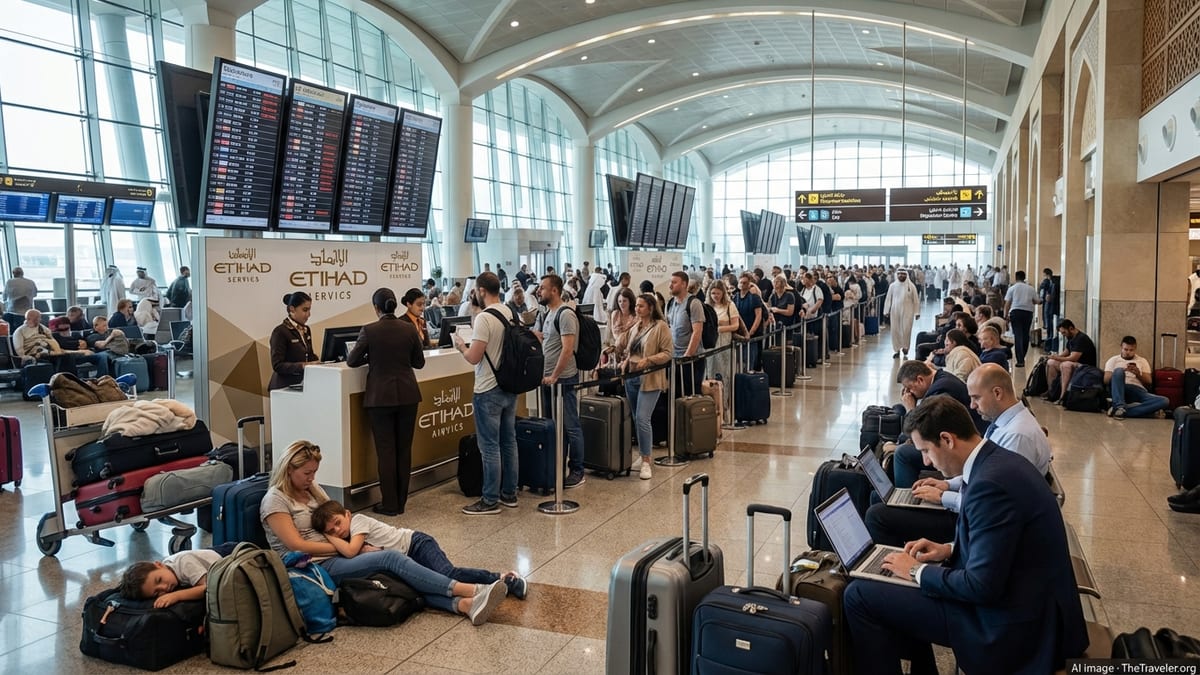
The flight, which was scheduled to carry close to 280 passengers, did not depart as planned. Instead, the aircraft was towed back to a parking stand for further engineering assessment and the service was cancelled. Passengers were returned to the terminal while ground teams worked through established safety and inspection protocols.
Coverage of the incident initially framed it as a potential wing fire, but later accounts from airport and airline sources suggested that what was seen from the ground was likely the visual effect of hydraulic fluid and related vapour rather than an active fire. No injuries were reported, and there was no in-flight emergency because the event occurred before takeoff.
Tracking data and fleet information show that Etihad continues to use Airbus A320 family aircraft on the Chennai–Abu Dhabi sector, with other frames operating subsequent rotations on the route. That pattern underlines that the disruption centred on a specific aircraft and departure, rather than a prolonged suspension of the city pair.
Hydraulic Systems and the Airbus A320: Why Issues Matter
Hydraulic systems are critical to the safe operation of modern commercial jets, including the Airbus A320, which is widely used by airlines across Asia and the Middle East. These systems power key flight controls, landing gear, flaps, slats and brakes, and they operate under high pressure with multiple redundancies built in.
In the event of a suspected hydraulic leak, airlines typically follow a conservative safety approach. Standard procedures call for aborting the departure, returning the aircraft to a stand, and conducting detailed inspections to determine whether the leak involves a minor line, a fitting, or a component that could affect controllability or braking performance if left unaddressed.
Industry data show that hydraulic anomalies are not uncommon across global fleets, but they are usually managed on the ground before takeoff or resolved in a controlled manner in flight through checklists and alternate systems. The Chennai event, based on available reporting, fits that pattern: a technical indication or visible concern triggered a precautionary stop rather than a midair emergency.
For travellers, the most immediate consequence of such an incident is operational rather than safety related. Once a jet is placed in an aircraft-on-ground status, it often requires replacement capacity or a schedule reshuffle, leading to delays and missed connections, especially for those using Abu Dhabi as a hub for onward travel to Europe or North America.
India–UAE Air Travel Already Under Strain
The timing of the Chennai–Abu Dhabi disruption comes as Etihad and other carriers in the Gulf region work through a complex period of operational challenges. In recent months, airspace closures and temporary suspensions of scheduled commercial flights to and from Abu Dhabi have affected thousands of passengers, many of them transiting between India and long-haul destinations.
Etihad’s publicly available travel updates describe periods when all regular commercial flights to and from Abu Dhabi were paused for safety and security reasons, with only limited movements permitted. During those windows, passengers reported being stranded in the hub, facing rebookings several days later, or being rerouted through alternative gateways such as Doha, Istanbul or European hubs.
For Indian travellers, this has amplified pressure on key corridors between major cities such as Chennai, Delhi, Mumbai and southern tier destinations and the United Arab Emirates. Government and airline notices from India have previously highlighted cancelled or curtailed operations to Abu Dhabi and Dubai across multiple carriers, underscoring how quickly disruption in Gulf airspace can ripple through the wider network.
Against that backdrop, even a single aircraft-specific technical issue on the Chennai–Abu Dhabi link can feel more consequential than it might during a period of normal operations. Passengers who depend on carefully timed connections onward to the United States, Canada or Europe have less slack in the system when regional capacity is already constrained.
What International Travelers Connecting via Abu Dhabi Should Do
For international passengers using Abu Dhabi as a connecting hub, the Chennai hydraulic incident serves as a reminder to build more resilience into travel plans. Public guidance from Etihad and other airlines consistently encourages travellers to monitor real-time flight status through official channels in the 24 hours before departure and again on the way to the airport.
Many experienced passengers on India–UAE routes now factor in the possibility of sudden schedule changes by choosing slightly longer connection windows rather than the tightest available options, particularly when travelling onward to long-haul destinations in Europe or North America. A missed connection in Abu Dhabi can be more disruptive when replacement services are full or when regional airspace restrictions have limited the number of daily departures.
Travel insurance with clear provisions for missed connections, delays and involuntary re-routing has also become more relevant. Policies differ widely, but some plans will cover hotel accommodation, meals and alternative transport when a trip is interrupted by technical issues, safety closures or other operational disruptions outside the traveller’s control.
Passengers with time-sensitive commitments, including visa appointments, cruises or events at the far end of an itinerary, may wish to avoid same-day critical connections where possible. Booking itineraries that arrive a day earlier than strictly necessary can create a buffer when flying through hubs that have experienced repeated disruption in recent months.
How Etihad and Regulators Handle Technical Incidents
When a technical issue such as a suspected hydraulic leak arises, Etihad and other global airlines operate under strict oversight from national civil aviation authorities. In this case, the airline falls under the regulatory framework of the United Arab Emirates, while the departure airport in Chennai is overseen by India’s aviation regulator and local airport authorities.
Incident reports from previous cases involving hydraulic issues and aborted departures on Airbus A320 family aircraft illustrate the standard pattern: initial on-the-ground response, engineering inspection, potential notification to authorities, and in some circumstances the opening of a formal incident file. These processes are designed to determine whether the event reflects isolated wear and tear or points to a broader technical trend that might require additional checks across the fleet.
Etihad’s recent public statements on separate episodes of disruption, including weather and navigation-system related issues, emphasise schedule adjustments, rebooking options and coordination with airport partners. While these statements are not specific to the Chennai event, they provide a window into how the airline typically communicates and manages irregular operations.
For travellers, the practical takeaway is that safety-driven decisions may result in sudden delays or cancellations even when the aircraft appears ready at the gate. In most cases, technical events like the Chennai hydraulic scare are contained, with engineers resolving the fault and aircraft returning to service after inspection. However, as India–UAE travel demand continues to grow, each such incident highlights the importance of flexible planning, active monitoring of flight status and a clear understanding of passenger rights when journeys do not go as scheduled.