


More news on this day
A fresh round of locomotive upgrades at Norfolk Southern in 2026 is drawing attention across the U.S. rail sector, as the carrier deepens its long-running partnership with Wabtec to modernize existing power instead of relying solely on new builds.
Get the latest news straight to your inbox!
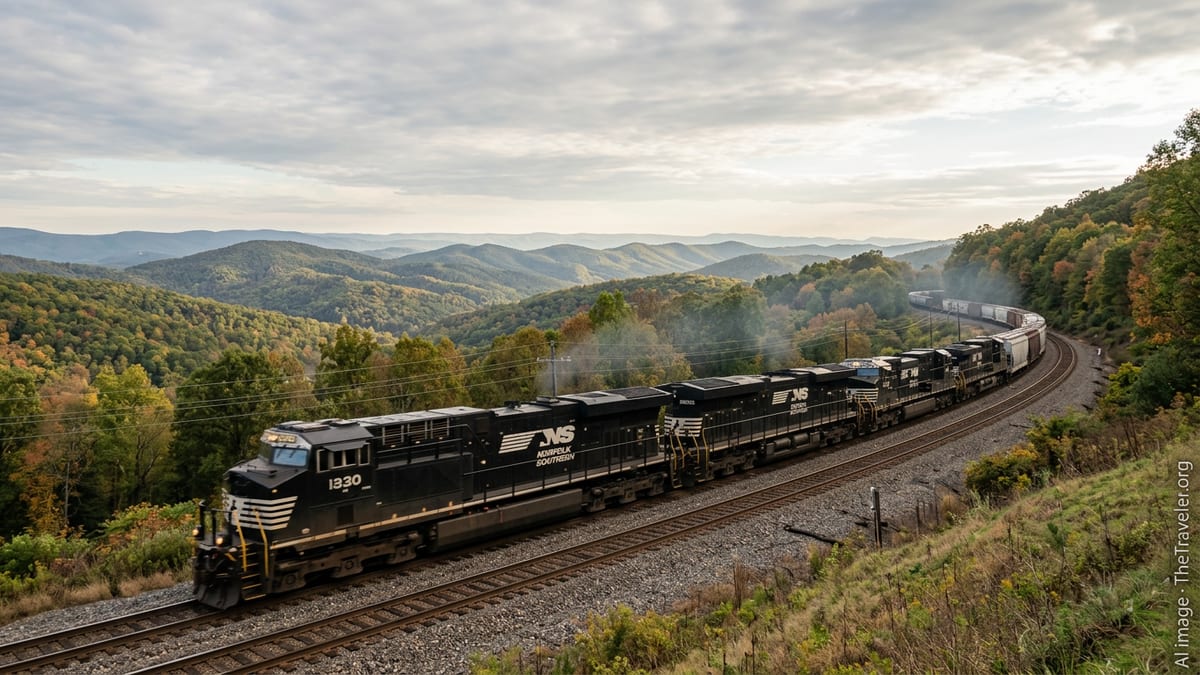
Expanded Modernization Deal Marks 2026 Milestone
Publicly available information from Norfolk Southern and Wabtec in late August 2026 shows the railroad has agreed to a new phase in its modernization program, covering 33 additional DC-traction Evolution Series locomotives. The units will receive comprehensive upgrades that extend their service life while bringing performance closer to the latest-generation power, reinforcing a strategy that favors rebuilding over wholesale fleet replacement.
The 33 locomotives covered in the new agreement build on a series of orders that began in 2015 and grew through a 2022 deal for 330 units. Industry coverage indicates the newest batch is scheduled for delivery beginning in 2026, with completions continuing into 2027, keeping Wabtec’s Erie, Pennsylvania, facilities and associated sites busy with Norfolk Southern work.
Rail-sector reports describe the modernization scope as more than a midlife overhaul. The program is designed to transform older DC units into AC-traction workhorses equipped with updated control systems, digital train-handling tools, and revised truck components. That approach positions Norfolk Southern to refresh its core freight power without the cost and embodied emissions associated with large orders of entirely new locomotives.
For the wider U.S. rail network, the 2026 expansion underscores how modernization has become a central plank of freight-rail capital plans. Rather than headline-making purchases of new models, incremental rebuild programs are increasingly where efficiency gains and emissions reductions are being realized.
What Wabtec Technology Brings to Norfolk Southern’s Fleet
Norfolk Southern’s latest locomotives upgrades use a suite of Wabtec technologies that have been maturing across North American fleets. Earlier program descriptions highlight DC-to-AC traction conversions, the FDL Advantage engine upgrade, and an array of digital systems including Trip Optimizer, SmartHPT, and distributed power controls. Together, these packages target fuel savings, improved tractive effort, and better train handling on long-haul freights.
Wabtec’s modernization solutions literature explains that converting older DC locomotives to AC traction can extend asset life by as much as two decades while cutting maintenance requirements associated with aging electrical gear. AC traction also improves low-speed pulling power and adhesion, attributes that are especially relevant on heavy bulk and intermodal trains that dominate much of Norfolk Southern’s network.
Digital technology is another pillar of the program. Trip-optimization software and advanced control platforms analyze route profiles, train makeups, and real-time operating conditions to meter power use, helping crews manage speed and fuel burn more precisely. Norfolk Southern has previously pointed to fleetwide deployment of energy management systems as a way to improve fuel efficiency, and the 2026 Wabtec work extends that digital layer to more of its power.
Mechanical upgrades, such as revised truck designs and enhanced diagnostics, round out the package. Wabtec’s materials indicate that standardized control systems and health-monitoring tools can reduce shop time and simplify parts inventories, benefits that scale quickly across a large Class I fleet.
Efficiency and Emissions Implications for U.S. Rail
For travelers and shippers watching the evolution of U.S. rail, the Norfolk Southern–Wabtec program offers a detailed case study in how technical improvements at the locomotive level ripple through the broader network. Modernized locomotives typically consume less fuel per ton-mile, which directly lowers operating costs and greenhouse-gas emissions while supporting more reliable schedules.
Norfolk Southern’s prior public sustainability and green-finance documents have cited Wabtec estimates that modernizing an existing locomotive can avoid roughly 200 tons of carbon emissions compared with manufacturing a new AC locomotive. When multiplied across hundreds of units, those avoided emissions begin to resemble the impact of major infrastructure projects, but achieved largely within existing fleets and facilities.
Operationally, stronger tractive effort and improved adhesion translate into fewer locomotives per train, particularly on demanding grades or with heavy consists. That, in turn, frees up units for other assignments and can reduce congestion at terminals, indirectly improving on-time performance for both freight and passenger services that share key corridors.
Although the program is focused on diesel power rather than fully alternative-fuel platforms, it complements longer-term decarbonization efforts. Wabtec is simultaneously developing technologies such as the FLXdrive battery-electric locomotive and waste heat recovery systems, and experience from current modernization work is expected to inform how future hybrid or low-carbon units integrate into existing freight operations.
Strategic Context: Modernization vs. New Builds
The timing of Norfolk Southern’s 2026 announcement aligns with a broader shift in North American locomotive investment. After several waves of new power deliveries tied to emissions regulations and traffic peaks, Class I railroads have leaned more heavily on modernization to manage capacity and environmental goals. Public reports on Norfolk Southern’s fleet strategy describe a roadmap that consolidates locomotive models and increases the share of AC-traction power while avoiding oversupply.
From a capital-planning standpoint, modernization programs offer more granular control. Railroads can schedule batches of rebuilds in line with traffic forecasts, freeing them from the long lead times and large block orders associated with new locomotives. For Norfolk Southern, which has already surpassed 1,000 modernized units with Wabtec’s help, the 33-unit 2026 tranche is another step along a path rather than a wholesale pivot.
For Wabtec, the agreement reinforces the company’s position as a key technology supplier to U.S. freight railroads. Corporate sustainability reports indicate that, globally, the firm has carried out more than a thousand locomotive modernizations, spanning GE’s older Dash-series units through to Evolution Series platforms. The Norfolk Southern contract highlights how that expertise is being applied not only to legacy locomotives but also to relatively modern models that still offer room for efficiency gains.
The balance between modernization and new builds is expected to remain a strategic question for U.S. carriers as they navigate uncertain freight cycles, regulatory pressure on emissions, and competitive challenges from trucking and inland waterways. Norfolk Southern’s 2026 move signals ongoing confidence that upgrading existing assets will remain a central tool in that mix.
Impacts for Corridors, Communities, and Travelers
While locomotive procurement decisions can seem distant from day-to-day travel, the Norfolk Southern–Wabtec program carries practical implications for corridors used by both freight and passenger services. Many intercity and regional passenger routes in the eastern United States run on or alongside Norfolk Southern tracks, where freight performance influences timetable reliability and capacity for additional service.
More efficient, higher-performing freight locomotives can help reduce delays by improving acceleration, hill-climbing capability, and reliability, particularly on complex mixed-traffic corridors. Over time, that can support efforts by states and passenger-rail operators to negotiate for new or expanded services, including in corridors eyed for higher-speed or higher-frequency operations.
Communities along busy freight lines may also see incremental benefits from modernization programs. Fuel savings and improved combustion management can reduce local pollutants, while better train handling and braking controls can assist with smoother operations through towns and terminals. These changes are gradual rather than dramatic, but they accumulate as more locomotives cycle through modernization shops.
For travelers considering rail as an alternative to road or air in the coming years, such behind-the-scenes fleet investments are part of a broader push to make U.S. rail more competitive. Whether through incremental improvements in freight reliability that stabilize passenger timetables or through future hybrid and battery-assisted locomotives, the technology now being deployed on Norfolk Southern’s freight trains is likely to influence how the country’s rail network evolves.
Norfolk Southern and Wabtec expand locomotive modernization program
Wabtec press release on Norfolk Southern modernization agreement
Norfolk Southern passes 1,000th locomotive modernization milestone
Background on earlier Wabtec–Norfolk Southern modernization orders