

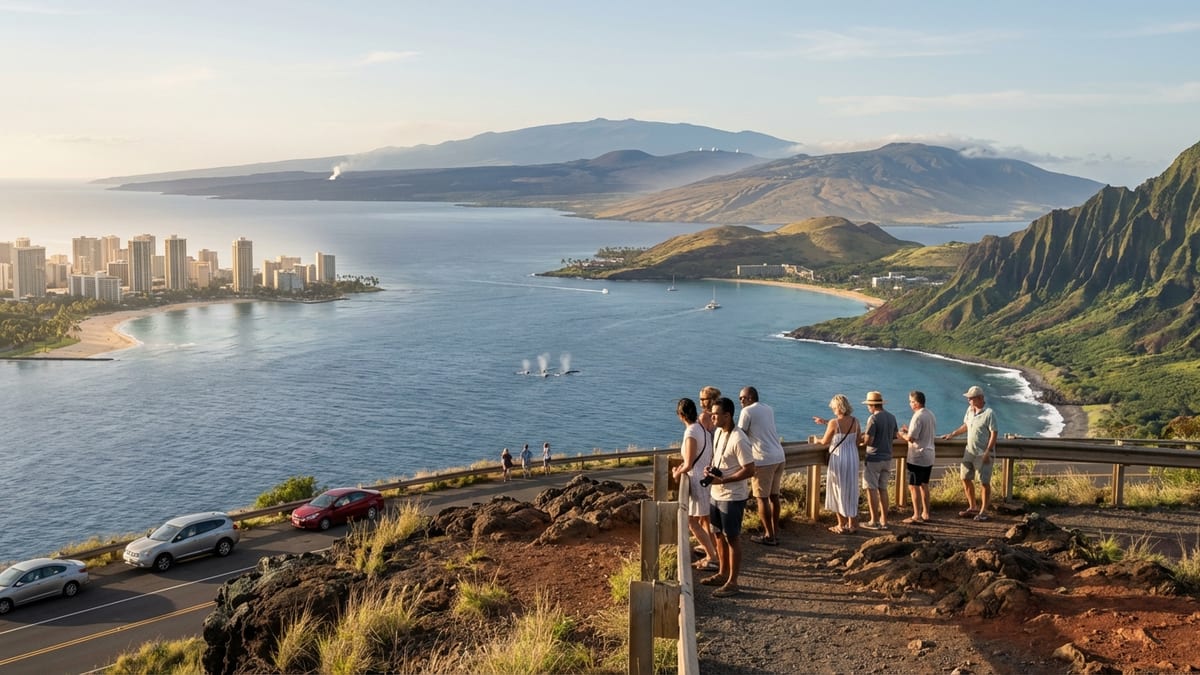
Choosing which Hawaiian island to visit is less about finding the single “best” place and more about matching a specific island’s character with the kind of trip you want. Oahu, Maui, Kauai and the Island of Hawaii, commonly called the Big Island, each deliver a different balance of beaches, nightlife, wilderness, culture, cost and convenience.
Recent years have also brought changes, from Maui’s wildfire recovery to evolving volcano activity on the Big Island and crowds dispersing differently across the chain. Understanding what each island does best in 2026 will help you build the Hawaii experience you are actually dreaming about.
How to Decide: Matching Each Island to Your Travel Style
If you picture Hawaii as a single place, Oahu, Maui, Kauai and the Big Island may seem interchangeable. In reality, they feel like four different worlds. The “best” island depends on how you prioritize nightlife versus nature, luxury versus affordability, and convenience versus escape. For first timers who want the classic surf-and-city combo, Oahu is often the easiest fit. Maui leans into refined resorts and superb beaches, while Kauai is about quiet, green wilderness. The Big Island adds drama with fiery volcanoes and stark lava landscapes.
Before picking, get specific about your must-haves. Are you set on staying in a full-service beachfront resort or willing to drive from a rental in the hills? Do you want to walk to restaurants every evening or unwind in relative seclusion? Are you comfortable renting a car, or do you need a mostly walkable base? Your answers will naturally steer you toward one island over another.
Trip length matters. In a quick five- or six-day vacation, trying to hop between islands can mean more time in airports than on the beach. For a first visit of a week or less, many travelers are happiest choosing one island and exploring it well. With 10 or more days, it becomes realistic to combine two islands that complement each other, such as Oahu plus Kauai, or Maui plus the Big Island.
Season and timing also shape the decision. Winter brings big surf to Oahu’s North Shore and prime whale watching off Maui and the Big Island. Summer tends to be calmer for ocean conditions and is often better for families with young children. Shoulder seasons in spring and fall can offer a balance of fewer crowds and still-pleasant weather, although major holidays and school breaks are busy across all four islands.
Oahu: Best for First Timers, Nightlife and “Urban Hawaii”
Oahu is home to Honolulu, Waikiki and the islands’ main international gateway airport, which makes it the most convenient starting point for many visitors. It blends skyscrapers with iconic beaches and historic sites, offering a fast-paced, “big city in the tropics” feel that you will not find on the quieter neighbor islands. For travelers who want both modern amenities and a heavy dose of scenery, Oahu is frequently the best match.
Waikiki remains the center of the action, lined with high-rise hotels, shopping centers, rooftop bars and restaurants spanning everything from local plate lunches to tasting menus. You can spend the day swimming or learning to surf in the sheltered waves off Waikiki, then enjoy live music or cocktails without ever needing a car. Public transportation and ride shares are more available here than on the other islands, which helps travelers who would rather avoid driving.
Beyond the city, Oahu offers some of Hawaii’s most famous day trips. Pearl Harbor provides a sobering look at World War II history, while the windward side of the island reveals dramatic cliffs, reef-protected beaches and views that feel worlds away from Waikiki’s bustle. The North Shore is known for its powerful winter surf and a more laid-back vibe, with food trucks and small beach towns that contrast sharply with Honolulu’s urban skyline.
Oahu’s advantages come with trade-offs. It is the busiest island year-round, particularly in Waikiki and key viewpoints and hikes. If your ideal Hawaii escape involves long stretches of empty sand and evenings filled mostly with the sound of waves, Oahu can feel crowded. However, for travelers who value variety, nightlife, historical sites and the possibility of a car-free or car-light vacation, Oahu often comes out on top.
Maui: Best Beaches, Refined Resorts and Careful Recovery
Maui has long been the poster child for the classic tropical beach vacation, with golden crescent bays, swaying palms and a lineup of upscale resorts. Its main resort areas in South Maui and West Maui offer a blend of comfort and access to nature that many honeymooners and families find irresistible. At the same time, the island is still recovering and reshaping itself following the devastating Lahaina wildfires in August 2023, which continues to influence where visitors stay and how they move around the island.
Resort zones such as Wailea and Kihei in South Maui, and Ka’anapali, Napili and Kapalua in West Maui, are fully open and operating. Hotels, restaurants, golf courses and beaches in these regions are welcoming visitors, and most of the island’s major attractions, from snorkeling spots to the summit of Haleakala, are accessible. Travel officials have emphasized in 2025 and into 2026 that visitors are welcome, provided they come with sensitivity and respect for local communities that are still rebuilding.
Lahaina itself remains in an extended period of reconstruction. Portions of the town and its historic waterfront core are closed or restricted, and visitors are expected to pay close attention to posted guidance, stay out of burn zones and use bypass routes where directed. At the same time, a growing number of businesses on the fringes and along the harbor are gradually reopening, which provides ways to support the local economy while honoring residents’ needs for space and privacy during recovery.
Maui still delivers many of Hawaii’s top experiences in a compact package. Winter whale watching between December and April is exceptional, with frequent sightings in the waters between Maui, Lanai and Molokai. The sunrise or sunset view from Haleakala’s summit gives a sense of being above the clouds. The Road to Hana offers waterfalls, sea cliffs and pockets of rainforest. Compared with Oahu, nightlife is quieter, but dining is strong, and the overall feel leans relaxed and upscale. The main downsides remain high prices and, at peak times, significant traffic on main corridors, especially when visitor numbers swell.
Kauai: Best for Quiet, Green Wilderness and Slower Travel
Kauai, often called the Garden Island, is the place many travelers imagine when they picture a deeply green, waterfall-laced Hawaii. It is smaller in population than Oahu or Maui and has more of a rural, low-key character. There are resorts and well-developed areas, particularly around Poipu in the south and Princeville and Hanalei in the north, but outside these pockets, Kauai feels slower and more residential.
The island’s natural highlights are some of the most dramatic in the state. The Napali Coast’s sheer cliffs and emerald ridges plunge into the Pacific, best viewed by boat, helicopter or from certain hiking trails where permits and preparation are critical. Farther inland, Waimea Canyon, often described as a “Grand Canyon of the Pacific,” provides extensive hiking opportunities and sweeping viewpoints. Rainfall and microclimates vary, but in general, Kauai’s lushness comes with frequent showers, especially in the north and interior, which some travelers find refreshing and others see as a trade-off.
Kauai’s infrastructure and visitor numbers remain more modest than those of Oahu or Maui. That can make it appealing for couples and families seeking a slower stay, but it also means fewer restaurant choices in some areas, especially late at night. Driving is practically mandatory, and distances can feel longer due to the island’s horseshoe-shaped road system, which does not circle the entire coast. When surf is up in winter on the north shore, certain beaches can be unsafe for casual swimming, pushing visitors to sheltered southern areas.
Costs on Kauai are roughly comparable to Maui in many resort areas, though there are simpler accommodations and vacation rentals that can ease the budget. For travelers who value scenery, hiking and quiet above nightlife and extensive shopping, Kauai often ranks as the best Hawaiian island. Those looking for a balance of nightlife, shopping and beaches might find it a bit too sleepy, particularly in the evenings.
The Big Island: Best for Volcanoes, Variety and Space to Roam
The Island of Hawaii, widely called the Big Island, more than lives up to its name in size and variety. It is larger than all the other Hawaiian islands combined, with landscapes that range from black lava fields and two of the world’s most massive volcanoes to ranchland, rainforest, coffee farms and some of the archipelago’s newest beaches. For travelers drawn to geology, stargazing and road-trip style exploring, the Big Island can be the best choice.
Hawaii Volcanoes National Park is the island’s signature attraction, anchored by Kilauea and Mauna Loa. Kilauea has gone through periods of intermittent eruption in recent years, with lava activity contained inside the park’s summit caldera and no immediate threat to residential areas. When lava is visible, the experience of watching glowing fountains or flows in a controlled, park-managed environment is unforgettable. Even during quiet phases, steam vents, craters and old lava fields provide a vivid look at an evolving volcanic landscape.
The island’s size means that where you base yourself matters. The Kona side is sunnier and drier, with many of the island’s main beach resorts, snorkeling spots and coffee farms. Hilo on the east side is wetter and more local in feel, with easy access to the national park and several waterfalls. Driving times between the two coasts can be two to three hours, and a loop around the island with stops can easily consume a full day or more.
The Big Island tends to feel less crowded than Oahu or Maui because visitors are more spread out. Accommodations range from large full-service resorts at Waikoloa Beach to small inns and vacation rentals in upcountry areas. Nightlife is limited, and distances between towns can be substantial, so this is not the place to arrive without a car or with expectations of walking to a long strip of restaurants and shops. For travelers who value open space, diverse scenery and the chance to see active geology, however, it is hard to beat.
Comparing Costs, Crowds and Practicalities in 2026
From a cost and logistics standpoint, the four islands differ in ways that can meaningfully affect your budget and comfort. Oahu frequently offers the broadest range of accommodations, including urban high-rises, smaller hotels and some more affordable options farther from the beachfront. Competition keeps some prices slightly more moderate, although prime seafront locations still command premium rates.
Maui and Kauai both skew toward higher nightly rates in their main resort zones, especially at peak travel times. Maui has also grappled with a tightening long-term housing market following the 2023 fires and subsequent policy changes aimed at shifting more units away from short-term vacation rentals. This process is ongoing and may continue to affect availability and pricing of some accommodations in the coming years, even as major resorts remain open and actively courting visitors who travel thoughtfully.
The Big Island typically offers a broader spectrum of price points, from upscale resorts to modest hotels in Hilo and small lodgings in upcountry or rural areas. Because destinations are spread out, some visitors find they spend more on rental cars and fuel but less on nightly room rates than they might on Maui or Kauai. Rental cars are highly recommended on all islands, but they are particularly essential on Kauai and the Big Island, where public transit is limited and many natural sights are far from resort areas.
Crowding patterns are shifting slightly as Maui continues its long recovery, but Oahu remains the busiest island overall, particularly in and around Waikiki, major memorials and the North Shore during big winter swells. Maui’s main resort corridors can still feel busy, even as total island visitation remains somewhat below pre-fire peaks. Kauai and the Big Island often feel calmer on average, although popular viewpoints and trailheads can still fill up at peak hours. Booking vehicles, key activities and in-demand restaurants well in advance is increasingly wise on all four islands, especially for high-season winter and summer dates.
Which Island Is Best for You? Scenario-Based Recommendations
If you are planning a first trip to Hawaii with a mix of beach time, famous sights and city comforts, Oahu often makes the most sense. It offers the easiest flight options, especially from the mainland United States, and allows you to experience Pearl Harbor, Waikiki, the North Shore and a variety of cultural venues without the need to coordinate interisland flights. You can add a second island later on a future trip once you have a sense of what you liked most.
For a honeymoon or special-occasion trip focused on beaches, resorts and scenic drives, Maui continues to be a prime choice. Staying in South Maui or the resort sections of West Maui gives you access to excellent beaches, strong dining options and activities such as snorkeling excursions, whale watching, Haleakala sunrise tours and the Road to Hana. If you choose Maui in the coming years, be prepared to engage with the island’s ongoing recovery sensitively, follow local guidance about where you can and cannot go, and support locally owned businesses when possible.
Travelers who prioritize quiet, greenery and hiking over nightlife may find Kauai the best fit. A split stay between the south and north shores, if time permits, can showcase different sides of the island’s personality and help you adapt to seasonal conditions. Days spent exploring Waimea Canyon, taking a boat tour along the Napali Coast or walking less-traveled coastal trails will create a trip defined more by nature than by resorts.
Adventurous travelers drawn to geology, astronomy and open road exploring should seriously consider the Big Island. Combining a few nights near Kona with time in or near Hilo offers very different perspectives on the same island. Visiting Hawaii Volcanoes National Park, walking on older lava fields and, if conditions allow, viewing glow or lava activity from designated viewpoints connect you directly with the forces that built the islands. On clear nights, high-elevation stargazing can be remarkable.
The Takeaway
There is no universally “best” Hawaiian island, only the one that best aligns with your interests, budget and travel style at this particular moment. Oahu shines for first-time visitors, nightlife and convenience. Maui remains a standout for beaches and refined resorts while navigating a long, complex recovery that asks visitors to come with empathy and awareness. Kauai offers a slower, greener and more contemplative version of Hawaii, while the Big Island delivers wide-open spaces and volcanic drama.
In 2026, it is worth thinking not just about what you want from Hawaii, but also what Hawaii needs from you as a visitor. That means respecting closures, staying informed about local conditions, booking with reputable operators and choosing businesses that give back to the community. It means recognizing that behind every postcard-perfect view are people who live and work there year-round.
Ultimately, if you choose the island whose strengths mirror your priorities, you are unlikely to be disappointed. Whether your days are spent watching waves crash on Oahu’s North Shore, driving through mist toward Kauai’s canyon overlooks, tracing cooled lava on the Big Island or greeting a Haleakala sunrise on Maui, each island can deliver a version of Hawaii that feels like the best one for you.
FAQ
Q1. Is Maui ready for visitors in 2026 after the Lahaina wildfires?
Maui’s main visitor areas, including South Maui and the resort communities of West Maui, are open and operating, with hotels, beaches and most attractions welcoming travelers. Portions of Lahaina remain restricted or under reconstruction, and visitors are expected to respect closures, use designated routes and follow local guidance. Travel leaders continue to emphasize that visitors are welcome, provided they come with sensitivity and support local communities.
Q2. Which Hawaiian island is best for a first-time visitor?
For many first-time visitors, Oahu is the best starting point. It offers the state’s main international gateway airport, a wide range of accommodations and the greatest mix of city life, beaches and historic sites. You can experience Waikiki, Pearl Harbor, the North Shore and scenic coastal drives all on one island, which simplifies logistics and reduces the need for interisland flights on a shorter trip.
Q3. Which island is best for families with young children?
Oahu and Maui are both strong choices for families with young children. Oahu’s calm sections of Waikiki Beach, variety of kid-friendly attractions and walkable areas make it easy with strollers and naps. Maui offers many gently sloping beaches, family-oriented resorts and activities like snorkeling cruises and whale watching in season. Kauai and the Big Island can also work well, but they often require more driving between sights.
Q4. Which island is most affordable?
Overall costs fluctuate with season and demand, but Oahu and the Big Island typically provide the widest range of price points. Oahu has more hotel inventory and some relatively budget-friendly options away from the prime beachfront, while the Big Island offers simpler accommodations in towns like Hilo alongside major resorts. Maui and Kauai often have higher average nightly rates in their main resort zones, though careful planning and off-peak dates can still uncover savings.
Q5. Where should I go for the best beaches?
Maui is often cited for some of the best overall beach experiences, thanks to a concentration of picturesque, swimmable bays lined with resorts and facilities. South Maui and West Maui both feature excellent stretches of sand suitable for sunbathing, snorkeling and family time. Oahu’s Waikiki and several windward beaches are also iconic, while Kauai and the Big Island offer more rugged or remote-feeling options, including black-sand and green-sand beaches on the Big Island.
Q6. Which island is best if I want to see an active volcano?
The Big Island is the only choice if seeing active volcanoes is a priority. Hawaii Volcanoes National Park is home to Kilauea and Mauna Loa, two of the world’s most active volcanoes. Kilauea has gone through intermittent eruptive phases in recent years, sometimes producing visible lava within the park’s summit caldera. Activity levels vary, so visitors should check current conditions and follow park guidance, but even in quieter times the volcanic landscapes are striking.
Q7. Is it worth visiting more than one island on a single trip?
If you have 10 or more days, combining two islands can be very rewarding, allowing you to experience contrasting landscapes and atmospheres. Common pairings include Oahu with Kauai, or Maui with the Big Island. For trips of about a week or less, staying on one island is often more relaxing, as interisland flights and packing up can consume more time than expected.
Q8. Which island is best for hiking and nature experiences?
For hiking and dramatic natural scenery, Kauai and the Big Island stand out. Kauai’s Waimea Canyon and the Napali Coast offer some of the most memorable trails in Hawaii, with lush valleys and cliffside views. The Big Island provides volcanic craters, old lava flows and diverse microclimates within a single island. Maui and Oahu also have excellent hikes, including Oahu’s ridgeline trails and Maui’s Haleakala Crater, but Kauai and the Big Island feel more wilderness-focused overall.
Q9. Do I need a rental car on each island?
A rental car is strongly recommended on Maui, Kauai and the Big Island, where public transportation is limited and many beaches, trailheads and viewpoints are spread out. On Oahu, it is possible to spend part or all of a trip without a car if you stay in Waikiki and rely on walking, buses and ride shares, but having a vehicle for at least a few days makes it much easier to reach the North Shore, windward beaches and less urban areas.
Q10. When is the best time of year to visit Hawaii?
Hawaii is a year-round destination, but the best time depends on your priorities. Winter, from roughly December through March, brings big waves to Oahu’s North Shore and excellent whale watching off Maui and the Big Island, along with higher demand around holidays. Summer offers generally calmer ocean conditions and can be better for young children. Shoulder months in spring and fall often balance pleasant weather with somewhat fewer crowds and more moderate prices, though specific events and school breaks can still create busy periods.