


More news on this day
The residential cruise ship Villa Vie Odyssey, marketed as a “cruise for life” around the world, has been seized in Singapore after departing Cambodia without its residents, leaving around 200 passengers scrambling for accommodation, flights and answers following the abrupt collapse of its operator.
Get the latest news straight to your inbox!
From “forever cruise” dream to stranded in Cambodia
The Odyssey, operated by Florida based company Villa Vie Residences, set out in October 2024 on what was promoted as an affordable, continuous world cruise in which travelers could buy or lease cabins as long term homes. Publicly available material from the company described a multi year itinerary, with some passengers selling property and possessions to finance life at sea.
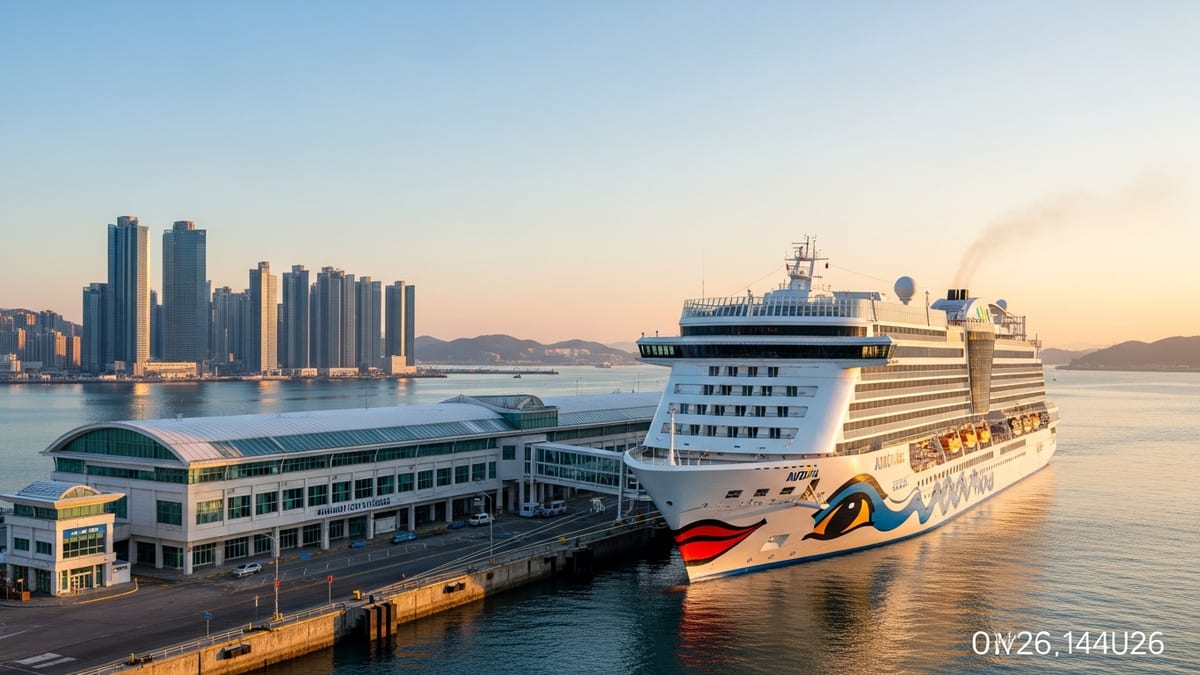
The voyage unraveled in late October 2026 when the 200 meter ship docked at Sihanoukville in southern Cambodia during a scheduled call. According to published coverage from outlets including Channel NewsAsia, CBS News and the Associated Press, residents were informed with only a few hours’ notice that the cruise was ending and they were required to disembark with all of their belongings.
Reports indicate that more than 200 passengers were affected, with some accounts describing roughly 200 residents ordered ashore and others noting that about half of them remained in Cambodia in the days that followed. Travelers were spread across Sihanoukville, Phnom Penh and other nearby locations as they scrambled to arrange emergency accommodation and new onward travel.
With operations suspended, the ship departed Sihanoukville on 4 November 2026 without any passengers on board, leaving behind what had been marketed as a floating residential community and turning the “endless cruise” concept into an expensive and disruptive ordeal for many participants.
Ship arrested in Singapore amid creditor dispute
After leaving Cambodia, marine tracking data and court records cited by multiple news outlets show that the Odyssey sailed for Singapore, Southeast Asia’s main maritime hub. The vessel arrived in Singapore waters on Sunday, 8 November, and was subsequently placed under arrest at Changi General Purpose Anchorage.
Information published by Singapore’s courts and summarized in regional media indicates that the ship was detained under a civil court order, a standard procedure in maritime disputes when creditors seek security over an asset. A local law firm, Helmsman LLC, is listed in court records as the arresting solicitor, although public reporting does not yet clarify which party the firm represents or the specific claim behind the arrest.
Coverage in Singapore and international media notes that a lender had already taken operational control of the ship before it left Cambodia, following Villa Vie’s failure to meet financial obligations. Reports from CBS News and maritime industry outlets further describe significant unpaid fuel bills in the region, with at least one supplier allegedly owed several hundred thousand US dollars.
According to statements summarized in Singapore based reporting, the Odyssey is currently anchored in Singapore port waters with crew on board but no passengers. The welfare of the crew is being handled by parties linked to the vessel’s creditors while legal proceedings around the arrest move forward, leaving the future of the ship and its planned residential concept uncertain.
Passengers face unexpected costs and complex travel logistics
While the ship now sits under arrest in Singapore, the human impact of the collapse continues to play out on shore in Cambodia. International coverage, including reports carried by wire services and regional newspapers, describes how many residents were left to pay out of pocket for hotels, local transportation and last minute flights after the cruise ended abruptly.
Some travelers had invested substantial sums, with individual cabin purchases reported in the hundreds of thousands of US dollars. Many had given up jobs, leases or homes on land in anticipation of a multi year voyage, complicating their ability to simply return to previous living arrangements once they were told to leave the ship.
Accounts compiled by media organizations and online passenger communities suggest that, as of early November, dozens of affected residents were still in Cambodia while others used personal funds or help from family to relocate to nearby countries or back to their home nations. At the same time, questions remain over refunds, contract rights and whether future legal action may be pursued in various jurisdictions.
Publicly available information so far indicates that there is no comprehensive company funded repatriation program in place for all affected guests, beyond limited support reported in some individual cases. Travelers therefore face a patchwork of options based on their own resources, travel insurance coverage and any assistance that might be negotiated through credit card providers or consumer protection channels in their home countries.
Rising fuel costs and a fragile business model
In earlier public statements before operations ceased, Villa Vie Residences had pointed to a steep rise in fuel costs in parts of Asia as a key factor undermining the financial viability of the Odyssey’s itinerary. Reports summarizing those statements note that the operator cited “extraordinary increases” in fuel prices linked to wider geopolitical tensions, including conflict involving Iran, as a major driver of cost overruns.
According to figures reported in regional media, the company said per cabin monthly fuel expenses had jumped from an average of around 1,800 US dollars to an estimated 6,000 to 8,000 US dollars on certain legs in Asia. At the same time, investigative reporting by CBS News and others has highlighted months of internal financial strain, including efforts to secure emergency funding and accounts of residents contributing substantial sums directly to fuel suppliers while the ship was previously in Singapore.
The Villa Vie Odyssey had been promoted as a new entrant in the residential cruising niche, promising more accessible pricing than earlier luxury “live at sea” concepts. The sudden shutdown is now being analyzed across the travel and maritime industries as a warning about the financial risks associated with long duration, residential style cruising, especially when voyages depend on finely balanced cost assumptions for fuel, port charges and occupancy.
Analysts quoted in industry coverage suggest that the combination of volatile fuel prices, complex international itineraries and the need for sustained sales of cabins or leases can leave such ventures exposed if funding gaps emerge or operating costs spike unexpectedly.
Uncertain future for the vessel and its residents
With the Odyssey under arrest in Singapore, attention is shifting to what will happen next to both the physical vessel and the community that once lived on board. Maritime legal procedures in such cases can lead to eventual auction of a ship to satisfy creditor claims, transfer to a new owner, or negotiated settlements that allow operations to resume under different terms.
Publicly available reporting indicates that even before the crisis in Cambodia, corporate entities linked to Villa Vie had explored acquiring additional ships and launching parallel residential cruise projects. Those plans now appear to be in doubt as creditors assert claims and affected passengers weigh their options for recovering at least part of their investment through legal or insurance channels.
For now, travelers who had signed up for what was marketed as a “forever cruise” are instead navigating immigration rules, airline schedules and consumer protection systems from hotel rooms and temporary rentals in Cambodia and beyond. Many have turned to online groups and informal networks to share practical information on refunds, chargebacks and claims, as well as to document their experience for potential use in future proceedings.
Until more detail emerges from Singapore’s legal process regarding the arrested ship, and from Villa Vie’s corporate representatives about any restructuring or liquidation plans, both the Odyssey and its former residents remain in limbo, separated by more than a thousand kilometers between Changi anchorage and the Cambodian ports and cities where the cruise of a lifetime abruptly came to an end.