


More news on this day
A long delay to a SpiceJet flight from Ahmedabad to Srinagar on November 9 left 189 passengers stranded at Sardar Vallabhbhai Patel International Airport for more than half a day, disrupting Diwali holiday plans and renewing scrutiny of the carrier’s on-time performance on key domestic routes.
Get the latest news straight to your inbox!
Hours-long Wait for Morning Departure
According to regional media coverage, SpiceJet flight SG 9634 was scheduled to depart Ahmedabad for Srinagar at around 8:40 a.m. on November 9, with passengers advised to arrive several hours earlier for check-in and security. Around 189 travellers reportedly completed formalities and handed over checked baggage in the early morning, expecting to reach the Kashmir Valley by midday.
Reports indicate that shortly before the planned departure, travellers were informed of an initial delay of about one hour, attributed to unspecified technical reasons. Over the course of the day, the expected departure time was repeatedly pushed back in increments of one to two hours, with no firm estimate provided inside the terminal.
Local coverage notes that by early evening, more than 10 hours had passed without take-off, and passengers remained inside the departures area. Boarding reportedly began only after 7:30 p.m., with travellers still unclear about the final timing of wheels-up on the approximately 2 hour 10 minute sector to Srinagar International Airport.
Separate live flight-status trackers for the Ahmedabad–Srinagar route on November 9 showed revised timings, with one listing a new departure around 12:30 p.m. for another SpiceJet service that day and an aircraft configured with 189 seats, highlighting ongoing schedule volatility on this corridor.
Limited Access to Food and Medication
Stranded passengers described challenging conditions during the extended wait. As reported by Gujarati-language and English-language outlets, travellers alleged that the airline did not consistently provide meals or refreshments over the many hours spent in the terminal, despite the delay stretching beyond standard mealtime windows.
The situation appeared to be especially difficult for families with young children and older relatives. With checked baggage already handed over at the counter, several passengers said they were unable to access essential personal items packed in their suitcases. Local reports mention that this included prescription medication, which some travellers expected to retrieve only after a routine on-time arrival in Srinagar.
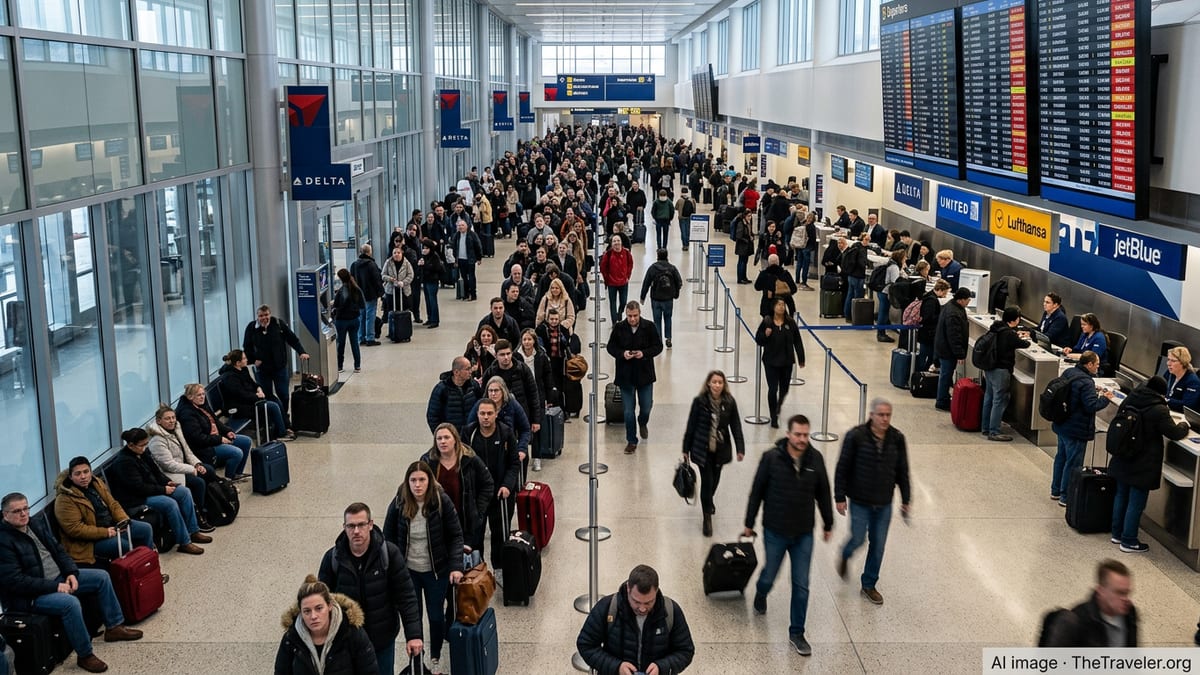
Some passengers reportedly experienced fatigue and minor health complaints after remaining in crowded waiting areas for much of the day. Visuals shared on social media platforms and picked up in regional coverage showed frustrated travellers clustered around desks at Terminal 2 of Ahmedabad’s international airport.
Accounts from the scene suggest that tempers flared at certain points during the afternoon and evening. Security personnel from the Central Industrial Security Force were reported to have stepped in to manage crowds and maintain order inside the terminal as discussions between passengers and ground staff became increasingly tense.
Uncertainty Over Cause of the Disruption
The precise cause of the prolonged disruption has not been formally detailed in public statements. Initial explanations relayed to passengers referenced technical issues, a broad term often used in aviation to describe maintenance checks, aircraft rotation challenges or operational constraints.
Coverage in local news outlets cited unnamed airport-linked sources suggesting that a fuel-related payment dispute between the carrier and suppliers might have been a contributing factor, though this remains unconfirmed. Publicly available reports do not include any formal acknowledgment of such an issue by the airline or the fuel provider.
Trip-based flight trackers and independent aviation data services recorded multiple status changes for Ahmedabad–Srinagar SpiceJet services around the same period, including delays and at least one cancellation listed under different flight numbers on nearby dates. These records point to irregular operations on the route, but they do not specify internal reasons such as staffing, fleet availability or supplier negotiations.
Without a detailed technical explanation from the airline, travellers affected by the November 9 delay have been left to rely largely on fragmented updates at the airport and after-the-fact assessments in the press and on social media.
Impact on Holiday Travel to Kashmir
The disruption came at the height of the Diwali holiday period, when many families travel from Gujarat and other parts of western India to the Kashmir Valley for seasonal tourism. Reports from Ahmedabad indicate that a significant share of the 189 passengers on SG 9634 had booked multi-day tour packages in and around Srinagar, including accommodation and local transport.
Package prices highlighted in regional coverage ranged around tens of thousands of rupees per traveller, reflecting bundled costs for flights, hotels and sightseeing. With the outbound leg heavily delayed, passengers expressed concern that non-refundable hotel nights, prepaid vehicle bookings and tightly scheduled itineraries in destinations such as Gulmarg and Pahalgam could be partially lost.
The delay also risked compressing or shortening planned stays, particularly for travellers on fixed annual leave or with onward connections. Publicly available information on the Ahmedabad–Srinagar route shows that, on many days, only a limited number of direct services are scheduled, constraining same-day alternatives when a morning departure does not operate on time.
For Kashmir’s tourism-facing businesses, such operational disruptions can have a wider ripple effect. Missed or curtailed arrivals may translate into lower occupancy for hotels and houseboats, fewer bookings for local guides, and reduced spending in restaurants and shops that depend heavily on peak-season visitors from other Indian states.
Passenger Rights and Growing Concern Over Reliability
The episode at Ahmedabad adds to a series of recent reports highlighting long delays and cancellations involving the low-cost carrier on various domestic routes. Online aviation communities and consumer forums have carried multiple accounts of travellers facing multi-hour waits, overnight rescheduling and last-minute cancellations on services to and from Srinagar, Mumbai, Delhi and other major airports.
In India, passenger entitlements for delays and cancellations are framed by guidelines issued by the Directorate General of Civil Aviation. Publicly available summaries of these rules note that, depending on the circumstances and duration of disruption, airlines may be required to offer meals, refreshments, hotel accommodation or rebooking options, particularly when the cause is within the carrier’s control rather than weather or air-traffic restrictions.
Legal and consumer advisers frequently encourage passengers affected by extensive delays to keep boarding passes, booking references and receipts for any additional expenses incurred. These documents support subsequent claims directly with airlines or, if needed, through grievance mechanisms provided by aviation regulators and consumer protection bodies.
For travellers planning future trips between Ahmedabad and Srinagar, current schedule data shows that multiple Indian carriers operate on the wider Gujarat to Kashmir axis, either non-stop or with one stop via Delhi or Mumbai. Travel experts often recommend checking recent on-time performance records, reading current passenger feedback, and allowing extra buffer time around key holiday dates, particularly when visiting high-demand destinations such as Kashmir during the festival and winter peak seasons.