


More news on this day
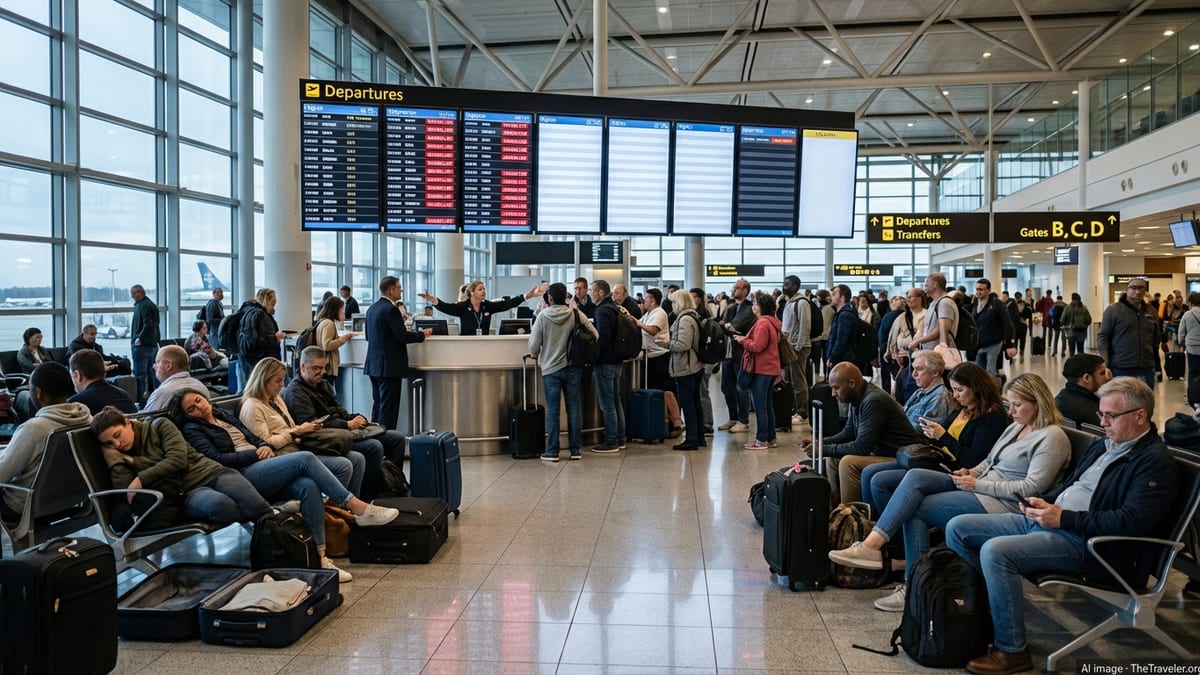
Oman Air is reporting delays and schedule changes on parts of its network after temporary airspace restrictions in and around the Sultanate forced some flights to be rerouted or rescheduled, according to publicly available information from airline statements and regional aviation notices.
Get the latest news straight to your inbox!
Temporary restrictions reshape routings over Oman
Recent airspace notices for Muscat Flight Information Region indicate the activation of temporary restricted areas in northern Oman, including the vicinity of Sohar, with flights subject to prior coordination and potential rerouting. These measures have narrowed available corridors for commercial traffic and added complexity to flight planning for carriers using Muscat as a hub.
Reports from regional media and flight-tracking data show that Oman Air has been adjusting routings on selected services to avoid restricted zones and neighboring conflict areas. While the airline continues to operate the bulk of its scheduled network, some flights are taking longer paths or modified altitudes, which can cascade into knock-on delays for subsequent departures.
Industry documentation submitted to international aviation bodies in mid 2026 describes a sustained period of non-routine pressure on Muscat terminal operations due to regional airspace closures and restrictions. According to that material, compressed traffic flows and frequent rerouting requests have increased controller workload and required more conservative sequencing of arrivals and departures, a pattern that aligns with the delays now being reported by passengers.
From outright cancellations to rolling delays
Earlier in 2026, Oman Air responded to regional airspace closures with targeted cancellations on routes to nearby Gulf and Levant destinations, as reported by local newspapers in Muscat. Published coverage at the time detailed multi-day suspensions of flights to cities including Amman, Dubai, Doha, Manama and Kuwait City, as the carrier waited for military and overflight conditions to stabilize.
In the latest phase, publicly available information suggests the airline is relying more on schedule adjustments and rolling delays than on wholesale cancellations. Rerouted flights that must skirt conflict zones or temporary restricted areas are adding flight time and placing additional pressure on connection banks at Muscat International Airport. When one long-haul sector arrives late, subsequent departures on the same aircraft may be held, leading to a ripple effect across the network.
Posts on travel forums and social media in recent months describe Oman Air customers facing rebookings, extended layovers and, in some cases, departure times pushed back by many hours after operational messages citing airspace restrictions. These anecdotal accounts are consistent with the pattern of disruption seen whenever large sections of regional sky are placed under temporary constraint for security or military reasons.
Muscat hub remains open but under strain
Oman Airports, the operator of Muscat International Airport, has emphasized in public statements this year that the facility remains open and handling scheduled commercial flights. At the same time, the operator has advised travelers to verify flight status directly with airlines before heading to the airport, acknowledging that regional developments can prompt last-minute changes to individual services.
Air navigation documents and briefing papers presented to international regulators highlight how closures and restrictions in adjacent airspaces have effectively funneled more traffic into narrower corridors managed by Muscat air traffic control. This concentration has required additional coordination to sequence aircraft safely, especially during peak arrival and departure waves tied to Oman Air’s connecting banks.
For passengers, the result is a hub that continues to function but is more vulnerable to disruption when a single flight in a tightly timed bank experiences a delay. Industry observers note that even modest route-length increases or holding patterns introduced to accommodate temporary restrictions can be enough to tip connections into missed territory, particularly on long-haul itineraries linking Europe and Asia via Muscat.
Impact on key markets and peak-season travel
Oman Air’s network strategy places Muscat at the center of flows between Europe, the Indian subcontinent and Southeast Asia, along with an important regional role within the Gulf. Temporary airspace restrictions have therefore had disproportionate impact on itineraries that traverse the most congested parts of the Middle East, where multiple states have adjusted overflight permissions in response to the evolving security environment.
Domestic and regional leisure routes are also exposed during peak seasons. Separate updates from Oman’s Civil Aviation Authority and Oman Airports show that carriers, including Oman Air, planned higher frequencies on popular summer routes to Salalah and additional seasonal links from Gulf cities. When airspace limitations intersect with these peak schedules, airlines have less slack in their operations and fewer spare aircraft to absorb delays.
Travel industry analysts following the region suggest that travelers connecting through Muscat to destinations in Europe or Asia should build in extra buffer time and remain flexible about routings. Published advisories from carriers and airports in the wider Gulf region likewise recommend allowing more time for connections and monitoring bookings closely, as routing decisions can change at short notice when temporary restrictions are introduced or extended.
What affected passengers should watch for
For customers ticketed on Oman Air services in the coming days, the most immediate concern is whether departure and connection times will shift again as airspace notices are updated. Aviation authorities in Oman periodically refresh temporary restrictions through Notices to Air Missions, which can in turn require airlines to redraw flight plans.
Passenger rights and rebooking options vary depending on the point of sale and the jurisdictions involved, but many carriers, including Oman Air in earlier phases of the disruption, have provided fee-free changes or refunds when flights were significantly altered due to regional airspace issues. Travelers are generally advised in public guidance to keep contact details up to date in their bookings so they can receive schedule-change notifications promptly.
While there is no indication from publicly available information that Oman’s main airports are closing to scheduled traffic, the current pattern of delays underscores how quickly regional events and temporary restrictions can reverberate through a hub-and-spoke network. For now, Oman Air continues to operate the majority of its timetable, but with the caveat that journeys touching the most constrained sections of Middle East airspace may take longer and involve more uncertainty than usual.