


More news on this day
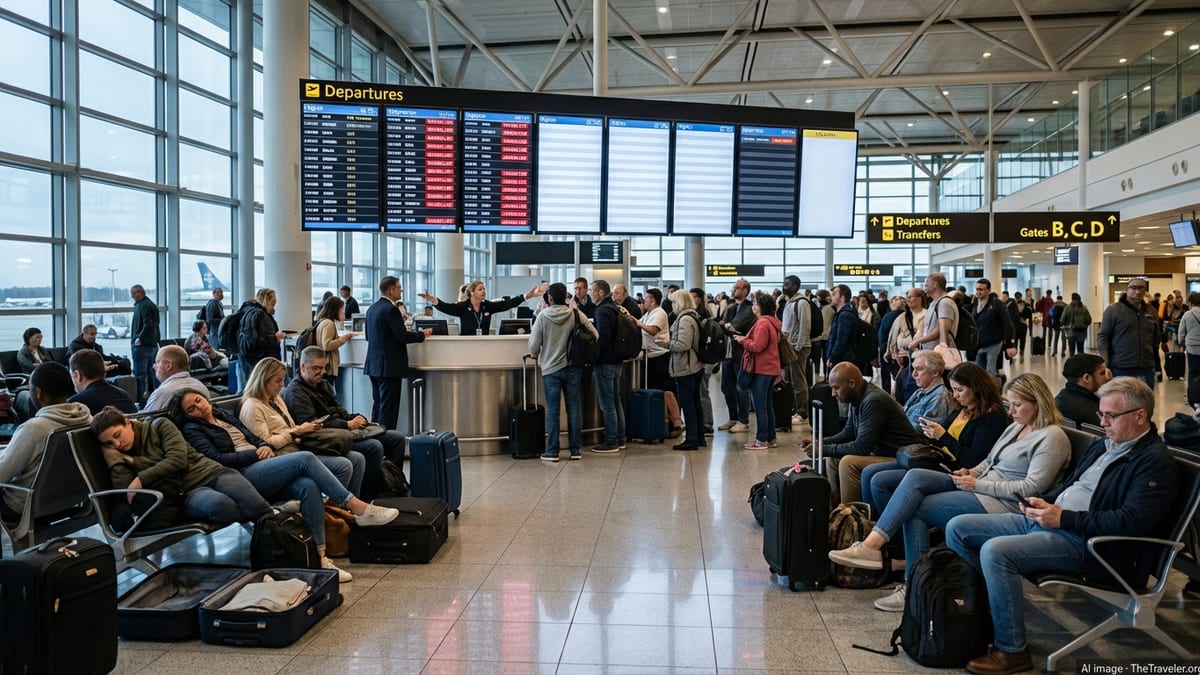
Oman Air is reporting fresh delays and schedule changes after temporary airspace restrictions in the wider Middle East region forced some flights to reroute, extend flight times and operate with tighter spacing around Muscat International Airport.
Get the latest news straight to your inbox!
Regional airspace curbs ripple through Oman operations
According to publicly available flight-tracking data and recent travel advisories, a series of short-notice airspace restrictions in neighboring states has narrowed key corridors commonly used by Oman Air services linking Muscat with Europe, the Indian subcontinent and Southeast Asia. While Oman’s own airspace remains open to civil traffic, constraints in adjacent flight information regions have reduced routing options and increased congestion along remaining paths.
Operational material presented by Oman’s aviation authorities to international meetings in June 2026 described how regional security tensions and temporary closures in nearby airspace have reshaped traffic flows through the Muscat Flight Information Region. Those presentations highlighted a pattern of rerouting, airborne holding and diversion pressures whenever neighboring airspace becomes restricted, with knock-on effects for carrier schedules.
Recent days have seen that pattern reflected in Oman Air’s network. Travelers posting on public forums report delayed departures, lengthened flight times and in some cases cancellations or rebookings on selected routes. These individual accounts align with wider data showing that flights into and out of the Gulf have been subject to intermittent disruption whenever new airspace limits are introduced or extended.
Publicly available information also shows that flights headed toward or away from conflict-affected parts of the Middle East have been most exposed to adjustment. In several instances, Oman Air and other regional airlines have shifted planned routings south or east of usual tracks in order to remain clear of restricted zones, adding distance and time to journeys.
Rerouting, holding patterns and schedule changes
Technical papers from recent international aviation forums indicate that Muscat’s air traffic managers have been relying on a mix of tactical rerouting, altitude changes and airborne holding to manage waves of traffic when alternative paths are suddenly required. For Oman Air, this has translated into extended sector times on some long-haul services and tighter ground turnaround windows once aircraft arrive in Muscat.
On days when neighboring airspace is heavily constrained, traffic flows that would normally be spread across multiple routes are compressed into fewer corridors. Public analyses of the regional situation describe how this can increase controller workload and limit flexibility to recover from earlier delays. When that happens, even relatively minor schedule disturbances can propagate across an airline’s network, affecting later departures from hubs such as Muscat.
Individual travelers have reported spending additional time on the ground before takeoff as crews wait for revised departure slots compatible with the new airspace configuration. Others describe being advised of last-minute schedule changes or receiving notifications that flights had been retimed to operate outside the peak hours of congestion. Such measures help keep operations within safety margins but can prove disruptive for passengers with onward connections.
Oman Air’s network in Europe and Asia has been particularly sensitive to these shifts, because many of its long-haul services traverse the corridors most affected by current regional tensions. Extended routings not only push block times higher but can also require adjustments to fuel planning and crew duty schedules, occasionally triggering aircraft swaps or retiming in order to stay within regulatory limits.
Passengers advised to monitor bookings closely
Public travel advisories and airline-industry commentary are broadly aligned in urging passengers flying through the Gulf region to monitor their bookings more closely than usual while temporary airspace measures remain in place. For Oman Air customers, that has meant checking departure and arrival times frequently in the 24 to 48 hours before travel and remaining alert to possible schedule updates issued on short notice.
Reports circulating on consumer forums show that some Oman Air passengers have received rebooking offers or itinerary changes several days before departure where specific rotations were expected to be heavily affected by rerouting. In other cases, travelers only became aware of disruption once at the airport, when they were informed of rolling delays linked to flow-control measures in restricted airspace.
Travel agents and aviation analysts quoted in public coverage recommend allowing additional connection time in Muscat and other Gulf hubs during periods of regional tension. Where itineraries involve tight transfers, they advise considering earlier departures or alternative routings to reduce the risk of missed onward flights if airspace restrictions tighten again.
For travelers already en route, standard guidance remains to stay in contact with the airline’s official channels and to make use of mobile apps or airport display boards for real-time information. Published commentary also stresses the importance of allowing extra time at departure airports, since check-in and security lines can lengthen quickly when multiple flights across an airline’s network have been pushed into similar time windows by external constraints.
Oman’s evolving contingency planning for airspace shocks
The latest bout of disruption comes as Oman continues to refine its contingency planning for regional airspace shocks. Papers submitted by the Sultanate to international aviation bodies in 2026 outline a Muscat Flight Information Region contingency framework designed to keep essential traffic moving when surrounding airspace is restricted or closed.
Those documents describe a tiered response that includes predefined alternative routes, enhanced coordination with neighboring air navigation service providers and procedures for prioritizing certain categories of flight when capacity is severely constrained. The material emphasizes lessons learned from previous episodes of regional tension, during which Muscat’s airspace became a key alternative corridor for carriers avoiding higher-risk zones.
For Oman Air, these national initiatives provide an important backdrop to operational decision-making during the current restrictions. Access to agreed contingency routes and established coordination channels can help the airline maintain more of its schedule than would otherwise be possible, even if some services still suffer delays or need to be rescheduled.
Industry observers note that the recent development of spaceflight-related regulations and potential future launch activity within the Muscat Flight Information Region has also brought fresh focus to managing temporary airspace closures in a structured way. While the latest Oman Air delays are linked to geopolitical factors rather than space operations, the broader push to formalize how and when airspace is restricted may help reduce uncertainty for airlines and passengers over time.
What travelers can expect in the near term
Looking ahead, publicly available reporting suggests that the duration and severity of Oman Air’s disruption will be closely tied to how long neighboring airspace restrictions remain in place and whether additional constraints are introduced. If current limits ease, the airline could gradually restore more direct routings and rebuild schedule resilience around Muscat.
However, analysts who follow Middle East aviation caution that the regional environment remains fluid. Any escalation in tensions affecting critical air corridors could prompt renewed or expanded restrictions, with immediate effects on block times, departure slots and aircraft utilization. In that scenario, Oman Air and other Gulf carriers would likely continue to adjust timetables at short notice as they work within changing capacity limits.
For now, travelers booking Oman Air are likely to see a mix of normal operations on many routes and intermittent disruption on others, particularly where flights traverse the most constrained segments of regional airspace. Longer scheduled flight times, retimed departures and a continued emphasis on flexible rebooking policies are among the measures that passengers may encounter as the carrier manages through the current period.
Prospective visitors connecting through Muscat are being advised, in public-facing guidance, to build additional margin into their travel plans, to keep documentation and contact details to hand, and to review the latest information from the airline as departure approaches. While the underlying airspace situation remains dynamic, these practical steps can help reduce the impact of potential delays on onward journeys.