


More news on this day
A collision between two freight trains on a rail bridge in Munich overnight has left one person dead and sent several wagons plunging onto a city street, according to multiple media reports from Germany.
Get the latest news straight to your inbox!
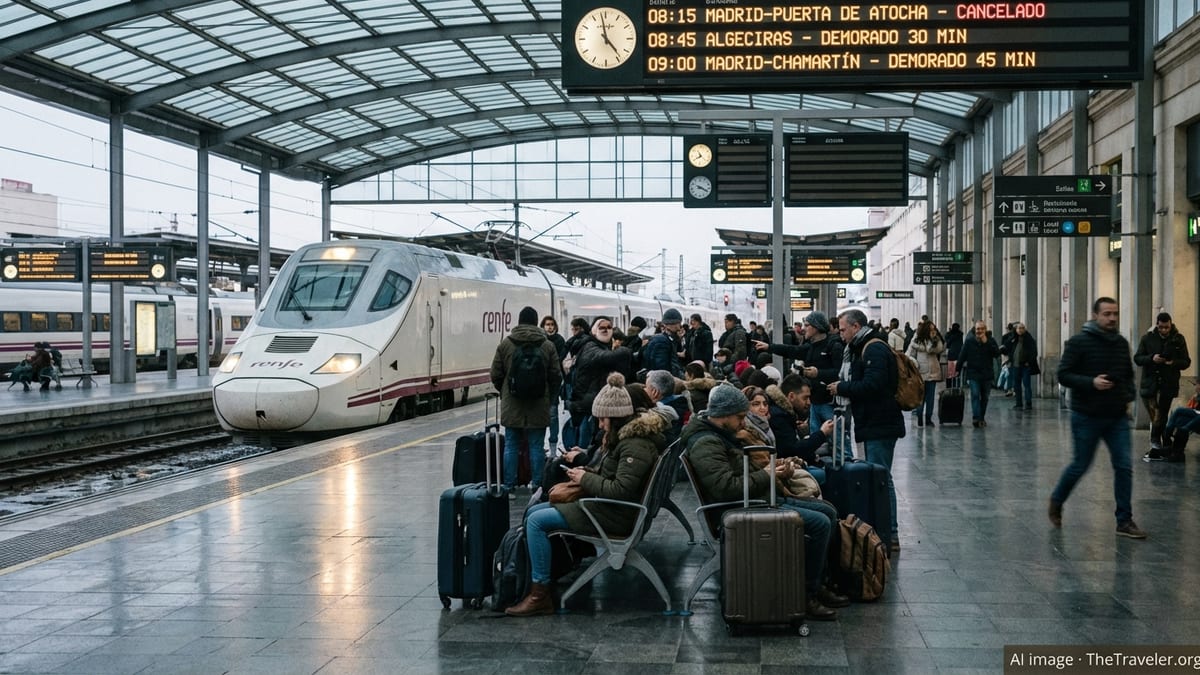
Overnight collision on busy Munich freight corridor
Published coverage indicates that the crash occurred in the early hours of Saturday in the northern Munich district of Milbertshofen, an area crossed by key freight routes linking Bavaria with Austria and central Europe. Two freight trains traveling on a bridge collided, sending at least two wagons off the elevated track and down onto the road below.
Initial reports describe a scene of extensive damage on and beneath the bridge, with derailed wagons resting at an angle and debris scattered across the closed roadway. One person was confirmed dead in connection with the incident, although news outlets in Germany have not yet identified the victim or clarified whether the person was on one of the trains or in the vicinity of the bridge.
Information made public so far suggests that no hazardous materials were involved. German-language reporting notes that the affected wagons were not carrying cargo at the time of the collision, reducing the risk of environmental damage or secondary incidents at the crash site.
Emergency services, rail staff and recovery crews moved into the area shortly after the collision, with images from the scene showing heavy cranes and specialized rail equipment being brought in to stabilize and later remove the fallen wagons.
Street closures and rail disruption in Milbertshofen
The accident took place on a bridge spanning a local street in Milbertshofen, a mixed residential and commercial neighborhood north of central Munich. Following the collision, local police and city services closed the street under the bridge to all traffic so that recovery teams could work safely and inspectors could assess possible structural damage.
Publicly available information describes the closure as an ongoing measure, with drivers urged to avoid the area and follow local diversions. City traffic is already under pressure from summer construction projects, and the sudden loss of a through route beneath a rail bridge has added to congestion in parts of northern Munich.
On the rail network, freight movements along the affected line have been disrupted while rail infrastructure managers secure the bridge and examine tracks, signaling equipment and overhead lines. Some freight trains are expected to be rerouted onto parallel corridors around Munich, a development that may add pressure to other lines already carrying diverted traffic due to unrelated engineering works elsewhere in southern Germany.
Passenger rail services in the city do not appear to be directly affected on a large scale, according to early media coverage, though local operators may adjust timetables or speeds in the vicinity of the accident site until inspections are complete.
Cause of the collision still under investigation
As of Saturday afternoon, there is no confirmed explanation for how two freight trains came to collide on the same bridge. Reports from German outlets emphasize that the cause of the accident remains unclear and will be subject to a formal investigation by rail and transport safety specialists.
Investigators are expected to examine a range of factors, including signaling and communication systems, train routing and scheduling, track conditions, and the technical condition of the locomotives and wagons involved. Data from on-board recording equipment, as well as radio logs from dispatch centers, will likely play an important role in reconstructing the sequence of events in the minutes before impact.
Weather conditions in Munich overnight were reported to be typical for early summer, with no immediate indication that heavy rain, fog or storms played a role. Attention is therefore likely to focus on operational procedures and technical systems, in line with standard practice after a serious rail incident.
The accident comes at a time when freight volumes on key corridors through Bavaria are high, partially due to rerouted traffic from ongoing infrastructure works in other regions. While there is no evidence yet that congestion or temporary routing contributed to Saturday’s collision, the broader context of a heavily used network provides an important backdrop for any safety review.
Rail safety context in Germany and across Europe
Germany’s rail system is generally regarded as having a strong overall safety record, with high-speed passenger services and dense regional networks carrying millions of travelers each day, alongside substantial freight traffic. Serious collisions involving freight trains are relatively rare, but when they occur they tend to prompt close scrutiny of signaling technology, staff training and infrastructure maintenance.
In recent years, several high-profile rail accidents elsewhere in Europe have sharpened debate about investment in modern train control systems and the resilience of busy corridors. Incidents involving freight operations, even when they do not result in mass casualties, often highlight vulnerabilities around older infrastructure, junction bottlenecks and the interface between freight and passenger traffic.
Rail specialists note that freight trains can be particularly challenging to manage safely in dense urban areas, where bridges, tunnels and constrained rights of way limit options for rerouting or rapid emergency access. The Munich collision, with wagons falling from an elevated track into a city street, underscores the potential consequences when something goes wrong at such locations.
Discussions that follow events like this typically encompass not only technical questions, but also land-use planning, noise and vibration concerns, and the balance between rail freight growth and neighborhood safety in large metropolitan regions.
Travel implications for visitors to Munich
For travelers in Munich on the weekend of the accident, the most immediate impact is likely to be localized road closures and possible detours on public buses in the Milbertshofen district while the bridge and surrounding area remain cordoned off. Visitors staying or driving in northern Munich may encounter temporary congestion and should allow extra time for airport transfers or trips to regional attractions.
Long-distance rail travelers are advised, according to publicly available journey planners and media reports, to verify their train status on the day of travel and pay attention to last-minute platform or routing changes. While the main intercity and suburban passenger axes through Munich are not reported to be directly involved, the knock-on effects of freight diversions can occasionally prompt timetable adjustments.
The incident also serves as a reminder that rail networks used by tourists rely heavily on underlying freight operations. When freight corridors are disrupted, even events that primarily affect goods trains can ripple through the broader system, influencing capacity and punctuality for passenger services at busy hubs like Munich.
Despite the disruption and the tragic loss of life, rail remains a comparatively safe mode of transport for both residents and visitors in Germany. Travelers planning trips that involve Munich can continue with their itineraries, while remaining attentive to updated information as the recovery and investigation efforts progress.