

More news on this day
One person has died and dozens more have been injured after two passenger trains collided north of London near Bedford on Friday, disrupting a key rail corridor used by thousands of travelers each day.
Get the latest news straight to your inbox!
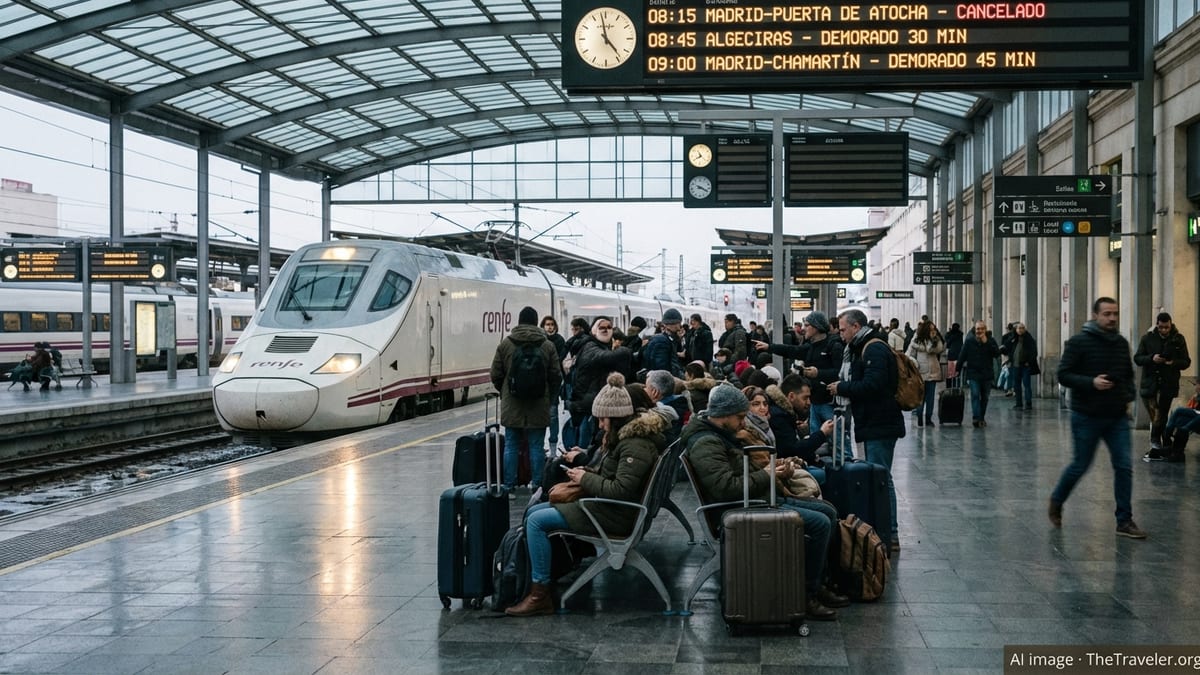
Collision on busy route into central London
According to published coverage from British and international outlets, the crash occurred in the late afternoon on June 19 when two southbound East Midlands Railway services bound for London St Pancras collided on the approach to Bedford. The incident happened at a time of heavy commuter and leisure travel, magnifying its impact on the network.
Rail tracking data cited in news reports indicates the trains involved were a service from Corby and another from Nottingham, both heading toward the capital. The junctions north of Bedford form part of the Midland Main Line, a strategic artery linking northern and eastern England with central London and one widely used by business travelers and weekend visitors.
Images and video circulating on social media and in broadcast coverage show crumpled carriages, shattered windows and passengers standing on an adjacent service road as fire, police and ambulance crews work around the tracks. An air ambulance and specialist hazardous incident teams were also dispatched to the scene, reflecting the scale of the response.
Early casualty figures reported by national media suggest a large number of people suffered injuries of varying severity, with some described as very serious. Rail unions have publicly identified the person who died as a train driver, underscoring the risks faced by frontline rail staff when incidents occur.
Emergency response and on-the-ground accounts
Publicly available information from regional ambulance services shows that multiple medical teams, including trauma specialists and air ambulance crews, were mobilized rapidly after the collision was reported. Staging areas were established on a local access road running parallel to the line, allowing medics to triage patients away from the tracks while firefighters assisted with evacuations.
Passengers quoted in British news coverage described a sudden, violent impact that threw people forward in their seats, followed by scenes of confusion inside the carriages. Several accounts mention smoke, broken glass and fellow travelers with visible bone and head injuries, as well as others struggling to move through buckled interiors and jammed doors.
Some travelers reported climbing out through narrow gaps or windows after interior doors became difficult to open. Others described forming improvised support lines along the ballast to help injured or disoriented passengers walk away from the carriages toward emergency crews. These accounts highlight both the force of the collision and the challenges of evacuating crowded trains on an embankment.
Local hospitals in Bedfordshire and surrounding counties were placed on heightened readiness to receive multiple casualties. Reports indicate that patients were transported with a wide range of injuries, from suspected fractures and lacerations to more serious trauma requiring immediate surgery or intensive care.
Major disruption for rail travelers
The collision has caused substantial disruption along a corridor that is particularly important for domestic travelers, business commuters and international visitors connecting through London. East Midlands Railway announced that services on the Midland Main Line to and from St Pancras were suspended for the remainder of Friday, with no firm indication of when normal operations would resume.
Rail operators have advised passengers to avoid attempting to travel on the affected route, warning that even partial reopenings are likely to involve significant delays, diversions and overcrowding. Some services have been rerouted where track layouts permit, but capacity on alternative lines into London is limited, especially at peak times.
For visitors already in the United Kingdom or planning to travel this weekend, publicly available journey planners show that longer travel times and short-notice cancellations are expected on intercity routes serving the East Midlands and parts of northern England. Travelers with flexible plans are being urged in published advisories to postpone nonessential trips or consider coach and road-based alternatives.
The disruption at St Pancras, which also handles international Eurostar services alongside domestic trains, has a ripple effect on onward journeys across Britain and into continental Europe. Although international services run on separate infrastructure, the concentration of travelers at a single London terminus can quickly affect station crowding, taxi queues and local public transport.
Investigations and safety focus
Rail investigators are expected, according to specialist transport coverage, to examine a range of possible contributing factors, including signaling, train control systems, braking performance and human decision-making in the minutes before impact. The fact that both trains were reportedly traveling in the same direction toward London suggests a rear-end collision scenario, which will focus attention on how separation between services was managed.
Modern main line routes in Britain incorporate layered safety systems designed to prevent collisions even if a signal is passed at danger or if there is an operational error. Investigators will likely study whether those systems operated as intended, whether any temporary restrictions or engineering works were in place, and how real-time information was communicated between drivers and control centers.
Published commentary from rail unions and passenger groups has already called for a thorough, transparent inquiry and for any lessons to be rapidly applied across the network. These organizations are highlighting both the relatively strong long-term safety record of Britain’s railways and the need to scrutinize rare but high-impact incidents that expose specific vulnerabilities.
The findings of the investigation will be closely watched by industry professionals and frequent travelers alike, particularly if recommendations emerge around train spacing, line speeds, or upgrades to automatic protection systems. In recent years, similar inquiries into serious accidents have led to changes in equipment specifications, driver training and infrastructure maintenance regimes.
Implications for travelers and local communities
The area around Bedford is a significant commuter belt and a common base for visitors using the town as a gateway to both London and destinations further north. With trains halted and emergency services active around the scene, road traffic has also been affected, compounding delays for residents and people traveling to and from nearby airports and attractions.
Local authorities are using public information channels to advise residents about congestion and to encourage drivers to avoid roads close to rail access points while recovery work continues. Travelers heading to events, tours or accommodation bookings in the region are being urged through travel industry updates to maintain close contact with operators for rebooking and refund options.
Tourism businesses in the wider corridor, from Nottingham and Leicester down to the northern outskirts of London, may experience short-term cancellations and no-shows as potential visitors reassess travel plans. Industry observers note that previous rail incidents have sometimes led to a brief shift toward car and coach travel until confidence in rail schedules and reliability is restored.
For now, the priority remains the care of those injured and the safe stabilizing and removal of the damaged trains. As investigators work to piece together the sequence of events, travel organizations and transport operators are expected to adjust schedules, offer alternative routes and update guidance to help affected passengers navigate one of the most serious train collisions in Britain in recent years.