

More news on this day
One person has died and dozens more have been injured after two London-bound passenger trains collided near Bedford, north of the UK capital, in an evening rush-hour crash that has brought significant disruption to one of England’s busiest rail corridors.
Get the latest news straight to your inbox!
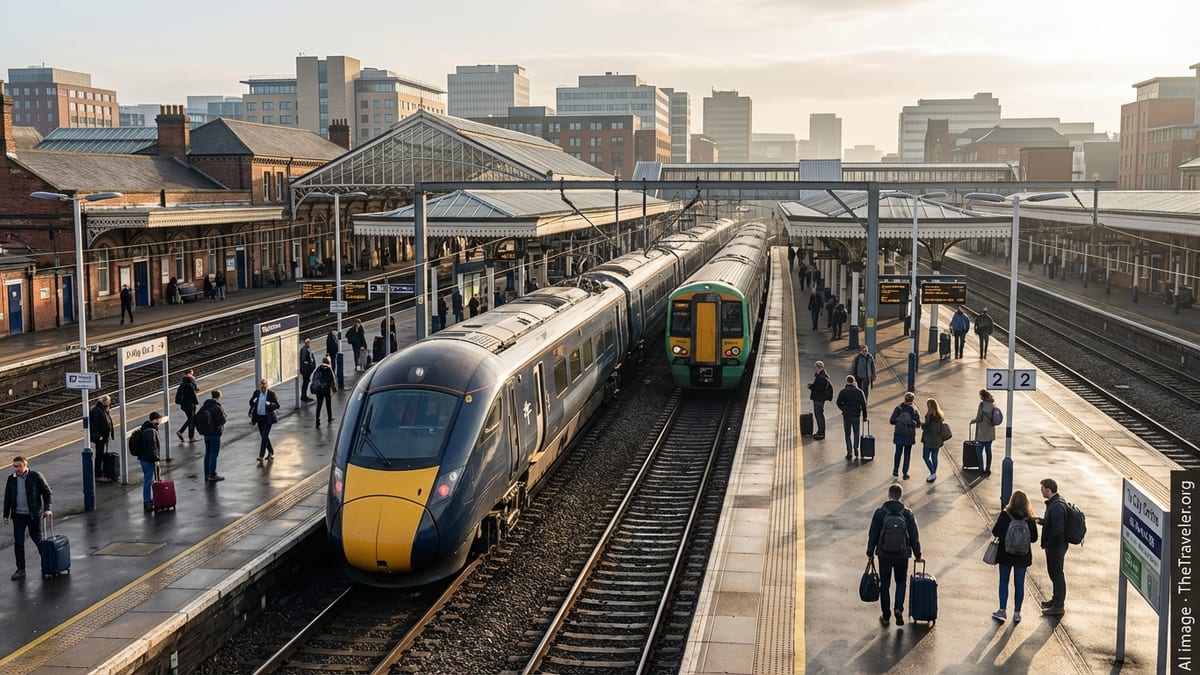
Evening collision on key London-bound route
Publicly available information indicates that the crash occurred on Friday evening near the town of Bedford, around 60 miles north of central London, on lines used by fast services into London St Pancras station. Two southbound trains, both reported to be operated by East Midlands Railway, were involved in the incident.
Reports indicate that one train had departed Corby at 16:40 local time, bound for London, while the other had left Nottingham at 15:50 with the same destination. The collision happened shortly after 17:15, at a time when many commuters and leisure travellers use the route for journeys into and out of the capital.
Images shared on social media and in news coverage show at least one damaged train upright on the tracks, with windows smashed and evidence of impact damage to carriages. Passengers can be seen gathered on adjacent roads and fields, some with visible bandages, as emergency vehicles line a service road parallel to the railway.
Rail tracking data cited in published reports suggest that both trains were travelling south toward London at the time of the collision, though the precise sequence of events has yet to be confirmed by investigators.
Casualties and emergency response
According to figures reported by multiple outlets, at least one person has died in the crash and a large number of passengers have required medical treatment. Some reports describe more than 80 people with varying levels of injury, including a number categorised as very serious.
Ambulance services deployed significant resources to the scene, including hazardous incident teams and air ambulances. Photos from the area show medical staff treating passengers at the roadside, with temporary triage points established close to the tracks.
Bedford-area hospitals were placed on heightened alert, with regional media indicating that facilities were asked to prepare for a substantial influx of casualties. While many of those caught up in the collision were able to walk from the trains, visual evidence and witness accounts collected by broadcasters describe people with suspected broken limbs and head injuries.
Police and rail staff have established a cordon around the crash site, and access to nearby paths and minor roads has been restricted as rescue and recovery operations continue. The full number of passengers on board the two services has not yet been made public, and casualty figures may change as assessments progress.
Major disruption for travelers to and from London
The collision has triggered significant disruption on services linking the East Midlands, the East of England and London. East Midlands Railway has said in public statements that trains to and from London St Pancras on the affected route were cancelled for the remainder of Friday following the incident.
Passengers travelling between London and destinations such as Nottingham, Derby, Leicester and Corby are being advised, according to published travel updates, to check live information before starting their journeys and to consider alternative routes where available. Some services have been rerouted, while others remain suspended as the railway near Bedford stays blocked.
The disruption is expected to continue into the weekend, with operators unable to confirm a normal timetable until the damaged trains are removed, track and signalling checks are completed, and safety inspectors have concluded their initial on-site work. Travellers holding advance tickets may be eligible to use other operators’ services or to defer trips, in line with standard disruption policies.
For visitors and domestic travellers alike, the incident underscores the importance of checking real-time information on rail apps and station displays, particularly when moving through major hubs such as London St Pancras, where delays on one route can quickly affect connecting services.
Investigation focuses on cause and safety systems
A formal investigation is expected to examine how two passenger trains came into conflict on a busy main line protected by modern signalling and automatic train protection systems. Rail accident specialists typically review data from on-board event recorders, trackside equipment and signalling logs to determine the sequence of events leading up to a collision.
Recent reports into other rail incidents in the United Kingdom have highlighted a mix of potential risk factors, including equipment failures, operational decisions and human error. Investigators will be looking to establish whether any similar factors played a role near Bedford, and whether existing safeguards functioned as intended or only partially mitigated the impact.
According to publicly available commentary from rail safety experts, the relatively low number of fatalities compared with historic collisions on British railways may point to improvements in train design, crashworthiness and emergency response planning. Nonetheless, the scale of injuries in this case is likely to prompt scrutiny of how trains were operated and how quickly services were halted elsewhere on the route once the collision occurred.
Any recommendations emerging from the inquiry are expected to focus on preventing a recurrence on this and other high-speed intercity corridors, potentially affecting signalling procedures, staff training and maintenance regimes across the network.
Impact on rail confidence and regional travel
The crash comes at a time when the UK rail industry is working to rebuild passenger confidence, particularly among leisure travellers and tourists who rely on fast, frequent services between London and regional cities. Major incidents involving injuries on this scale can have a chilling effect on demand, even though serious collisions remain rare compared with overall journey numbers.
Travel and tourism businesses in the East Midlands and surrounding regions are likely to feel the immediate effects of disrupted services into London, especially over a summer weekend when visitor numbers typically rise. Some hotels and attractions promote easy rail access as a key selling point, and any prolonged timetable changes could prompt travellers to alter their plans or seek alternative destinations.
At the same time, published commentary from passenger groups often emphasises that rail remains one of the safest ways to travel over medium distances in the UK. For many regular users, the priority in the coming days will be clear, detailed communication about service restoration, ticket flexibility and any lingering speed restrictions or diversions on the route.
As investigators work to establish what went wrong north of London, the railway through Bedford is expected to stay under intense scrutiny, with travellers, local communities and industry observers watching closely for both answers and visible improvements to safety and resilience.