


More news on this day
The Port of Montreal is sharpening its focus on Ontario as a fast-rising source market for passengers, joining Quebec and select U.S. regions in a broader push to accelerate cruise growth along the St. Lawrence in the coming seasons.
Get the latest news straight to your inbox!
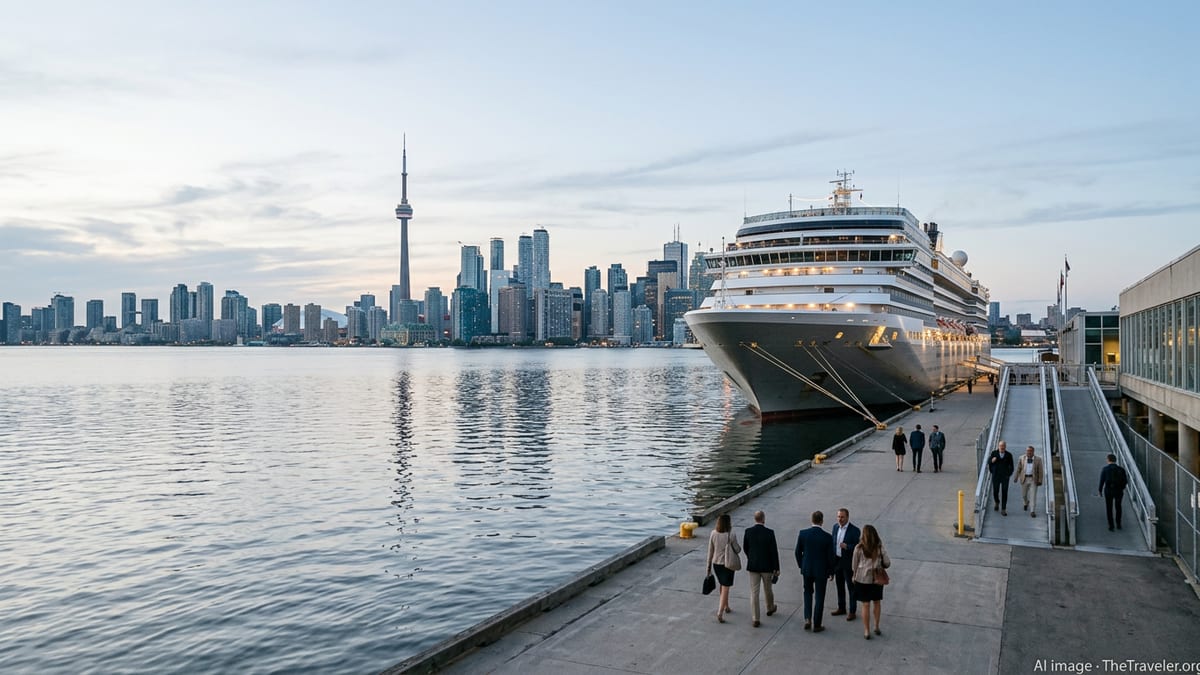
Port of Montreal Positions for Larger Share of Canada’s Cruise Recovery
Publicly available traffic data indicate that Canada’s cruise industry has rebounded strongly from the pandemic years and stabilized at higher volumes in 2024 and 2025, with the St. Lawrence corridor emerging as one of the country’s most dynamic regions. National reporting on cruise ship traffic shows that Montreal handled around 50,000 passengers in 2024, consolidating gains made during the 2023 recovery season and reinforcing its status as a turnaround and port-of-call gateway on the river.
The Montreal Port Authority has highlighted cruise as a strategic complement to its core cargo activities, noting that the port now operates two dedicated cruise terminals and markets itself as the westernmost deep-water call on the St. Lawrence. Coupled with Montreal’s extensive air and rail connectivity, this has positioned the city to capture a growing share of Canada and New England itineraries as lines restore and expand deployment in the region.
Federal transportation reporting further underscores the importance of Montreal among Canadian ports, listing it alongside Vancouver, Halifax and Quebec City in tracking cruise ship calls and passenger volumes. While the west coast remains larger in absolute numbers, the St. Lawrence network is gaining attention for its ability to disperse visitors across multiple Quebec and Atlantic communities during a compact seasonal window.
Ontario Joins Quebec and U.S. Markets as Priority Source Region
As cruise capacity returns, Ontario is emerging as a central component of Montreal’s growth strategy. A marine transportation strategy released by the Government of Ontario cites Port of Montreal data indicating that roughly 30 percent of the port’s cargo traffic is destined for Ontario, supported by strong rail and truck connections into the province. Although these figures relate to freight, they highlight how firmly Montreal is already embedded in Ontario’s trade and mobility patterns.
Transportation planning documents from Ontario describe Montreal as a key maritime gateway feeding the province’s economy, moving up to tens of millions of tonnes of goods each year and connecting seamlessly into inland logistics networks. That same connectivity is being leveraged for tourism, with rail and highway links making it relatively easy for Ontario residents to embark in Montreal for St. Lawrence and Canada–New England cruises.
Market analyses from Cruise the Saint Lawrence and federal tourism programs point to central Canada, including Ontario, as a growing origin market for St. Lawrence itineraries. This sits alongside Quebec, the northeastern United States and select European countries as core sources of demand. With Ontario’s large population and proximity by road and rail, the province is viewed as a key contributor to filling additional berths as more ships and longer seasons are pursued.
St. Lawrence Cruise Network Targets Higher Volumes and Longer Seasons
The Port of Montreal is part of Cruise the Saint Lawrence, a regional association that brings together nine ports of call along the river, from Montreal and Trois-Rivières to Quebec City, Saguenay and Gaspé. According to studies and economic reports compiled by the association, international cruises on the St. Lawrence generated hundreds of millions of dollars in direct and indirect economic benefits in the pre-pandemic period and are regaining that scale as volumes return.
Recent federal support for the St. Lawrence Cruise Association under the Tourism Growth Program highlights the corridor’s importance for regional development. Government program descriptions describe the association as playing a central role in strengthening tourism along the river, with funding aimed at marketing, product development and coordination across ports to attract more ships and diversify itineraries.
Published coverage of Quebec City’s cruise performance shows how this network effect is taking shape. Annual reports from the Port of Quebec indicate that the city welcomed more than one hundred stopovers in 2024 and has since passed 130,000 passengers in a single season, underscoring the capacity of the St. Lawrence system to absorb higher cruise traffic. As Montreal, Quebec City and smaller ports align on sustainable development strategies, river-wide planning is increasingly centered on how to distribute future growth.
Infrastructure Investment Underpins Montreal’s Gateway Ambitions
Montreal’s cruise ambitions are closely tied to broader investments in its port infrastructure. The federal Major Projects Office and the Montreal Port Authority have advanced the Contrecoeur Container Terminal Project, a major expansion southeast of the city that is expected to increase the port’s container capacity by roughly 60 percent once completed. Official project descriptions portray the development as critical to supporting trade flows serving Quebec, Ontario and the U.S. Midwest.
Federal summaries of the project note that in recent years half of the containers moving through Montreal have been destined for Quebec, while nearly one-third were bound for Ontario. This deep integration with central Canadian supply chains is seen as strengthening Montreal’s role as a multimodal hub where cruise, cargo, rail and road networks intersect, making it easier to package cruise vacations with pre- and post-stays or overland extensions into Ontario.
Alongside container capacity, the Port of Montreal’s own highlights showcase construction and upgrades at its cruise facilities, as well as measures to improve how cruise operations fit into the city’s urban fabric. The port has emphasized the importance of sustainable development, congestion management and community relations as it welcomes larger ships and more frequent calls, recognizing that cruise growth must be balanced with resident expectations.
Policy Support and Market Trends Signal Further Expansion
Broader transportation and tourism policy trends in Canada also point to continued cruise expansion along the St. Lawrence, with benefits expected to flow to Ontario, Quebec and Atlantic regions. Transport Canada’s annual reporting on the national system notes that the cruise sector delivered significant growth in 2024, helping to support tourism employment and service-sector revenues in multiple provinces.
At the same time, federal infrastructure programs have allocated billions of dollars to ports, railways and tourism projects, explicitly including port expansions and revitalization initiatives that improve multimodal connections. This investment environment is designed to make it easier for gateways such as Montreal and Quebec City to handle larger numbers of visitors, including Ontario residents travelling east to embark or join itineraries.
As cruise lines finalize deployment plans for upcoming seasons, industry data from Statistics Canada show that cruise passenger numbers entering Canada have stabilized following the rapid rebound of 2023 and 2024. With capacity on the St. Lawrence trending upward and more attention on domestic source markets, Ontario now stands alongside Quebec and the northeastern United States as a central pillar of Montreal’s cruise strategy, positioning the city as a primary embarkation point for Canadians looking to explore the river and Atlantic coast by sea.
Port of Montreal - Trading with the World
Government of Ontario - Marine Transportation Strategy
Government of Canada - Support for St. Lawrence Cruise Association