


More news on this day
Indonesia’s main international gateway outside Jakarta has postponed its planned reopening after ash from the erupting Anak Krakatau volcano drifted across key air corridors, forcing extended airport closures and leaving hundreds of thousands of passengers stranded across the country.
Get the latest news straight to your inbox!
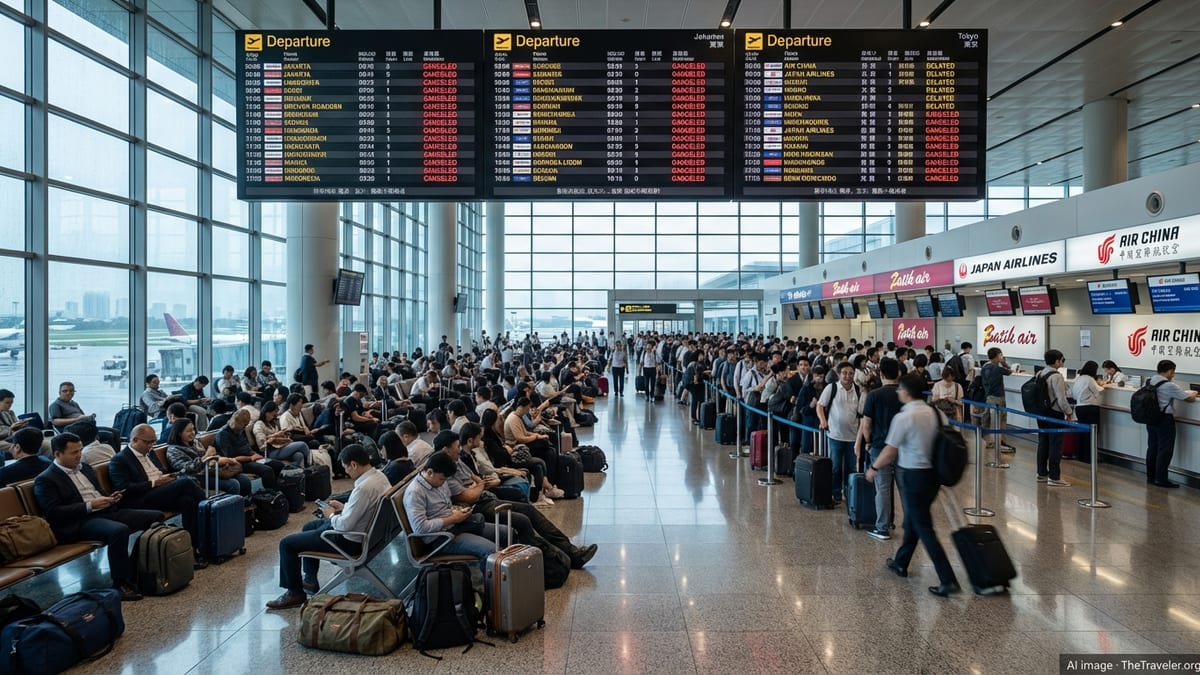
Extended closures at Jakarta’s main hub
Publicly available information shows that Jakarta’s Soekarno-Hatta International Airport, one of Southeast Asia’s busiest hubs, has pushed back the reopening of its runways after halting operations over the weekend when volcanic ash from Anak Krakatau was detected in the airspace above the capital. The airport, together with three other facilities, had initially been expected to resume limited services on Monday but remained closed for longer as aviation authorities reassessed ash concentrations and wind patterns.
Reports indicate that closures at Soekarno-Hatta and nearby airports have affected a vast number of travelers. Regional and international media describe hundreds of thousands of passengers stranded nationwide, with figures ranging from around 170,000 people impacted on Sunday to more than 250,000 as disruptions spread into a second day. Airlines have been forced to cancel or divert flights, while ground handlers and airport operators contend with crowded terminals and mounting backlogs.
According to published coverage, Indonesia’s civil aviation authorities are relying on satellite data, pilot reports and ash dispersion models to determine when conditions will be safe enough to restart full operations. Until those assessments show that ash concentrations along approach and departure routes have fallen below critical thresholds, Jakarta’s primary airport is expected to operate on a severely reduced schedule or remain closed.
Eight airports affected across western Indonesia
The impact of the eruption has extended far beyond Jakarta. Publicly available information shows that closures and partial suspensions have affected up to eight airports across western Indonesia, including facilities in Lampung province near the Sunda Strait and other regional gateways along the busy Java transport corridor. These airports lie closer to Anak Krakatau and have experienced heavier ash fall, prompting more cautious operating decisions.
Reports from regional news agencies describe a cascading effect across the domestic network as airlines struggle to reposition aircraft and crew. With several key nodes offline, carriers have reduced schedules and in some cases suspended routes entirely until airspace assessments improve. Passengers attempting to connect through Jakarta or other hubs have encountered long waits at ticket counters as they seek new itineraries.
According to published coverage, some airports outside the main ash-affected zone have begun operating normally again, but the wider system remains under strain. The combination of multiple closures, aircraft out of position and continuing uncertainty over Anak Krakatau’s behavior has made it difficult to publish reliable timetables, complicating travel planning for both domestic and international passengers.
Travel chaos for domestic and international passengers
For travelers on the ground, the extended closure has translated into hours or even days of waiting. Media images from Soekarno-Hatta show long queues at airline customer service counters and packed seating areas as passengers attempt to rebook flights or arrange overnight stays. Reports indicate that some travelers have opted to leave the airport in search of hotel rooms in Jakarta or nearby Tangerang, while others remain in terminals in the hope of securing the next available departure.
International connections have been particularly affected because Soekarno-Hatta serves as Indonesia’s main long haul and regional hub. According to publicly available data cited in news coverage, more than 1,500 to 2,000 flights have been disrupted since the eruption began, with cancellations rippling to destinations across Southeast Asia, the Middle East and beyond. Some airlines have rerouted flights through alternate hubs or delayed departures until visibility on ash conditions improves.
Domestic passengers have faced similar challenges. On key routes linking Jakarta with cities on Java, Sumatra and other islands, travelers have turned to overland or sea alternatives. Reports from regional outlets mention increased demand for intercity buses, trains and ferries as people seek to continue journeys that would normally take a few hours by air. Journey times have stretched significantly, underscoring how dependent Indonesia’s archipelago is on air connectivity.
Why volcanic ash grounds aircraft
Volcanic ash presents a well known hazard to aviation, and Anak Krakatau’s latest activity has underlined those risks. Ash particles can melt inside jet engines, fusing on turbine blades and potentially causing engine failure. Even at lower concentrations, ash can abrade cockpit windows, damage sensors and contaminate cabin air systems. Because of these dangers, international aviation standards call for extreme caution whenever ash clouds intersect flight paths.
According to publicly available information from volcanology and aviation agencies, the ash plume from Anak Krakatau has climbed several kilometers into the atmosphere and drifted west and east with prevailing winds, periodically crossing established air corridors serving Jakarta and other western Indonesian airports. Satellite imagery and ground based monitoring have shown variable ash densities at different altitudes, requiring continual updates to flight advisories.
Past eruptions in Indonesia and elsewhere have shown that even short lived ash events can create prolonged disruption when they affect major hubs. The current situation around Jakarta aligns with that pattern, with aviation authorities prioritizing safety while attempting to minimize economic and social impacts. As long as Anak Krakatau continues to emit ash and weather systems carry it across busy airspace, the risk of renewed closures remains.
Uncertain outlook for stranded travelers
Looking ahead, the timeline for a full return to normal operations remains unclear. Reports indicate that the eruption’s intensity has fluctuated since the weekend, with periods of reduced activity followed by fresh ash emissions. Forecasts for wind direction and speed are also changing day by day, complicating efforts to predict when air corridors above Java and the Sunda Strait will be consistently clear.
Publicly available information suggests that some airlines are preparing for a phased resumption of flights once ash advisories ease, focusing first on domestic routes and short haul regional services before ramping up long haul operations. However, the scale of the backlog means that even after runways reopen, it may take several days for schedules to stabilize and for stranded passengers to reach their destinations.
Travel advisories from carriers and tourism platforms are urging passengers to check flight status frequently, allow extra time for airport procedures and consider flexible itineraries. For those yet to begin their journeys, many operators are offering fee waivers or rebooking options on alternative dates. Until Anak Krakatau’s activity subsides and Indonesia’s main aviation gateways are fully operational again, travelers planning to pass through Jakarta and other affected airports are likely to face continued uncertainty.
Jakarta Post coverage of Soekarno-Hatta closure
The Guardian report on Anak Krakatau airport disruptions